Why you should experience Sphinx of Memphis in Egypt.
The Sphinx of Memphis is Egypt's quiet enigma, a creature of light and stone, carved to guard the birthplace of pharaohs.
Resting in the open air near the Colossus of Ramesses II, this majestic sculpture radiates both grace and mystery. Its surface gleams a warm ivory under the Egyptian sun, the stone almost translucent, as though it were breathing light. Though smaller than the Sphinx of Giza, it possesses a rare intimacy; here, you stand at eye level with one of antiquity's most exquisite guardians. Believed to have been sculpted between 1400 and 1350 BCE, the Alabaster Sphinx captures a time when artistry reached spiritual perfection, its calm smile and folded paws embodying the harmony of divine kingship. As you move around it, the polished calcite ripples with reflections of sky and sand, creating the illusion that the sphinx itself is still alive, still watching. In the stillness of Memphis, where Egypt's first rulers were crowned, this glowing sentinel reminds you that power, once born, never truly fades, it simply turns to stone.
What you didn't know about Sphinx of Memphis.
The Sphinx of Memphis remains one of the most elegant and mysterious sculptures of the New Kingdom, both for its craftsmanship and for the enduring debate over whom it represents.
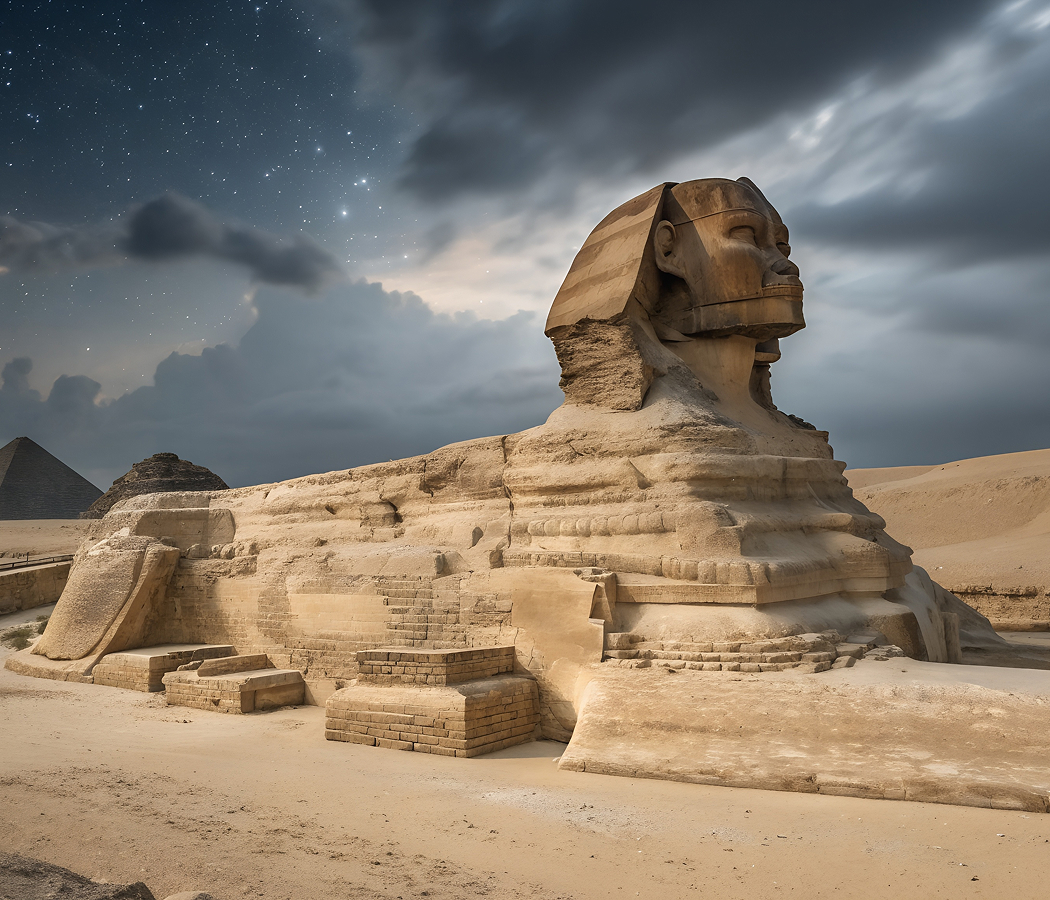
Carved from a single block of Egyptian calcite, a precious material associated with purity and divinity, the sphinx measures about 8 meters (26 feet) long and weighs roughly 80 tons. Its smooth, luminous surface once reflected the sunlight with an almost ethereal glow, the ancient Egyptians called alabaster “the stone of eternity.” Scholars have long debated whether the face belongs to Queen Hatshepsut, Egypt's most powerful female pharaoh, or to Amenhotep II, whose reign (circa 1427, 1401 BCE) marked a golden age of peace and artistry. Its androgynous features, the full lips, high cheekbones, and serene gaze, suggest an intentional blending of masculine authority and divine femininity. The statue originally stood at the entrance to the Temple of Ptah, god of craftsmen, creation, and rebirth, at the heart of ancient Memphis, where every pharaoh since Narmer had been crowned. Archaeological evidence suggests the sphinx was likely commissioned to symbolize the unity of Egypt under Ptah's divine protection. Unlike the colossal limestone Sphinx at Giza, which was carved directly into the bedrock, the Memphis sphinx was sculpted in the round, allowing worshippers to walk fully around it during temple processions, an act believed to invoke renewal and cosmic balance. Discovered in 1912 by archaeologist Flinders Petrie, the statue was found half-buried in silt from centuries of Nile flooding, which preserved its details remarkably well. The subtle traces of original pigment still visible in the headdress hint that the sphinx once shimmered with color, deep blues and ochres that would have contrasted dramatically with the glowing alabaster beneath. Though the temple it guarded has vanished, the sphinx endures as the last silent witness to Memphis's lost grandeur.
How to fold Sphinx of Memphis into your trip.
The Sphinx of Memphis is a must-see stop within the Memphis Open-Air Museum, offering a serene and deeply personal encounter with Egypt's artistry at its most refined.
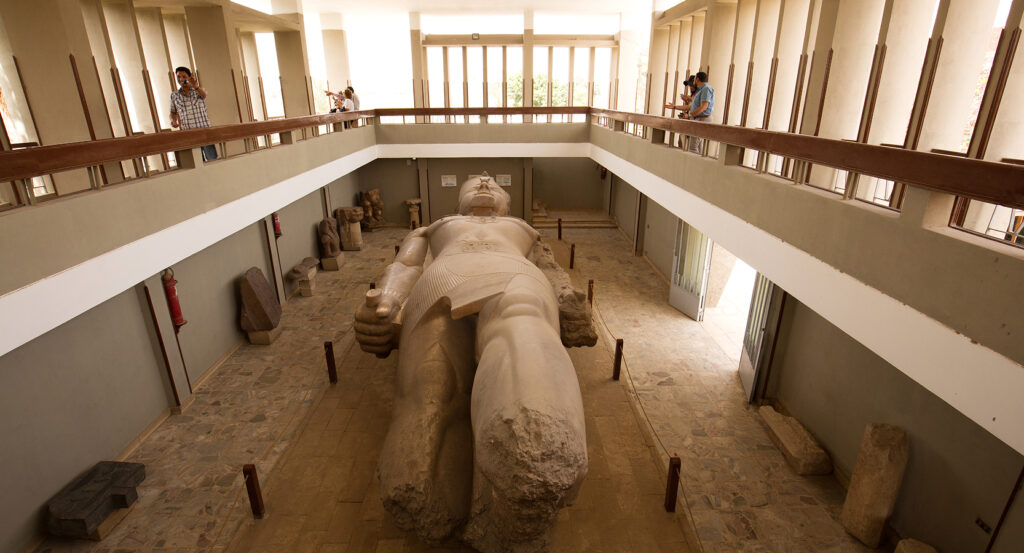
Located about 25 kilometers south of Cairo, the museum is typically paired with a day trip through Saqqara and Dahshur, forming a full circle of Egypt's ancient story. From the city center, it's a 45-minute drive by private car or guided tour, with Memphis serving as a tranquil final stop after exploring the grandeur of the pyramids. Inside the museum grounds, the sphinx rests outdoors on a raised platform framed by palm trees, its gleaming alabaster catching the changing tones of daylight. Arrive in the late morning or early afternoon, when the sunlight is at its most golden and the stone glows as if lit from within. Walk around the sculpture slowly; its perfection reveals itself from every angle, especially when viewed from behind, where the curve of the headdress flows seamlessly into the body. Nearby, plaques detail the sphinx's excavation and the theories surrounding its identity. Combine your visit with the adjacent Colossus of Ramesses II, housed in the covered hall, and the surrounding fragments of Ptah's Temple to complete the picture of ancient Memphis's power. Plan to spend 30, 40 minutes at the site, taking time to pause in the shade and watch how the sphinx's color changes as the sun moves overhead. Before leaving, look back once more, the alabaster will seem to shimmer like water, a final mirage from Egypt's eternal capital. The Alabaster Sphinx of Memphis is more than sculpture; it's a living reflection of Egypt's soul, carved from light itself.
Hear it from the Foresyte community.
Just enough life around you not to be overwhelming. Right pace.
Where your story begins.
Start your planning journey with Foresyte Travel.
Experience immersive stories crafted for luxury travelers.