Why you should experience Montezuma Castle National Monument in Sedona, Arizona.
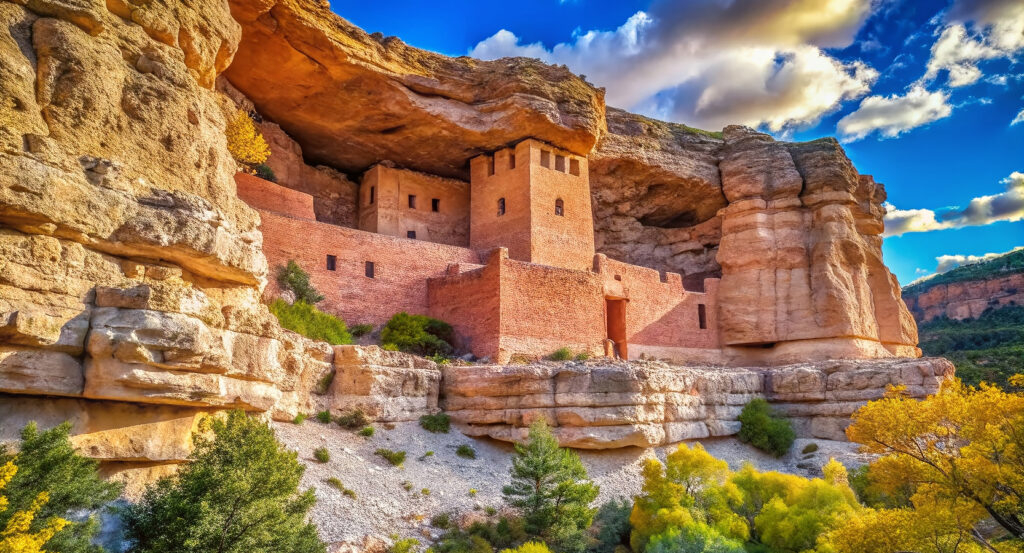
Montezuma Castle National Monument in Camp Verde is a window into an ancient world, a silent masterpiece carved into a cliff face that has watched over Arizona's desert valley for nearly a thousand years.
Tucked along Beaver Creek in the Verde Valley, this remarkable five-story structure rises 90 feet above the ground, built directly into a limestone alcove that has shielded it from centuries of wind, rain, and time. From a distance, it looks almost impossible, a honey-colored fortress suspended in the rock, a marvel of both engineering and endurance. The name, a misnomer given by early settlers who wrongly attributed it to the Aztec emperor Montezuma, hides its true heritage: the Sinagua people, an agricultural society that thrived here between the 12th and 15th centuries. Their “castle” was no royal palace, but a communal dwelling of twenty rooms, home to dozens of families who lived in harmony with the surrounding desert. The cliff itself provided protection from floods and invaders, while its position allowed for breathtaking views of the valley below. Standing at the base, the air still hums with a quiet reverence, the sense that this was once a place of laughter, community, and sacred life. Montezuma Castle isn't just an archaeological site; it's a conversation across centuries, between those who built it and those who still come seeking to understand.
What you should know about Montezuma Castle National Monument.
Montezuma Castle is among the best-preserved cliff dwellings in North America, but its story is as much about the land around it as the structure itself.
The Sinagua, whose name means “without water” in Spanish, were anything but helpless in this arid landscape. They mastered dry farming, using runoff from summer monsoons and the waters of Beaver Creek to cultivate corn, beans, squash, and cotton. Archaeologists believe the site was occupied for nearly 400 years before being mysteriously abandoned around 1425 CE, due to climate shifts, resource scarcity, or migration toward larger trade centers. Though the people moved on, their craftsmanship endures: walls of hand-shaped limestone blocks and clay mortar, ceilings reinforced with sycamore beams, and ladders that once connected each level like veins through a living organism. The structure's elevated placement was no accident, it protected its inhabitants from flash floods, predators, and the desert heat, keeping the interior cool even in midsummer. When European settlers “rediscovered” the site in the 1860s, they marveled at its sophistication and preservation, but early tourism also caused damage. Visitors chipped away at the walls, scavenged artifacts, and climbed inside until the site was closed to the public in 1951 for protection. Today, the National Park Service maintains it as a cultural monument and ecological refuge, home to nesting cliff swallows, sycamores, and the occasional great horned owl. Nearby, Montezuma Well, a separate limestone sinkhole fed by underground springs, reveals how water has always been the silent architect of life here. Though separated by time, both sites tell the same story: of people who learned to live with the desert.
How to fold Montezuma Castle National Monument into your trip.
A visit to Montezuma Castle National Monument is less about sightseeing and more about listening, to the quiet echo of a civilization that understood balance better than we often do today.
Located about 90 minutes north of Phoenix and 45 minutes south of Sedona, the monument makes for an easy half-day trip or a tranquil detour along Interstate 17. The paved trail from the visitor center winds gently through shaded sycamores and mesquites before revealing the castle in full, an awe-inspiring reveal that never feels overstated. Information panels along the path explain how the Sinagua lived, farmed, and thrived in this desert cradle, while rangers at the visitor center offer deeper insight into the site's archaeology and cultural meaning. Be sure to explore Montezuma Well, a few miles away, where a short loop trail leads to a natural limestone spring that has flowed continuously for thousands of years, an oasis that once sustained entire communities. Bring water, sunscreen, and respect; this is not a playground, but a sacred space that still commands stillness. Morning visits offer the softest light for photography, while late afternoons bathe the cliffs in a golden glow that feels almost otherworldly. Pair your stop with a drive through the Verde Valley's scenic vineyards or a visit to Tuzigoot National Monument, another Sinagua site nearby. As the sun dips behind the red cliffs, take one last look back at the castle carved into stone, a symbol of permanence in an impermanent world. Montezuma Castle doesn't just preserve the past; it reflects the timelessness of human ingenuity, resilience, and our endless discussion with the land.
Where your story begins.
Foresyte Travel reveals places that feel extraordinary long before you arrive.
Experience premium editorial crafted for luxury travelers.