Why you should experience Citadel Courtyard in Cairo, Egypt.
Citadel Courtyard is the heart of Cairo's high citadel, an open sanctuary of marble and sky where centuries of empire still breathe between every arch.
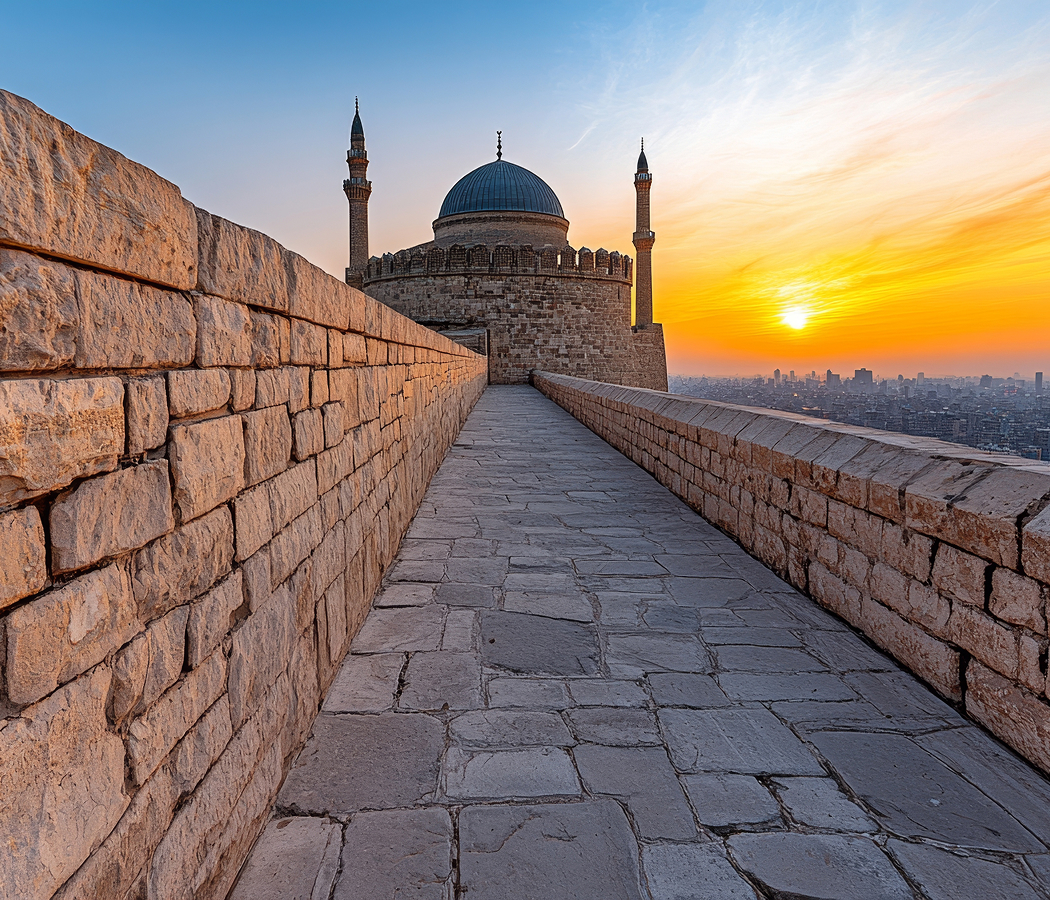
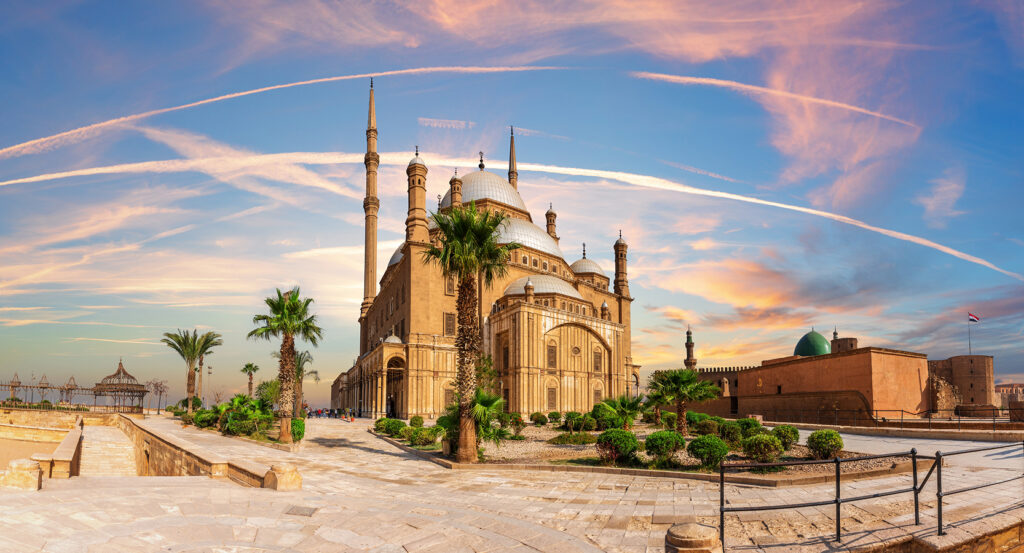
Step into the courtyard and the light shifts, golden, reflective, reverent. The vast open square stretches between the domes of the Mosque of Muhammad Ali, its alabaster walls glowing like carved sunlight, and the defensive terraces beyond. The air carries both stillness and echo: the shuffle of footsteps, the distant murmur of prayer, the call of pigeons swirling above the minarets. For nearly nine hundred years, this space has served as the citadel's living stage, where rulers held audiences, soldiers gathered before campaigns, and Cairo's skyline unfurled as backdrop to power. Today, it remains one of Egypt's most transcendent public spaces, a place where faith meets architecture and time dissolves into light.
What you should know about Citadel Courtyard.
Citadel Courtyard was originally laid out in the 12th century during Saladin's construction of the fortress but achieved its present grandeur under Muhammad Ali Pasha in the 19th century.
The open plaza was reimagined as both a ceremonial and spiritual center, linking the Ottoman-style Mosque of Muhammad Ali with the administrative and military buildings of the Citadel. Paved in marble and edged by arched colonnades, the courtyard's proportions were deliberately designed to mirror the grand courtyards of Istanbul's imperial mosques, blending Ottoman symmetry with Egyptian stonework. At its center stands a remarkable ablution fountain, its octagonal canopy supported by marble columns and once covered in intricate mosaics of gold and azure, a reminder that purification precedes prayer in both faith and architecture. Beneath the courtyard lies a network of cisterns and aqueducts that once supplied water to the Citadel's mosques, baths, and kitchens, part of an advanced hydraulic system originally engineered by Salah ad-Din's military architects and later expanded by the Mamluks. The northern side of the courtyard still bears traces of older Ayyubid masonry, while the southern arcades reflect the elegant curvature of Ottoman design, visual evidence of Egypt's seamless layering of dynasties. In the 1800s, the courtyard hosted military parades, diplomatic receptions, and royal ceremonies, with cannons fired from the adjacent bastions to mark celebrations or religious feasts. Even today, the site is an active stage of Egyptian identity, a setting for official receptions, festivals, and national commemorations. Its open expanse was not designed merely for grandeur but for symbolism: to reflect the infinite, the divine, and the unity of heaven and earth within a single architectural frame.
How to fold Citadel Courtyard into your trip.
To experience Citadel Courtyard is to stand at the intersection of devotion and dynasty, a perfect opening chapter to your exploration of Saladin Citadel.
Begin your visit in the early morning, when the sun glances off the alabaster mosque walls and the marble underfoot still holds the cool of the night. Enter through the western arcade, and take a moment before stepping into full light, the courtyard's brilliance is almost theatrical. Walk slowly toward the fountain at its center; notice how every archway frames the city below in perfect proportion, turning Cairo itself into part of the composition. If you stand at the southern end near the mosque steps, you'll have the best vantage of the Citadel's skyline, with the minarets mirrored across the polished marble like an illusion. From here, you can see the Mosque of al-Nasir Muhammad beyond the walls, a reminder of the Mamluk legacy that preceded the Ottoman age. Allow 45-60 minutes to linger, observe, and photograph, though what you'll remember most is not the sight but the atmosphere: sunlight bending through latticework, the faint scent of dust and incense, the sound of the wind whispering across centuries. Before leaving, pause by the northern colonnade, where an unobstructed view of Cairo opens through the arches, the city sprawling endlessly below, as if bowing to its own fortress. From this vantage, the courtyard feels less like a museum and more like a pause in eternity, a place where history learned how to breathe.
Where your story begins.
Foresyte Travel reveals places that feel extraordinary long before you arrive.
Experience premium editorial crafted for luxury travelers.