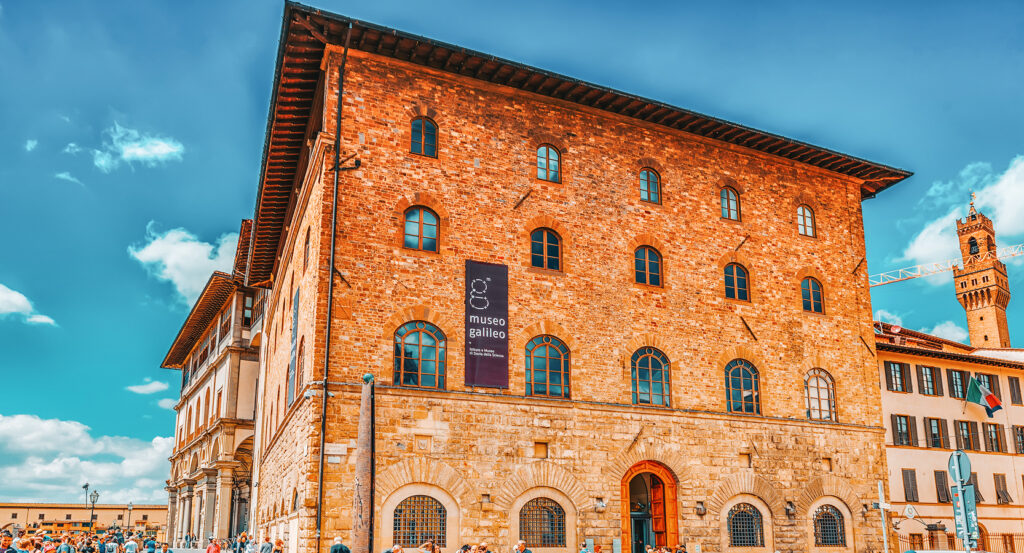
Why you should experience The Lorraine Collections at Museo Galileo in Florence, Italy.
The Lorraine Dynasty Collection at the Museo Galileo in Florence reveals the Enlightenment's heartbeat, a dazzling display of precision, intellect, and optimism forged in brass, glass, and imagination.
While the Medici had turned science into spectacle, the Lorraine rulers who succeeded them transformed it into a disciplined pursuit of progress. The galleries glow with 18th- and 19th-century instruments that mark the shift from wonder to method: gleaming telescopes, elegant microscopes, and intricate electrical devices designed not merely to impress but to prove. Walking among them feels like stepping into a moment when humanity believed that reason could illuminate all mysteries. The instruments, symmetrical, delicate, yet exacting, carry an unmistakable grace. They embody the Lorraine dynasty's spirit of intellectual continuity, refining the Medici legacy while extending it into the age of discovery. In this golden light, Florence's genius doesn't fade, it evolves.
What you didn't know about The Lorraine Collections at Museo Galileo.
The Lorraine dynasty's arrival in Florence in 1737 marked a new chapter in Tuscany's relationship with science, one defined by institutional reform and international collaboration.
Grand Duke Peter Leopold and his successors reorganized the Medici collections into a public scientific archive, commissioning new instruments from across Europe to modernize the state's understanding of physics, astronomy, and engineering. Their laboratories became centers of experimentation: pendulum clocks tested gravitational theories, electrostatic generators hummed with invisible energy, and glassware from Bohemia and Paris embodied the cross-cultural exchange of the Enlightenment. The Lorraine also introduced formal scientific education to the region, funding observatories and anatomical theaters that mirrored the rational ideals of the age. Many of the objects in the collection, from finely engraved telescopes to air pumps and magnetism devices, were imported, modified, or replicated by Florentine artisans who merged Northern precision with Tuscan artistry. The result is a uniquely Florentine Enlightenment: empirical, elegant, and profoundly humanistic. The Lorraine saw science not as a luxury of princes, but as a public good, and the Museo Galileo remains its living legacy.
How to fold The Lorraine Collections at Museo Galileo into your trip.
When visiting the Museo Galileo, save the Lorraine Dynasty Collection for last, it offers a graceful conclusion to the museum's story of discovery.
Move through the rooms sequentially, beginning with the ornate Medici instruments before crossing into the Lorraine galleries, where the aesthetic subtly shifts from ornament to order. Notice how the surfaces grow simpler, the mechanisms more intricate, mirrors of a changing worldview. Pause before the display of Enlightenment-era electrical machines, their glass globes still charged with a sense of anticipation. Study the microscopes and precision compasses, each one designed for study. Visit during midday when natural light floods through the Arno-facing windows; the reflection off polished metal makes the gallery shimmer with quiet brilliance. Before leaving, glance back through the museum's corridor, the transition from Renaissance opulence to Enlightenment clarity tells the story of how Florence carried human knowledge from faith to fact. The Lorraine Dynasty Collection is not just a gallery of instruments; it's a portrait of an era when progress itself became an art form.
Where your story begins.
Start your planning journey with Foresyte Travel.
Experience immersive stories crafted for luxury travelers.