Why you should experience Old Town in Dubrovnik, Croatia.
Old Town in Dubrovnik is a living legend, a city of marble and memory that rises from the Adriatic like a dream sculpted from time.
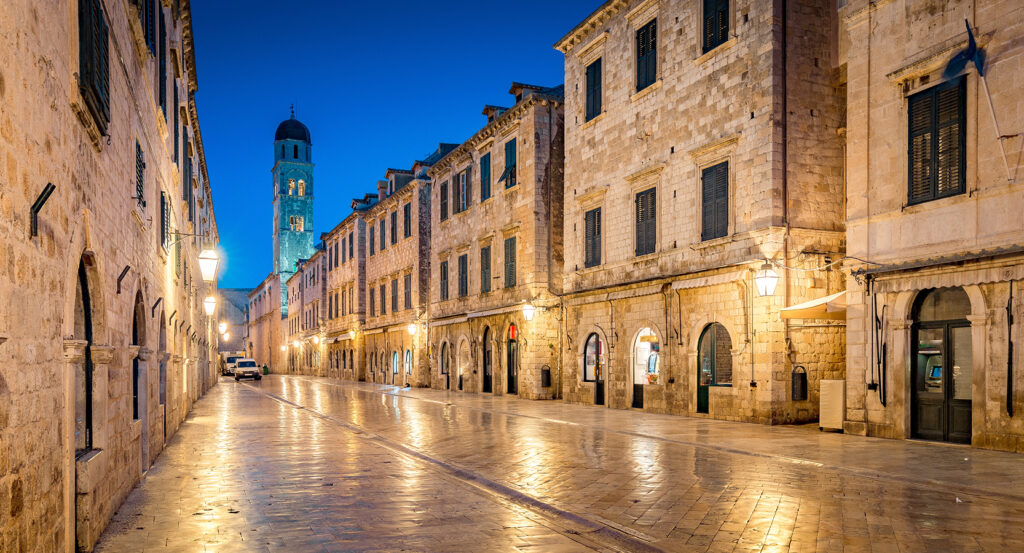
Encircled by its iconic medieval walls, this UNESCO World Heritage Site is one of the best-preserved fortified cities in the world, a dazzling blend of Gothic, Renaissance, and Baroque architecture that has withstood earthquakes, wars, and empires. As you pass through Pile Gate and step onto the polished limestone streets of Stradun, the city seems to exhale centuries of history in a single breath. The air smells faintly of salt and stone, the light glints off red rooftops, and every corner hums with stories, of merchants and monks, of sailors and scholars. The rhythm of the city unfolds with every step: bell towers ringing, cafés spilling laughter into narrow alleyways, and sea breezes drifting through archways that have stood since the 13th century. From the elegant Rector's Palace to the majestic Sponza Palace and the serene cloisters of the Franciscan Monastery, Old Town is a masterpiece of endurance and artistry. Walking here is like wandering through a living museum, one that never stopped breathing, even when history tried to silence it.
What you didn’t know about Old Town.
Dubrovnik's Old Town has endured and evolved through a thousand chapters, each more astonishing than the last.
Originally founded in the 7th century as Ragusa, the city grew from a small refuge for coastal exiles into one of Europe's most sophisticated maritime republics. By the 15th century, it rivaled Venice in trade, diplomacy, and culture, a city governed not by kings, but by its own citizens, who prized liberty above all else. Its famous motto, Non Bene Pro Toto Libertas Venditur Auro, “Freedom is not sold for all the gold in the world”, still echoes through its gates. The devastating earthquake of 1667 destroyed much of the city, yet Dubrovnik rebuilt itself in striking Baroque style, preserving its medieval layout and spirit. Even in modern times, when war scarred its stones in the 1990s, the city rose again, meticulously restored by artisans who understood that Dubrovnik is not just architecture, it's identity. Few realize that the city's marble main street, Stradun, was once a sea channel that separated two settlements; it was filled and paved during the 12th century, creating the grand promenade that now glows silver beneath the sun. The city's walls, up to 25 meters high and 2 kilometers long, have never been breached, a testament to the precision of its builders and the will of its people. And while millions now know Dubrovnik through Game of Thrones, long before the cameras arrived, this was already a city of cinematic grandeur, a masterpiece of stone and soul that earned its nickname, “The Pearl of the Adriatic.”
How to fold Old Town into your trip.
Experiencing Old Town in Dubrovnik is to step into another century, one best savored slowly and with open eyes.
Start early in the morning, before the crowds and cruise ships descend, when the streets glisten with dew and the city belongs to the locals. Enter through Pile Gate and stroll the length of Stradun, the city's main artery, where cafés and boutiques come alive under the watchful gaze of the Clock Tower. Climb the ancient city walls, one of Europe's most breathtaking walks, circling Old Town for sweeping views of the terracotta rooftops and the shimmering Adriatic beyond. Along the way, pause at Fort Minčeta and Fort Bokar, whose ramparts have guarded the city for centuries. Inside the walls, visit the Rector's Palace, the Church of St. Blaise, and the Franciscan Monastery, home to one of the world's oldest pharmacies still in operation. When hunger strikes, dine at a hidden konoba tucked into one of the back alleys, where seafood, olive oil, and Dalmatian wine tell their own story of the sea. As dusk settles, head toward the Old Port, its reflections dance like firelight across the water, or climb up to the city walls at sunset, when Dubrovnik glows gold against the blue horizon. Stay until nightfall, when the lanterns flicker to life and Old Town takes on an almost ethereal quiet. In those moments, you'll understand why travelers across centuries have called Dubrovnik not just a city, but a feeling, one that never fades, only deepens.
Where your story begins.
Start your planning journey with Foresyte Travel.
Experience immersive stories crafted for luxury travelers.