Why One Chun Café & Restaurant matters.
One Chun Café & Restaurant is a celebrated Southern Thai restaurant where Old Phuket Town's Sino-European architectural heritage meets the inherited cooking traditions of Phuket's Baba-Peranakan families and Napapat Chessadawan's distinctive interpretation of the island's culinary past.
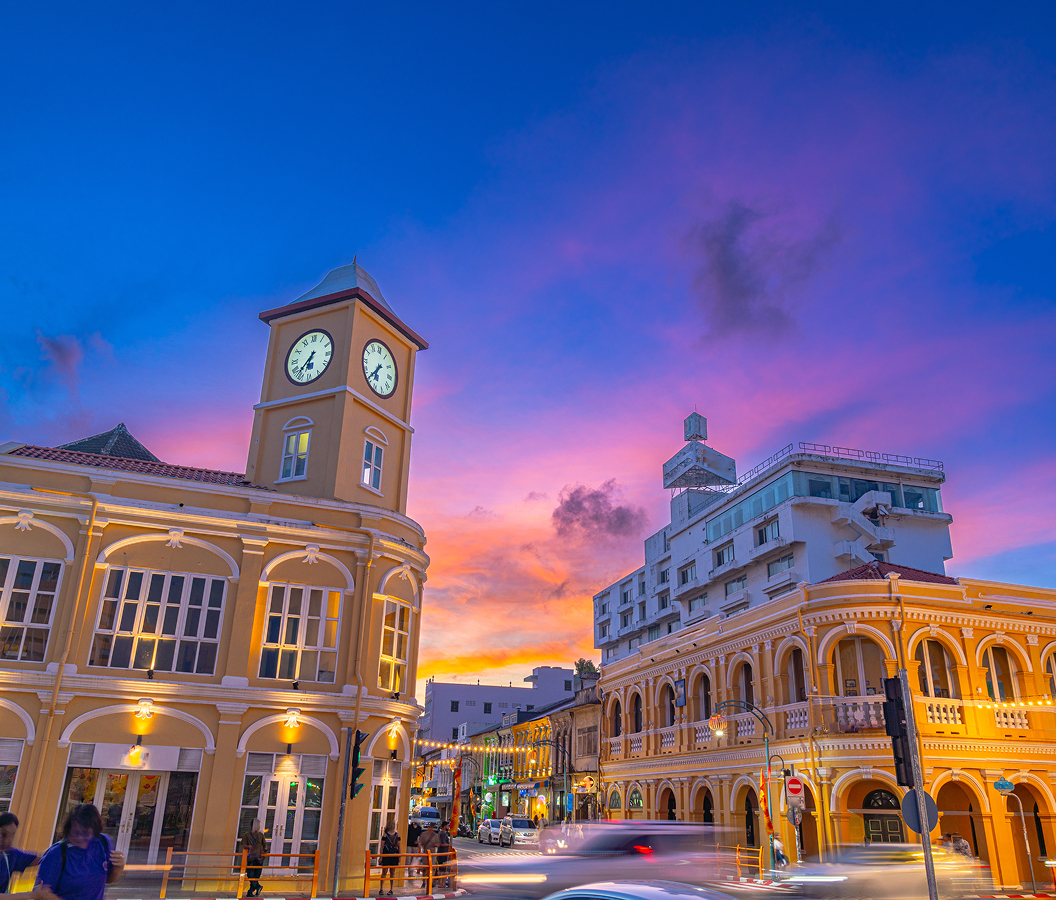
Occupying a historic corner property along Thep Krasattri Road near the eastern end of Dibuk Road, One Chun Café & Restaurant stands within Phuket's Talat Yai district, a short walk northeast of Thalang Road and Soi Romanee, amid the merchant shophouses and traditional businesses of Old Phuket Town. The restaurant occupies a nineteenth-century Sino-European building whose architectural character incorporates green timber shutters, decorative exterior detailing and patterned floor tiles. Its interior combines substantial wooden furniture with collections of vintage household objects, including antique clocks, transistor radios and black-and-white television sets. Framed photographs and decorative memorabilia occupy the walls, creating a domestic atmosphere associated with Phuket's mid-twentieth-century merchant households. Connected dining rooms accommodate communal tables and smaller seating arrangements, preserving the intimate proportions of the historic structure. Warm lighting accentuates the timber furnishings and aged decorative surfaces, reinforcing the relationship between the restaurant's architecture and its collection of family heirlooms. The result is a distinctive heritage restaurant whose preserved shophouse setting and carefully assembled antiques connect contemporary dining with Phuket's historic domestic culture.
What defines One Chun Café & Restaurant.
One Chun Café & Restaurant is best known for the culinary traditions preserved by owner Napapat “Prang” Chessadawan, whose background in fashion design and enthusiasm for antiques shaped one of Phuket's most recognizable regional restaurants. The establishment opened 2010, introducing a collection of family recipes developed across three generations of Phuket household cooking. Chessadawan inherited these preparations through her grandmother and aunt, whose influence established the restaurant's foundation in traditional southern Thai and Chinese-Phuket cuisine. Her grandmother's memory became particularly important to the project, inspiring an interior assembled from objects associated with the domestic environment of an earlier generation. Chessadawan approached the restaurant as a combination of culinary preservation and personal design, creating a setting that connected inherited cooking with the visual culture of Phuket's historic merchant families. The restaurant's Thai name, Wan Chan, means Monday, establishing a distinctive character within the surrounding commercial district. Its opening coincided with the expanding preservation movement in Old Phuket Town, where historic shophouses were undergoing restoration and traditional businesses were attracting renewed interest. The district's architecture had developed through the prosperity of Phuket's tin-mining industry, whose commercial networks brought substantial Hokkien Chinese migration during the nineteenth and early twentieth centuries. Chinese settlers established merchant households that combined southern Chinese customs with local Thai and Malay influences, contributing to the emergence of Phuket's Baba-Peranakan community. The family recipes preserved at One Chun belong to this wider culinary inheritance, incorporating regional seafood, aromatic spices and cooking techniques associated with the island's multicultural history. Chessadawan's restaurant developed a substantial local following through its emphasis on traditional preparations, generous portions and accessible pricing. Its reputation expanded beyond Phuket as regional food publications and international travel media brought greater attention to the island's historic culinary establishments. In 2015, Phuket became Thailand's first UNESCO Creative City of Gastronomy, recognizing the distinctive culinary heritage created through generations of interaction among Chinese, Thai and Malay communities. The designation established an international cultural structure for the traditional food businesses operating throughout the historic town. MICHELIN expanded its Thailand restaurant selection to Phuket and Phang Nga in the 2019 guide, bringing One Chun into an internationally recognized culinary evaluation program. The restaurant received the MICHELIN Bib Gourmand distinction, recognizing cooking quality and value within the guide's classification system. Its sustained inclusion established One Chun among the island's prominent regional restaurants and contributed to the international visibility of traditional Phuket cooking. In November 2021, the MICHELIN Guide published a dedicated feature examining Chessadawan's family recipes, antique collections and use of ingredients sourced from the surrounding region. The article explored the relationship between the restaurant's inherited preparations and its distinctive interior, connecting culinary traditions with the material culture of Phuket households. One Chun subsequently accumulated seven consecutive years of Bib Gourmand recognition through the 2026 MICHELIN Guide Thailand selection. Its culinary reputation also contributed to a broader group of restaurants associated with Chessadawan's family, including Raya and Chomchan, whose cooking draws upon related Phuket household traditions. The restaurant's significance rests on its preservation of three generations of family recipes, the personal creative direction of its founder and its contribution to the international recognition of Phuket's regional cuisine.
Napapat Chessadawan's culinary program develops around the complementary flavors of southern Thai seafood, Chinese-Phuket braising traditions and ingredients cultivated or harvested across the Andaman coast. The kitchen's crab curry combines substantial pieces of fresh crab with a coconut-based yellow curry, creating a rich preparation whose aromatic intensity develops through the careful balance of chili, spices and coconut milk. The crab contributes natural sweetness and delicate texture, providing a counterpoint to the concentrated flavor of the surrounding sauce. Thin rice noodles accompany the curry, absorbing its aromatic liquid and connecting the preparation with the southern Thai tradition of serving richly seasoned curries over noodles. A different expression of the restaurant's culinary heritage emerges through moo hong, the slow-braised pork belly preparation associated with Phuket's Chinese-Thai households. Extended cooking softens the meat and allows the braising liquid to develop a concentrated savory character through the combination of soy-based seasonings, garlic and pepper. The finished pork retains a tender interior surrounded by a richly flavored sauce, establishing a substantial contrast with the sharper preparations served alongside it. Southern Thai sour curry introduces another dimension through its combination of chili heat and pronounced acidity, frequently incorporating fish and locally available vegetables. One Chun's gaeng som pla mong uses seasonal jackfish, whose firm flesh supports the curry's intense flavor and maintains its texture during cooking. Young coconut shoots contribute a tender vegetable element, introducing a delicate sweetness that complements the surrounding spices. The kitchen's nam phrik kung siab develops the distinctive character of preserved seafood through dried shrimp combined with shrimp paste, chilies and aromatic seasonings. Its concentrated saltiness and heat are balanced by fresh local vegetables, whose crisp textures provide a refreshing contrast to the pungent relish. Tamarind prawns extend the seafood program through the relationship between fresh shellfish and the fruit's natural acidity. Large prawns are fried before being coated in a tamarind-based sauce, creating a preparation whose sweet and sour flavors complement the seafood's natural richness. The restaurant has presented this dish in a hollowed pineapple, incorporating a decorative element associated with its owner's interest in visual presentation. These preparations develop their full character through communal dining, with several dishes arranged at the center of the table and combined with steamed rice. The interaction between spicy curries, savory braises, seafood and fresh vegetables creates a balanced meal grounded in Phuket's traditional domestic cooking. Ingredient selection contributes substantially to the kitchen's approach, with seafood obtained from regional fishing communities and seasonal produce incorporated according to availability. The restaurant's continued emphasis on inherited recipes preserves a recognizable relationship between family cooking and the agricultural and maritime resources of southern Thailand. One Chun's culinary distinction emerges through this sustained combination of regional ingredients, carefully developed flavors and traditional preparations maintained within a historic Phuket dining environment.
How One Chun Café & Restaurant fits.
One Chun Café & Restaurant works as the centerpiece of an exploration connecting Phuket's Chinese religious traditions, the commercial architecture of its historic trading streets and the educational institutions established by the island's prosperous merchant families.
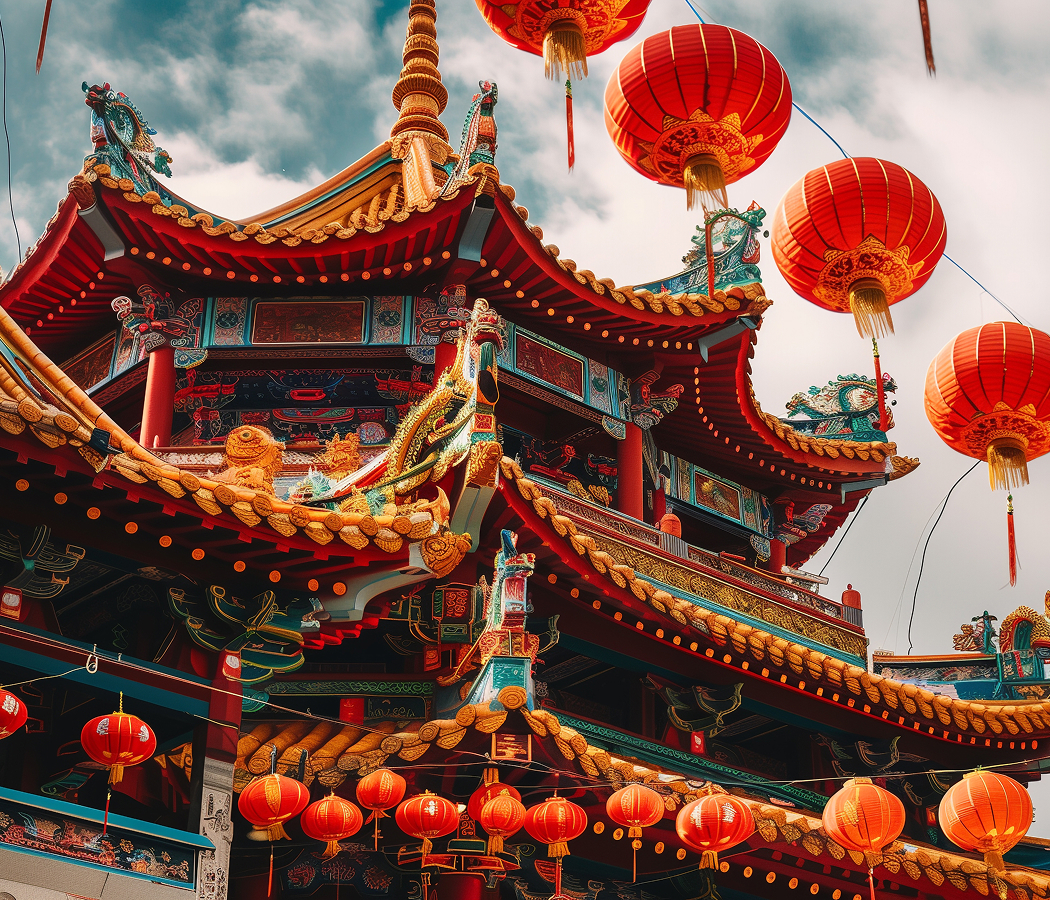
Begin at Shrine of the Serene Light, the historic Chinese religious sanctuary concealed behind the commercial frontage of Phang Nga Road. Established in 1889, the shrine is associated with the Tan Luan Jae community and preserves architectural elements characteristic of southern Chinese religious buildings. Its decorative program incorporates elaborate roof ornaments, carved details and painted panels depicting figures from Chinese religious traditions. The shrine occupies a compact courtyard reached through a narrow passage from the adjoining street, preserving a distinctive relationship between commercial buildings and community worship. Incense offerings and devotional ceremonies maintain its connection to the religious traditions of Phuket's Chinese families, whose settlement contributed substantially to the development of the historic town. Continue to Thalang Road, the principal historic commercial street running through the center of Old Phuket Town. Its continuous rows of Sino-European shophouses preserve the architectural character of the island's nineteenth- and early twentieth-century merchant economy, with narrow commercial frontages, decorative plasterwork and covered pedestrian arcades. The street developed through Phuket's tin-mining prosperity, when Chinese merchants established trading houses and commercial enterprises connected to regional maritime networks. In 2010, a major streetscape improvement project relocated overhead electrical cables underground, restoring clearer views of the historic façades. The Lard Yai Sunday Walking Street Market began in late 2013, transforming the corridor into a weekly gathering devoted to local food, crafts and cultural activity. Conclude at Phuket Thai Hua Museum, the former Chinese-language school occupying a substantial historic building on Krabi Road. Constructed in 1934 through contributions from Phuket's Hokkien Chinese community, the building incorporates a symmetrical façade, arched openings and an internal courtyard associated with Sino-European institutional architecture. King Prajadhipok, Rama VII, visited the school grounds in 1928, an event commemorated within the museum's historical exhibitions. The building was registered as a heritage property in 2002, and its subsequent restoration transformed the former educational institution into a museum that opened in 2010. Thirteen exhibition rooms examine Chinese migration, tin mining, family customs, educational development and the cultural traditions that shaped Phuket's urban history. The progression moves from Shrine of the Serene Light's religious heritage through Thalang Road's merchant architecture and culminates in Phuket Thai Hua Museum's educational and migration history, connecting the institutions that shaped Old Phuket Town's multicultural development.
Where your story begins.
Foresyte Travel reveals places that feel extraordinary long before you arrive.
Enjoy editorial crafted for luxury travelers.
Foresyte may earn a commission when you book.