Why you should experience Owens-Thomas House & Slave Quarters in Savannah, Georgia.
In the heart of Savannah's Historic District-Thomas House & Slave Quarters stands as one of the city's most profound and thought-provoking landmarks, a place where elegance and injustice are intertwined in stone.
Completed in 1819, this English Regency, style mansion is a masterpiece of architecture, designed by William Jay, one of the early 19th century's most gifted architects. Its graceful symmetry, ornate plasterwork, and sweeping staircases tell one story, that of wealth, refinement, and ambition. Yet behind this grandeur lies another, more haunting narrative: the story of the enslaved men, women, and children who lived and labored here. The house captures both the beauty and the brutality of Savannah's past in a single frame. Walking its halls is an emotional experience, one that moves beyond history into humanity. The juxtaposition of opulent parlors and the preserved slave quarters behind the home creates a visceral sense of contrast that no textbook can convey. This is not merely a historic house; it is a mirror reflecting the complicated soul of the American South.
What you didn’t know about Owens-Thomas House & Slave Quarters.
Owens-Thomas House was not only one of the most technologically advanced homes of its time but also one of the most revealing about the social hierarchies that built Savannah.
Constructed for wealthy banker and merchant Richard Richardson, the mansion was equipped with innovations nearly unheard of in early 19th-century America, indoor plumbing, running water, and an indoor bridge connecting the main bedrooms to a bathing area. However, the home's true significance lies in the rare survival of its urban slave quarters, located behind the main residence. These quarters, constructed of tabby, a mixture of lime, sand, and oyster shells, remain among the oldest and best-preserved examples of their kind in the United States. Within their walls, archaeologists have uncovered traces of daily life: pottery fragments, handmade tools, and evidence of a hidden spirituality that enslaved people practiced even under bondage. Visitors can still see the original haint blue paint on the ceilings, a color rooted in West African traditions believed to ward off spirits. The contrast between the elaborate architecture of the main house and the stark austerity of the quarters invites visitors to confront how comfort and cruelty coexisted. Later owned by George Welshman Owens, a congressman and mayor of Savannah, and his family, the house remained in use until the early 20th century before being donated to the Telfair Museums in 1951. Today, it stands not as a romanticized relic but as a reckoning, an honest, meticulously researched exploration of privilege, oppression, and endurance in antebellum America.
How to fold Owens-Thomas House & Slave Quarters into your trip.
Visiting Owens-Thomas House & Slave Quarters is not just a historical stop, it's a moment of reflection, empathy, and understanding that deepens any journey through Savannah.
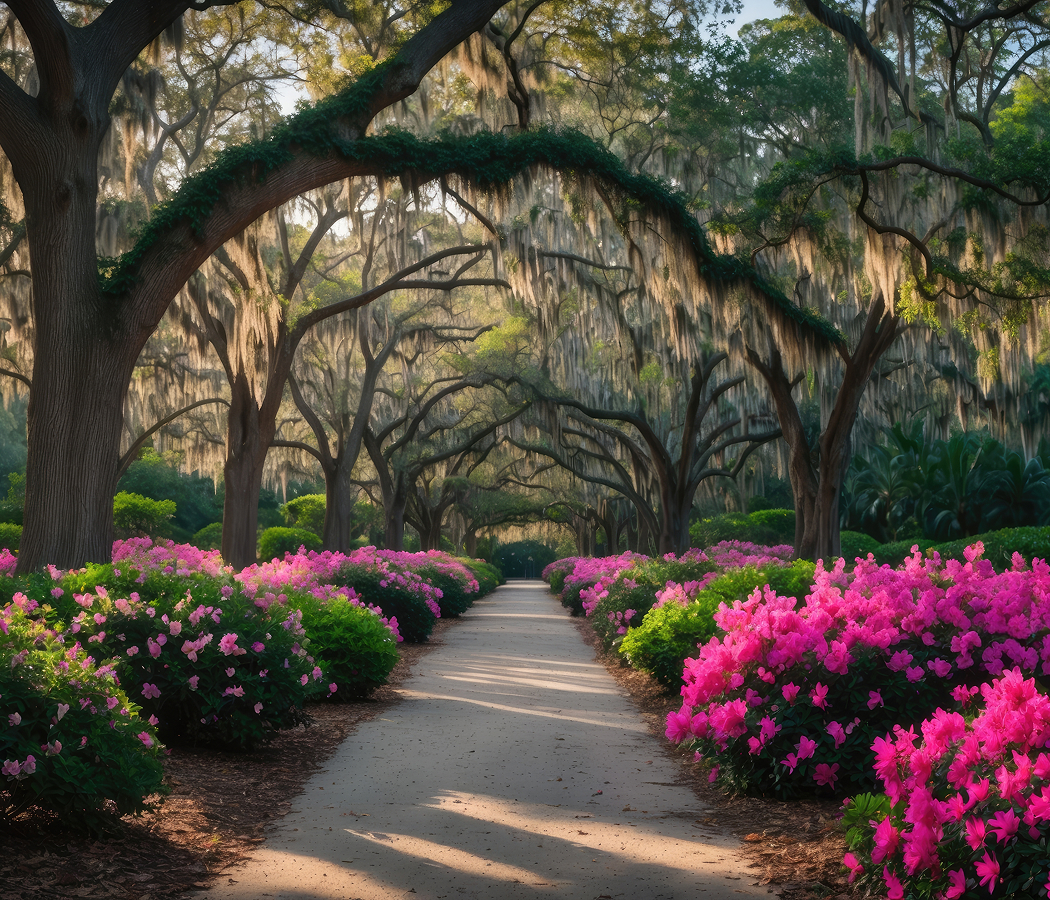
Begin your experience by walking through Oglethorpe Square, where the mansion's limestone façade commands quiet reverence amid the moss-draped oaks. Guided tours, offered through the Telfair Museums, take visitors through both the elegant main residence and the preserved quarters, creating an unflinching dual narrative of life above and below the stairs. As you move through the home, notice the architectural marvels, the curved walls, intricate moldings, and the grand staircase that still seems to glow in the filtered light. Then, step into the quarters, where low ceilings, small rooms, and artifacts of everyday survival evoke the resilience of those enslaved here. The docents weave these stories together, not as separate histories, but as one truth told from different perspectives. Plan to spend extra time in the interpretive galleries, where multimedia exhibits explore themes of race, identity, and memory in the modern South. Afterward, take a contemplative stroll through the surrounding streets, each block a patchwork of restored mansions, cobblestone lanes, and whispered history. End your visit with quiet reflection at nearby Colonial Park Cemetery or in Chippewa Square, where the beauty of Savannah feels both eternal and heavy with remembrance. The Owens-Thomas House & Slave Quarters doesn't simply preserve the past, it transforms it into dialogue, reminding every visitor that truth and beauty often share the same walls, and that to love Savannah fully is to understand all of its stories.
Where your story begins.
Start your planning journey with Foresyte Travel.
Experience immersive stories crafted for luxury travelers.