
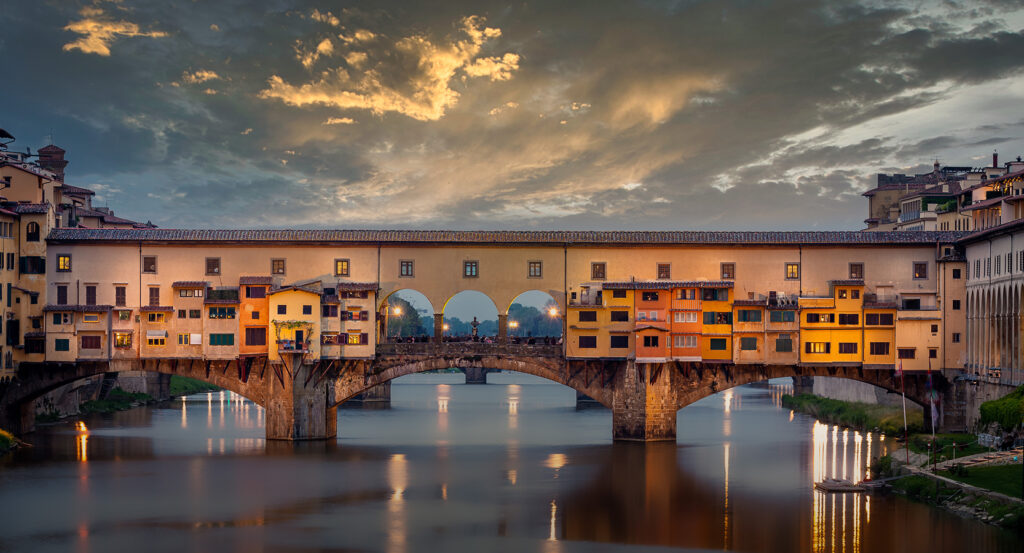
Why you should experience Palazzo Bardi-Guicciardini in Florence, Italy.
Palazzo Bardi-Guicciardini is where Renaissance nobility meets authentic Florentine residential charm, where centuries of aristocratic heritage blend seamlessly with the intimate elegance of a private palazzo stay, and where stepping inside feels like entering a quietly majestic world tucked in the heart of the Oltrarno.
Set along Via de' Bardi, among the oldest and most historically significant streets on the south side of the Arno, the palazzo rises with a dignified, time-worn façade marked by noble stonework, symmetrical windows, and the subtle architectural grandeur that defines Florence's 15th- and 16th-century aristocratic residences. The building once belonged to two of the city's most influential families: the Bardis, powerful medieval bankers and international financiers, and the Guicciardinis, renowned statesmen, political thinkers, and patrons of the arts. These layers of heritage still resonate through every corner of the palazzo. Step inside and the atmosphere unfolds with the quiet majesty of a centuries-old Florentine home: high ceilings, thick stone walls, exposed wooden beams, restored terracotta floors, elegant staircases, soft natural lighting, and a thoughtful blend of original architectural features and modern comforts. The interiors feel warm, stately, and intimate, less like a hotel and more like being welcomed into a beautifully preserved Renaissance residence. Suites and apartments carry this heritage forward in refined, contemporary ways. Expect plush beds wrapped in crisp linens, elegant furnishings that echo the palazzo's noble past, curated artwork inspired by Florence's artistic heritage, modern kitchens or kitchenettes in some units, and tall windows overlooking atmospheric Oltrarno streets or glimpses of the Arno. Many rooms maintain traditional Florentine details, wooden ceilings, stone portals, fresco remnants, or architectural lines that recall the building's medieval and Renaissance eras. Bathrooms are bright, modern, and well-composed, polished stone or tile, walk-in showers or deep tubs, refined fixtures, illuminated mirrors, and amenities chosen for comfort and simplicity. The property's overall mood is one of serene sophistication: elegant interiors, soft color palettes, thoughtful design, and an unmistakable sense of history that never feels heavy. One of the defining strengths of Palazzo Bardi-Guicciardini is its authentic residential feel. Staying here feels like becoming part of the Oltrarno-Florence's artisan quarter, loved by locals for its workshops, cafés, galleries, quiet piazzas, and deeply traditional atmosphere. The building's location offers the rare combination of noble grandeur and true Florentine immersion. Step outside and you're only moments from the Ponte Vecchio, Palazzo Pitti, the Boboli Gardens, Santo Spirito, and the atmospheric network of artisan studios that define the district. Yet within the palazzo, everything feels calm, elegant, and quietly luxurious, a peaceful retreat from the movement and energy of the streets outside. Service is warm, unobtrusive, and personalized, reflecting the property's boutique philosophy. Staff members offer thoughtful guidance for exploring artisan shops, dining in authentic trattorias, visiting lesser-known museums, and experiencing Florence beyond the traditional tourist paths. Palazzo Bardi-Guicciardini is historic, atmospheric, elegant, intimate, noble, quietly luxurious, and ideal for travelers who want the refined experience of staying inside a Renaissance palazzo while immersing themselves in the living craft and culture of the Oltrarno.
What you should know about Palazzo Bardi-Guicciardini.
Palazzo Bardi-Guicciardini stands on land shaped by medieval banking dynasties, Renaissance political influence, and centuries of Florentine cultural evolution, making it among the most historically charged residential structures in the Oltrarno.
The Bardi family, among the building's original proprietors, were among the most powerful bankers in medieval Europe. In the 13th and 14th centuries, their financial network extended from Florence to London, Bruges, and beyond. They financed kings, merchants, and large-scale international trade, shaping the early economic foundations of Europe. Their presence along Via de' Bardi transformed the street into one of the most prestigious residential corridors south of the Arno. After the Bardi banking collapse in the mid-1300s, the property evolved through several noble hands before becoming associated with the Guicciardini family, an equally influential dynasty whose political legacy remains central to Florentine history. Francesco Guicciardini, among the most notable members of the family, served as governor of several Italian states under Pope Leo X and was a close associate of Niccolò Machiavelli. His writings, especially the Storia d'Italia, are considered foundational texts of Renaissance political thought. Several rooms and structural elements in the palazzo date to the period of Guicciardini family expansion, when noble residences were designed not only for living but also for hosting political discussions, humanist study, and intellectual gatherings. Archival evidence suggests that the building once contained a private study used for diplomatic correspondence and political writing during the early 16th century. Architectural studies conducted during restoration revealed layered history beneath the modern surfaces: medieval stone foundations, Renaissance-era timber beams, fresco fragments hidden under later plaster, and structural reinforcements added during the 18th-century Oltrarno expansions. A lesser-known detail: the current entrance corridor aligns with a former medieval alleyway that once connected the riverbank to the artisan streets behind Pietro Porcellino. This pathway was used by goldsmiths, metalworkers, and merchants who traded with workshops across the Ponte Vecchio. Today, Palazzo Bardi-Guicciardini stands as a living architectural timeline, an elegant palazzo that preserves the legacy of Florence's merchant nobility, its political thinkers, and its artisan heritage in the heart of the Oltrarno.
How to fold Palazzo Bardi-Guicciardini into your trip.
Palazzo Bardi-Guicciardini becomes your atmospheric Oltrarno residence, where mornings begin with quiet river air and artisan bakeries opening their doors, afternoons unfold into Renaissance exploration, and evenings settle into warm, noble calm beneath the glow of Florence's historic streets.
Start the morning with a walk along the nearby Arno, then cross the Ponte Vecchio before the goldsmith shops open. Visit Palazzo Pitti or wander the Boboli Gardens for panoramic city views. Midday, return to the palazzo for a peaceful break, open your windows to the sounds of Oltrarno life, relax in your elegantly restored space, or step outside to explore Santo Spirito's cafés and boutiques. In the afternoon, visit artisan workshops, paper marblers, leather makers, jewelry designers, woodcarvers, and traditional Florentine craftspeople, all within steps of the palazzo. Continue toward the Duomo, Piazza della Signoria, or the Uffizi Gallery. As evening arrives, enjoy aperitivo in Santo Spirito or a quiet riverside wine bar before dining in one of Oltrarno's intimate trattorias. After dinner, wander back through softly lit medieval streets, watching the Ponte Vecchio glow over the water, before returning to your noble Florentine residence.
Where your story begins.
Foresyte Travel reveals places that feel extraordinary long before you arrive.
Experience premium editorial crafted for luxury travelers.




















































































































