Why Palazzo Poli matters.
Palazzo Poli in Rome is the silent monarch of Trevi Fountain, a Baroque façade that turns architecture into theater.
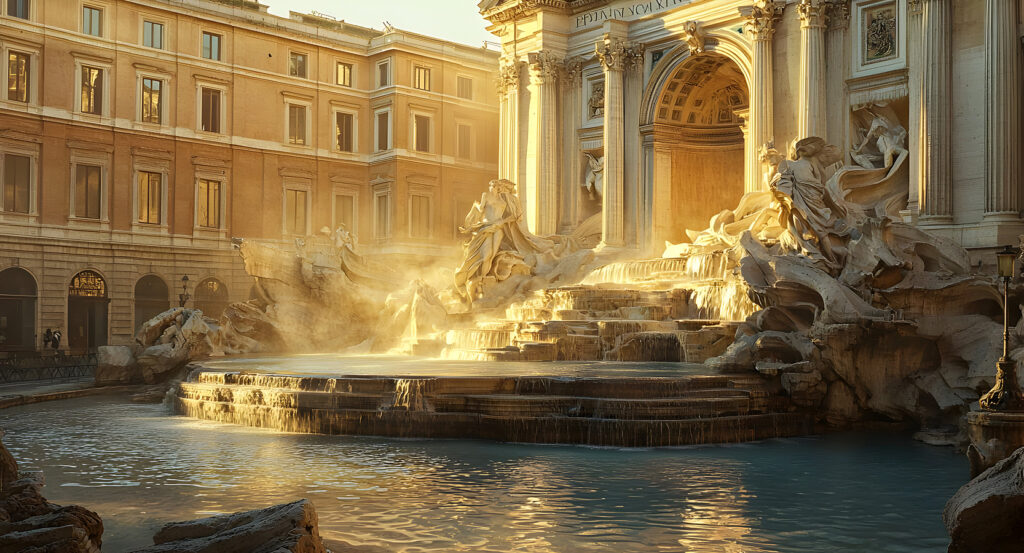
Its grand arches and Corinthian pilasters frame the Fontana di Trevi like a stage curtain drawn open for eternity. Rising in pale travertine above the cascading water, the palace lends balance, depth, and elegance to the roaring drama below. The symmetry is flawless: Oceanus at the center, flanked by niches and columns that rise in rhythm with the palace's windows and cornices. The design feels choreographed, a duet between stone and sculpture, building and fountain, harmony and grandeur. To stand before it is to watch Rome's genius at play, beauty not as excess, but as orchestration. Palazzo Poli elevates the chaos of water into the calm majesty of form.
What defines Palazzo Poli.
Originally built in the late 16th century, the Palazzo Poli became the foundation for Nicola Salvi's vision of the Trevi Fountain, both literally and artistically.
The palace's rear wall serves as the fountain's backdrop, anchoring its Baroque theatrics in Renaissance proportion. Salvi collaborated with the sculptor Pietro Bracci and later Giuseppe Pannini to merge the two structures into a single composition, a feat of integration rarely achieved in urban design. The palace's architecture, with its balanced windows and robust cornices, provides visual stability to the dynamic sculptures below. Above the central arch, the papal coat of arms of Pope Clement XII presides over the entire scene, symbolizing divine authority within earthly artistry. Few visitors realize that inside Palazzo Poli lies the Istituto Nazionale per la Grafica - Italy's National Institute of Graphic Arts, where centuries of engravings and prints preserve the country's artistic lineage. From its windows once hung banners celebrating papal decrees and victories, turning the façade into a living canvas of civic pride. Palazzo Poli stands as a reminder that Baroque Rome was as much about composition as it was about splendor, architecture conducting emotion like a symphony.
How Palazzo Poli fits.
When visiting the Fontana di Trevi, take a step back, as far as the piazza allows, to see how Palazzo Poli frames the entire masterpiece.
Observe how the fountain's vertical energy rises naturally into the palace's façade, uniting motion and stillness. Visit in the late afternoon when sunlight brushes the upper windows, turning the stone honey-gold and the fountain below a deeper turquoise. At night, the building's pale exterior glows softly under spotlights, echoing the rhythm of the water below, an architectural lullaby in the heart of the city. If you circle behind the fountain, you can glimpse the quieter side of the palazzo along Via della Stamperia, its stately restraint contrasting the exuberance of its famous face. Take a few minutes to simply absorb the symmetry, every column, arch, and niche perfectly in tune with the melody of water. Palazzo Poli captures Rome's grace: timeless, balanced, and forever poised between art and architecture.
Where your story begins.
Foresyte Travel reveals places that feel extraordinary long before you arrive.
Enjoy editorial crafted for luxury travelers.
Foresyte may earn a commission when you book.