
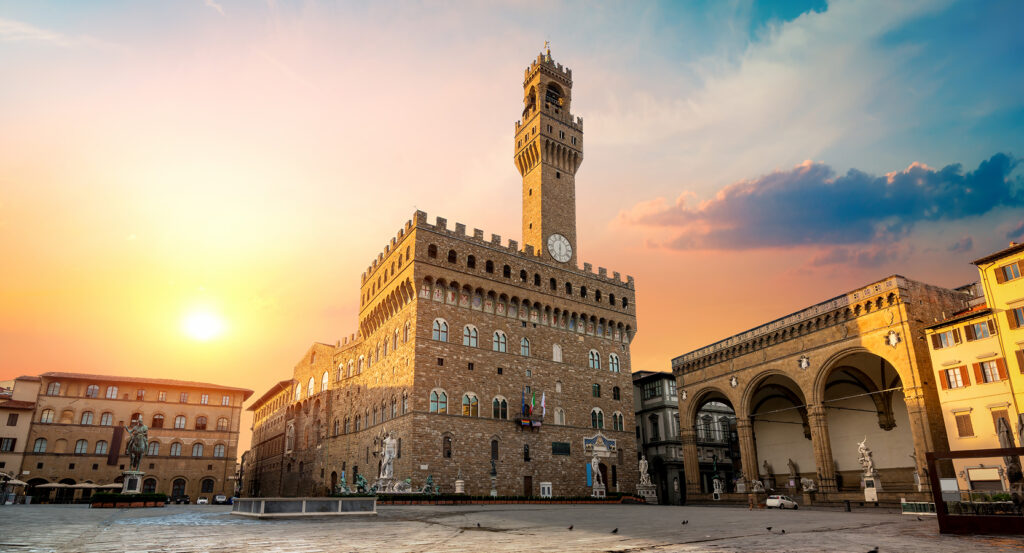
Why you should experience Cappella di Eleonora in Florence, Italy.
Cappella di Eleonora at Palazzo Vecchio in Florence are the palace's most intimate expression of Renaissance grace, a private refuge carved within a fortress of power.
Created for Eleonora di Toledo, the Spanish-born wife of Duke Cosimo I de' Medici, these rooms stand as a tribute to her influence, taste, and quiet strength. Passing from the grand public halls into her private suite feels like crossing into another world: frescoed walls adorned with mythological and biblical scenes, gilded ceilings shimmering in candlelight, and chambers that breathe with domestic elegance. The apartments were designed to provide both comfort and serenity, a sanctuary for a woman who, though at the center of Florentine politics, longed for balance between grandeur and grace. Each room unfolds with distinct personality: the Chapel of Eleonora, painted by Agnolo Bronzino in dazzling hues of lapis and gold, glows with divine intimacy; her audience chamber radiates refinement with allegories of virtue and feminine wisdom. Together, they form a portrait not just of a duchess, but of a dynasty built upon intellect, piety, and beauty.
What you should know about Cappella di Eleonora.
Behind their serenity, Cappella di Eleonora reveal the shifting politics and gender dynamics of Renaissance Florence.
When Cosimo I chose the Palazzo Vecchio as his ducal residence, he transformed what had been a civic fortress into a royal home, and Eleonora's suite played a vital role in that transformation. Located on the second floor, above the Hall of Five Hundred, her rooms offered privacy and autonomy in a court otherwise dominated by men. The apartments were designed by Giorgio Vasari, who filled them with frescoes rich in allegory: depictions of strong biblical women like Esther and Abigail reflected Eleonora's moral authority and wisdom, while mythological figures such as Minerva and Prudence symbolized her intellect. The private chapel, among Florence's local favorites, is Bronzino's masterpiece, its vaults and altarpiece glowing with the divine radiance of Renaissance color. Few realize that Eleonora managed much of the Medici family's estates and financial affairs from within these walls, wielding a quiet but profound influence over Tuscan governance. Even her choice of iconography, emphasizing virtue, faith, and resilience, served as subtle political messaging in an age when women's power had to speak through art.
How to fold Cappella di Eleonora into your trip.
Exploring Cappella di Eleonora is among the most rewarding and contemplative experiences inside the Palazzo Vecchio, a journey into the private heart of Medici life.
After visiting the Hall of Five Hundred and the grand civic chambers, ascend to the upper floors where the atmosphere shifts from public to personal. Step first into the Chapel of Eleonora and let Bronzino's frescoes envelop you, their vivid blues and golds glowing softly in the filtered light. Spend time tracing the scenes of the Old and New Testament, noticing how each figure radiates serenity and strength. Move through the adjoining rooms slowly; look up at the intricate ceilings, where Vasari's gilded designs frame allegories of divine and earthly wisdom. If you listen closely, you can almost hear the hush of courtly life that once filled these halls, the echo of silk gowns, whispered counsel, and quiet devotion. Visit early in the day to appreciate the tranquility before larger tours arrive, or near closing hours, when the light dims and the frescoes seem to deepen in tone. Cappella di Eleonora at Palazzo Vecchio in Florence offer a rare perspective, not of rulers or warriors, but of the quiet brilliance of a woman who helped shape the Renaissance from behind closed doors.
Where your story begins.
Foresyte Travel reveals places that feel extraordinary long before you arrive.
Experience premium editorial crafted for luxury travelers.




















































































































