Why Studiolo of Francesco I matters.
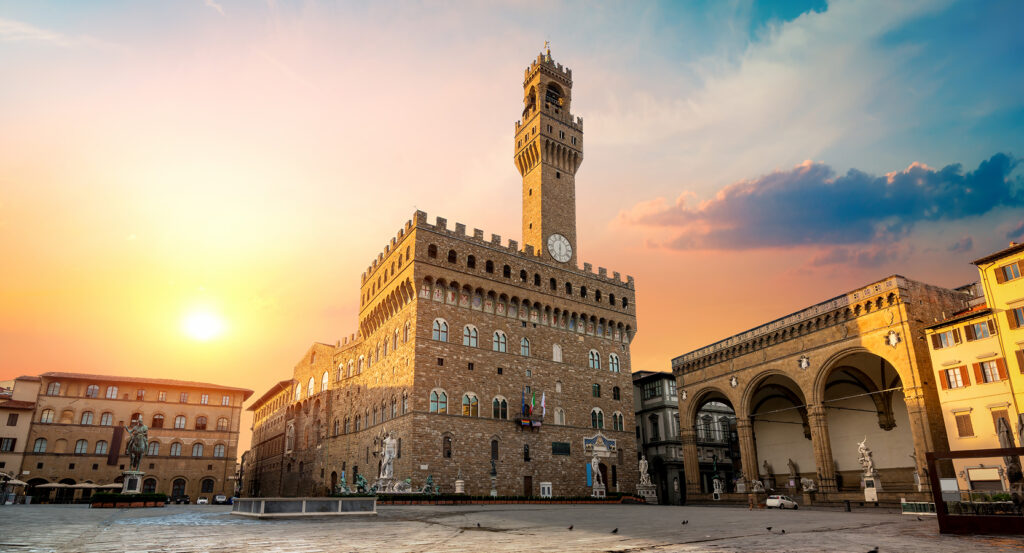
The Studiolo of Francesco I at the Palazzo Vecchio in Florence is a hidden world, a jewel-box chamber where art, alchemy, and philosophy fuse into one of the Renaissance's most intimate creations.
Tucked behind the Hall of Five Hundred, this small, windowless room glimmers with mystery. Every inch of its surface, from walls to ceiling, is covered with paintings and gilded panels that seem to breathe with symbolism. The room was conceived in the 1570s for Grand Duke Francesco I de' Medici, a man consumed by curiosity and obsessed with the unity of nature, science, and art. His studiolo served as both a laboratory and a sanctuary, where he could study minerals, conduct alchemical experiments, and contemplate the order of the universe. Each painting represents an element or transformation, fire, air, water, earth, rendered by the greatest artists of the day. The effect is hypnotic: a cosmos condensed into a single room, where mythological figures and natural forces swirl together in perpetual dialogue. Step inside, and the world beyond seems to vanish.
What defines Studiolo of Francesco I.
The Studiolo was among the first “modern museums”, a microcosm of the Medici worldview where knowledge, beauty, and secrecy intertwined.
Designed by Giorgio Vasari and Vincenzo Borghini, it brought together painters like Alessandro Allori, Jacopo Zucchi, and Santi di Tito, who filled its panels with allegories linking the physical and metaphysical worlds. The architecture itself mirrors the mind of its patron: a perfect cube of balance and symmetry, its corners representing the four elements and its ceiling adorned with celestial imagery. Behind each painted panel hides a cabinet once filled with rare minerals, scientific instruments, and exotic curiosities from across the globe, a literal cabinet of wonders. One of its secret doors leads directly to the Duke's private chambers, allowing him to enter unseen from the Hall of Five Hundred. Francesco I's fascination with alchemy wasn't superstition but philosophy, an early attempt to reconcile matter and spirit, science and soul. The Studiolo fell into neglect after his death, its treasures scattered, but 20th-century restorations returned it to its dazzling unity, revealing a Renaissance mind made visible. Few visitors realize that every painting conceals a compartment, and every compartment once held the ingredients of creation itself.
How Studiolo of Francesco I fits.
The Studiolo of Francesco I is among the most transporting spaces in Florence, a room that rewards patience and wonder.
When visiting the Palazzo Vecchio, approach it after exploring the vast Hall of Five Hundred; the contrast between the grand and the miniature is breathtaking. Step inside quietly, the space is small, and its silence feels sacred. Move slowly around the room, letting your eyes trace the blend between paintings and bronze sculptures, each one designed to embody an element of the natural world. Look for The Forge of Vulcan by Vasari and The Origin of Coral by Allori, masterpieces that link myth to material transformation. Guided tours often reveal the hidden doors and the concealed drawers behind the panels, remnants of Francesco's secret experiments and collections. Visit in the late afternoon when the museum is calm, and the dim lighting enhances the sense of enclosure, a Renaissance mind preserved in amber. The Studiolo of Francesco I at the Palazzo Vecchio in Florence isn't merely a curiosity; it's the heartbeat of Medici intellect, a private universe where imagination, discovery, and desire became one.
Where your story begins.
Foresyte Travel reveals places that feel extraordinary long before you arrive.
Enjoy editorial crafted for luxury travelers.
Foresyte may earn a commission when you book.