Why Passetto di Borgo matters.
Passetto di Borgo is a historic fortified passageway where Vatican City's papal security infrastructure, Renaissance-era defensive engineering, Borgo's layered urban fabric, and centuries of papal intrigue converge along one of Rome's most secretive architectural corridors.
Set between Vatican City and Castel Sant'Angelo near Via dei Corridori and just steps from St. Peter's Square, this elevated, enclosed corridor runs along the Leonine Wall, forming a concealed escape route historically used by popes during periods of political instability, siege, and internal unrest. The structure blends medieval fortification, Renaissance modification, and later restoration efforts, creating a continuous architectural thread that links the Apostolic Palace directly to a fortified refuge across the Tiber. Its brick arcades, narrow covered walkway, and elevated parapet geometry reflect both military necessity and ceremonial symbolism within the Vatican's evolving defensive system. The result is a destination defined by papal history, strategic architecture, and one of the most enigmatic passageways in Rome.
What defines Passetto di Borgo.
Passetto di Borgo is best known for being constructed in the 13th century as a fortified elevated corridor connecting the Vatican Palace to Castel Sant'Angelo, originally integrated into the Leonine Walls under Pope Nicholas III and later reinforced by successive popes to serve as an emergency escape route during invasions and political crises in Rome. The passage gained historical significance during events such as the 1527 Sack of Rome, when Pope Clement VII used the corridor to flee from advancing Imperial troops, solidifying its role as a functional instrument of papal survival and strategic retreat within the fortified Vatican landscape.
Over centuries, the structure underwent multiple phases of reinforcement, including Renaissance-era strengthening under Popes Alexander VI and Leo X, incorporating thicker masonry, improved defensive walkways, and enhanced connectivity to Castel Sant'Angelo's fortified bastions. In modern times, sections of the Passetto have been restored and opened for guided visits, revealing the elevated walkway's defensive slits, brick vaulting, and integrated surveillance points that once allowed guards to monitor the surrounding Borgo district. Today, it stands as one of the most intact surviving examples of a papal escape corridor, preserving a rare architectural narrative of secrecy, power, and fortified urban design.
How Passetto di Borgo fits.
Passetto di Borgo works as part of a Vatican and Castel Sant'Angelo walking route that explores Rome's layered religious, military, and architectural history.
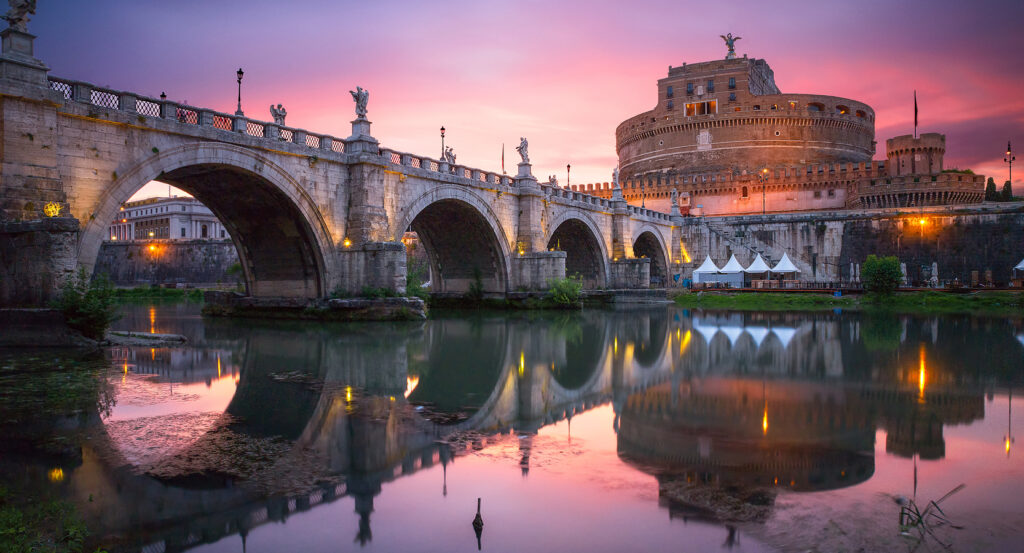
Begin at St. Peter's Square, where Bernini's expansive colonnades establish the ceremonial heart of Vatican City before moving toward the Leonine Wall to trace the exterior alignment of the Passetto di Borgo. Continue along guided access sections of the elevated corridor, where fortified brickwork and narrow passage geometry reveal its historical function as a secure papal escape route. Proceed to Castel Sant'Angelo, where imperial tomb, fortress, and papal residence converge in one of Rome's most complex historic structures. Conclude along the Ponte Sant'Angelo, where Baroque angel sculptures frame sweeping views of the Tiber and Vatican skyline. The progression moves naturally from sacred civic space to concealed defensive architecture to expansive fortress to riverside promenade, revealing why Passetto di Borgo remains one of Rome's most compelling hidden corridors.
Where your story begins.
Foresyte Travel reveals places that feel extraordinary long before you arrive.
Enjoy editorial crafted for luxury travelers.
Foresyte may earn a commission when you book.