Why you should experience Passetto di Borgo in Rome, Italy.
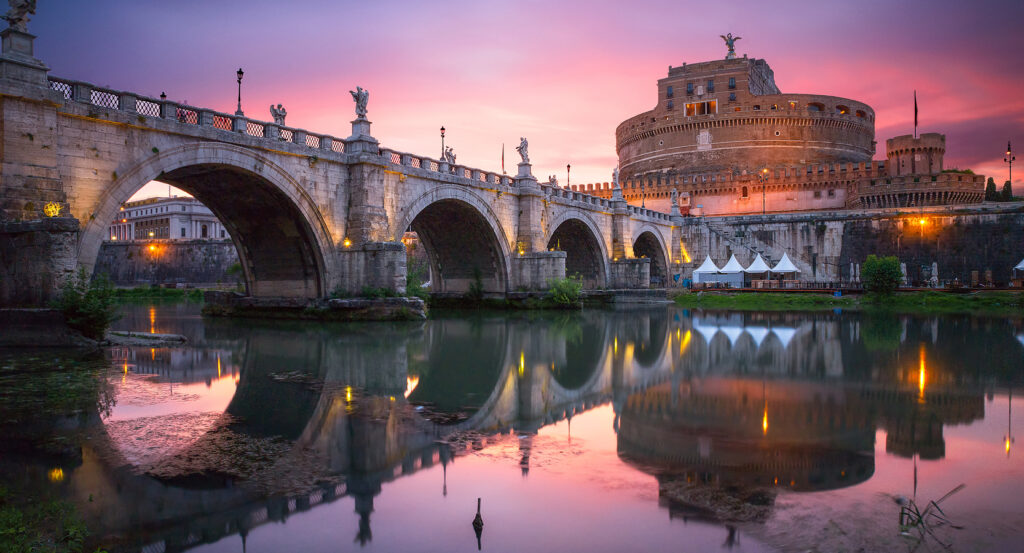
The Passetto di Borgo is Rome's most secret thread, a narrow, elevated artery of stone that binds the Vatican to Castel Sant'Angelo in silent conspiracy.
Stretching roughly 800 meters above the Borgo district, this fortified passageway feels like time carved into architecture: austere, shadowed, yet pulsing with hidden life. Built in 1277 under Pope Nicholas III, the Passetto was conceived not for grandeur but for survival, a private escape route ensuring that no pope would ever be trapped by turmoil again. Its rough brick walls still breathe the weight of centuries: footsteps of fleeing pontiffs during sieges, whispers of guards pacing beneath moonlight, the hum of rain against old mortar. From within, it's narrow and confining, a spine of stone with glimpses of sky through small slit windows, yet from above, it's a miracle of design, suspended between sanctity and strategy. To walk it is to feel history's pulse quicken beneath your feet, as if the walls themselves remember the urgency of escape.
What you didn't know about Passetto di Borgo.
What most visitors don't realize is that the Passetto di Borgo is both an architectural marvel and a spiritual metaphor, a bridge between power and vulnerability.
Popes used it not only as a lifeline, but as a symbol of divine protection. During the 1527 Sack of Rome, Clement VII fled through the passage as mercenaries ravaged the city, his crimson robes gathering dust while cannon fire echoed outside. Centuries later, the corridor would become myth, a whisper of papal mystery immortalized in novels and films. Yet its true genius lies in its simplicity: elevated for security, enclosed for secrecy, aligned perfectly between fortress and faith. Its construction followed the ancient Roman logic of continuity, recycling walls from Hadrian's era, weaving pagan stone into Christian sanctuary. Even today, its restoration reveals graffiti, candle soot, and the fingerprints of centuries. The Passetto isn't merely an escape route; it's Rome distilled, a city that never demolishes its past, only hides it in plain sight.
How to fold Passetto di Borgo into your trip.
To fold the Passetto di Borgo into your Roman itinerary, approach it as a pilgrimage through power's quiet corridors.
Though access is limited to guided visits, its path can still be traced from the outside. Begin near the Vatican walls at the Porta Sant'Anna, and follow the line of ancient brick as it winds toward the towering bulk of Castel Sant'Angelo. Imagine the urgency of that secret flight in 1527, the echo of armored boots, the breathless ascent from sanctuary to safety. Visit at golden hour, when the evening light clings to the walls and shadows stretch across the cobblestones of Borgo Pio, and you'll see the Passetto as it was meant to be seen: half in light, half in mystery. When you reach the Castel's entrance, ascend to the Terrace of the Angel to complete the story, the journey from fear to salvation. Stand beneath the bronze wings above and look back toward the Vatican's dome, and you'll understand the Passetto's true poetry: faith fortified by the will to endure.
Where your story begins.
Start your planning journey with Foresyte Travel.
Experience immersive stories crafted for luxury travelers.