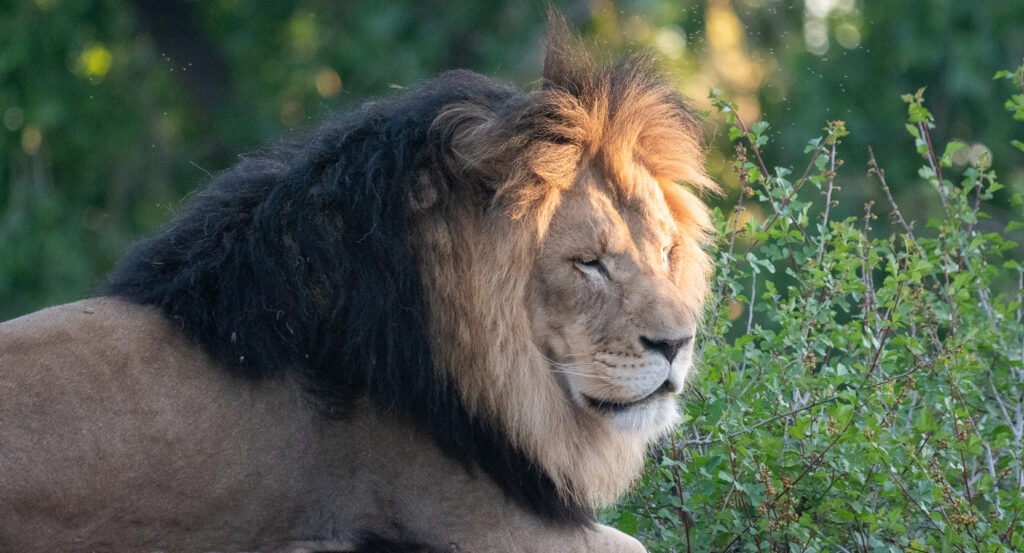
Why Predator Ridge at Denver Zoo matters.
Predator Ridge at Denver Zoo is a revolutionary wildlife habitat where City Park's conservation leadership, African biodiversity, behavioral science, and immersive exhibit design transformed the future of modern zoological parks.
Set near the zoo's main entrance along 23rd Avenue near Steele Street and just steps from Harmony Hill, this award-winning African savanna transports visitors through rugged kopjes, acacia-inspired landscapes, winding trails, and immersive viewing areas where African lions and spotted hyenas rotate through expansive shared territories modeled after Kenya's Samburu National Reserve. Thoughtfully designed landscapes, intimate viewing opportunities at Pahali ya Simba, and continually changing animal rotations create an experience that feels remarkably dynamic, revealing how cutting-edge behavioral science can fundamentally reshape wildlife care. The result is a destination defined by conservation innovation, immersive storytelling, and one of the world's most influential predator habitats.
What defines Predator Ridge at Denver Zoo.
Predator Ridge at Denver Zoo is best known for opening on June 22, 2004 as the centerpiece of Denver Zoo's $125 million Millennium Master Plan, pioneering the world's first large-scale rotational predator habitat and establishing a new international benchmark for activity-based zoological exhibit design. Developed through a $27 million investment across an 8.5-acre complex that also introduced the zoo's new entrance, the exhibit faithfully recreates Kenya's Samburu National Reserve while allowing African lions and spotted hyenas to rotate through multiple expansive habitats. Instead of direct interaction, each species encounters scent markings, vocalizations, and environmental changes left behind by the other, stimulating territorial instincts, exploration, investigation, and complex natural behaviors that closely mirror conditions in the wild. The project introduced the immersive Pahali ya Simba interpretive center, authentic East African architectural detailing, elevated keeper demonstration areas, sophisticated behind-the-scenes animal management facilities, and flexible holding systems supporting breeding, veterinary care, and behavioral research. Predator Ridge's groundbreaking rotational philosophy quickly became an international model adopted by accredited zoological institutions worldwide while directly inspiring Denver Zoo Conservation Alliance's later Toyota Elephant Passage, which expanded the same principles across an even larger multi-species conservation landscape. Today the habitat remains one of the zoo's defining achievements, illustrating how landscape architecture, conservation science, environmental enrichment, and innovative engineering can dramatically improve both animal welfare and public understanding of Africa's apex predators.
The defining quality of Predator Ridge lies in its complete reimagining of carnivore habitat design through behavioral science. Every rotating landscape, scent-enriched environment, elevated overlook, and carefully orchestrated management system demonstrates how thoughtful innovation can encourage natural behaviors while creating a more immersive visitor experience. More than two decades after opening, Predator Ridge continues influencing zoological institutions around the world, reinforcing Denver Zoo Conservation Alliance's reputation as a global leader in conservation, exhibit innovation, and progressive animal care.
How Predator Ridge at Denver Zoo fits.
Predator Ridge at Denver Zoo works as the wildlife centerpiece of an exploration through Denver Zoo Conservation Alliance's most innovative habitats.
Begin at Harmony Hill, where rescued grizzly bears introduce modern wildlife conservation before entering Predator Ridge to experience one of the world's most influential carnivore habitats. Continue to Toyota Elephant Passage, whose internationally acclaimed rotational habitat system expands upon the pioneering concepts first introduced at Predator Ridge while showcasing Asian elephants, greater one-horned rhinoceroses, and other endangered species. Conclude at Pachyderm Habitat, where Nile hippopotamuses and critically endangered black rhinoceroses reveal another chapter in Denver Zoo Conservation Alliance's remarkable evolution of habitat design and animal welfare. The progression moves naturally from North American wildlife conservation to groundbreaking African predator management before concluding among iconic megafauna habitats, revealing how Denver Zoo Conservation Alliance has continually advanced the global standard for immersive wildlife experiences.
Where your story begins.
Foresyte Travel reveals places that feel extraordinary long before you arrive.
Enjoy editorial crafted for luxury travelers.
Foresyte may earn a commission when you book.