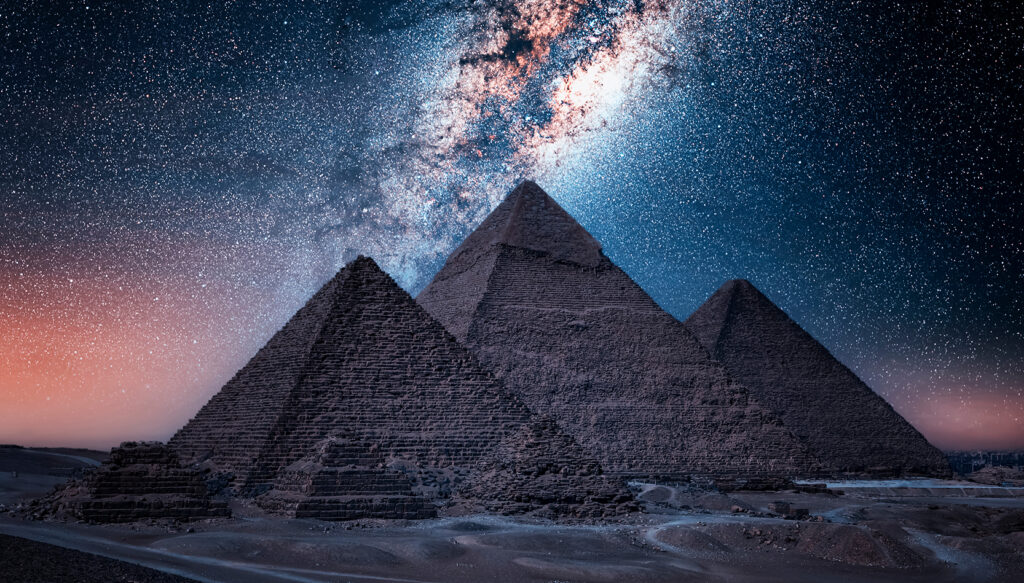
Why you should experience Pyramid of Khafre in Giza, Egypt.
Pyramid of Khafre is the Giza Plateau at its most commanding, where power meets perfection, and the desert bows in silence.
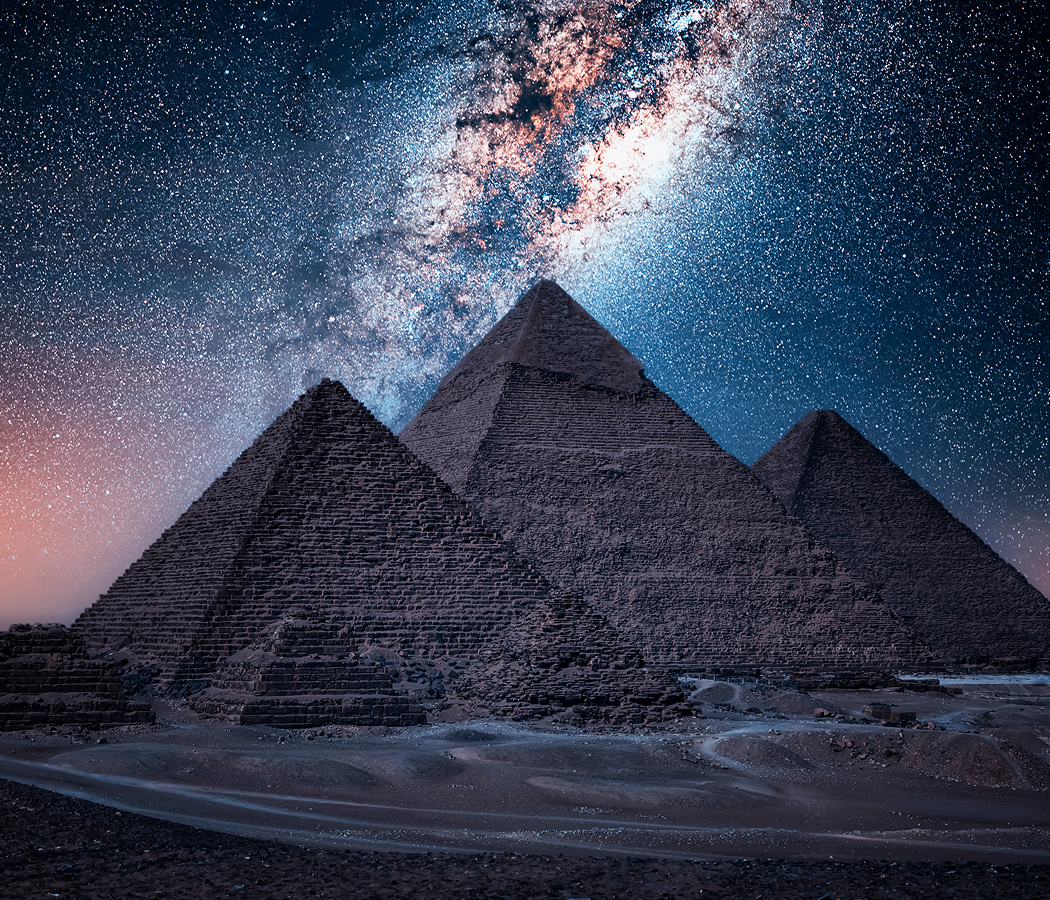
Slightly smaller than its renowned neighbor, Great Pyramid of Khufu, Khafre's monument appears taller from many angles, a trick of elevation and proportion that reveals the Pharaoh's subtle genius. Its summit still gleams with a remnant of the original white limestone casing, a ghost of the brilliance that once made the entire pyramid shine like sunlight captured in stone. Beneath that glow lies a design of unshakable balance, massive, geometric, and unyielding to time. From a distance, it stands as the anchor of Giza's skyline; up close, it commands reverence. The surrounding air hums with stillness, broken only by the soft scrape of sand against your shoes and the occasional cry of a falcon overhead. This is not just a structure, it's a presence, a royal echo cast in stone, built for a Pharaoh who understood that eternity demanded elegance as much as enormity.
What you should know about Pyramid of Khafre.
Pyramid of Khafre, built around 2520 BCE, was the second pyramid constructed on the Giza Plateau and remains one of the best-preserved examples of ancient Egyptian architecture.
It was commissioned by Pharaoh Khafre, son of Khufu and successor to the throne, during Egypt's Fourth Dynasty. Standing originally at 143.5 meters (471 feet), the pyramid's peak still retains a section of its polished limestone casing, offering a glimpse of how all three Giza pyramids would have once blazed white under the desert sun. Unlike Khufu's pyramid, Khafre's design includes an intricate complex at its base: temples, causeways, and the colossal Great Sphinx, which many scholars believe was modeled after Khafre himself. The pyramid's alignment is exact, its sides oriented with near-perfect precision to the cardinal points. Inside, the passageway descends to a granite burial chamber still lined with massive blocks, where Khafre's red granite sarcophagus once rested. Archaeological findings indicate that Khafre's funerary complex was among the first to introduce a full ceremonial layout, combining pyramid, mortuary temple, and valley temple in a symbolic journey from death to rebirth. The mortuary temple, remarkably preserved, still bears traces of the original alabaster flooring and basalt paving. It's thought that royal priests maintained rituals here for centuries after Khafre's reign, ensuring the Pharaoh's ka, his spirit, remained eternally sustained. Even the plateau's geography was chosen with intent: Khafre's pyramid sits slightly higher on bedrock than Khufu's, creating the illusion of equal height. In that small but brilliant manipulation lies a glimpse into the mind of a ruler who understood both the mathematics of power and the art of perception.
How to fold Pyramid of Khafre into your trip.
Visiting Pyramid of Khafre is a journey through precision, scale, and the quiet theater of eternity.
Start the exploration of the Giza Plateau at the Khafre Valley Temple, located near the base of the Great Sphinx. This is where Khafre's funerary procession would have begun, a space of dark granite walls and grand pillars that feel almost modern in their simplicity. From there, follow the ancient causeway upward toward the pyramid itself, passing through the remnants of offering chambers and ceremonial courtyards. Entry inside the pyramid requires a separate ticket, available on-site; the interior is less steep than Khufu's but no less powerful, its narrow corridors leading to a single vaulted chamber cut deep into the rock. Bring a flashlight or use your phone for soft illumination, the walls are bare, yet their silence feels alive. Outside, circle the base to fully grasp the pyramid's geometry; its northern side provides the best vantage point for photography, especially when framed with the Sphinx in the distance. Visit early morning or late afternoon to avoid the midday heat and crowds, this is when the desert light softens, revealing the pyramid's contours in gold and shadow. If you're visiting independently, hire a licensed local guide at the entrance to share the historical and astronomical context often missed in standard tours. For an unforgettable close, walk a short distance west to the Panoramic Point, where all three pyramids align against the desert horizon, a view that compresses 4,500 years of human achievement into a single, breathtaking line. Pyramid of Khafre at Giza is not just the echo of a dynasty, it's the example of balance, where design, illusion, and immortality converge beneath the unending Egyptian sky.
Where your story begins.
Foresyte Travel reveals places that feel extraordinary long before you arrive.
Experience premium editorial crafted for luxury travelers.