Why you should experience Tomb of Mereruka in Saqqara, Egypt.
Tomb of Mereruka in Saqqara is where stone begins to speak, not of gods or kings, but of life itself.
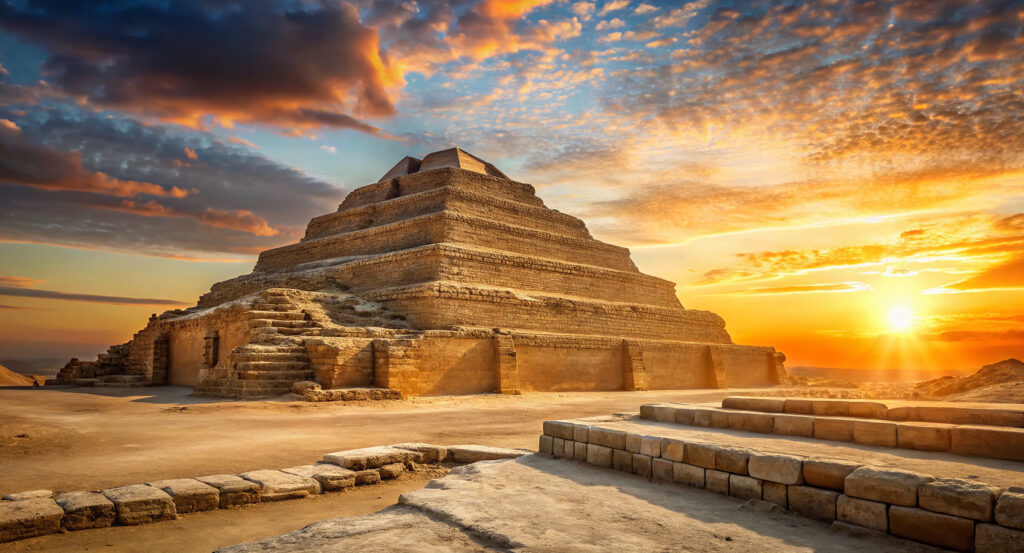
Hidden within the sands of Saqqara, just north of the Pyramid of Djoser, this mastaba is the grandest and most beautifully preserved non-royal tomb in all of Egypt. Where pyramids glorify eternity, Mereruka's tomb glorifies the everyday, love, labor, and legacy. As you enter its narrow passage, light flickers across walls carved over 4,300 years ago, scenes of fishermen casting nets, craftsmen shaping furniture, dancers moving in celebration. Mereruka, vizier and son-in-law to Pharaoh Teti, had his life immortalized not as myth but as memory, a tribute to how ancient Egyptians saw beauty in the rhythm of existence. The artistry here feels startlingly alive; every relief hums with vitality, every color whispering from the limestone like breath returning to the body. Tomb of Mereruka is not merely a burial place, it's a mirror of humanity, captured forever in the language of light and stone.
What you should know about Tomb of Mereruka.
Tomb of Mereruka, dating from Egypt's Sixth Dynasty (circa 2345 BCE), is the largest and most elaborate mastaba in the Saqqara Necropolis, containing 32 rooms divided between Mereruka, his wife Seshseshet Waatetkhethor (a daughter of Pharaoh Teti), and their son.
Mereruka served as Vizier, Chief Justice, and Overseer of Royal Works, roles that made him one of the most powerful men of his time. His tomb reflects that stature with architectural complexity rivaling royal burial sites. The outer chambers depict the daily life of the elite in astonishing detail: sculptors carving statues, scribes counting livestock, and Mereruka inspecting artisans at work, scenes so intricate they preserve the gestures of individual hands. In one chamber, he is shown hunting hippos in the Nile marshes, a symbolic act of triumph over chaos. In another, musicians and dancers perform in honor of his household gods. Traces of the original pigments, reds, blues, and ochres, still cling to the limestone, their vibrancy defying centuries of silence. The inner sanctuary houses a false door stela, believed to serve as a spiritual portal through which Mereruka's ka (spirit) could receive offerings. His sarcophagus, carved from a single block of limestone, remains in situ beneath a painted ceiling once dotted with stars. Archaeologists discovered that the tomb's layout subtly aligns with solar patterns, its main corridor illuminated by morning light, symbolizing rebirth. Beyond its art and architecture, the tomb provides invaluable insight into Egypt's social order: the depiction of servants, farmers, and fishermen underscores how the vizier's afterlife depended on the same cycles of labor that sustained the living world. It is, in essence, a visual encyclopedia of Old Kingdom life, rendered with more empathy than grandeur.
How to fold Tomb of Mereruka into your trip.
Visiting Tomb of Mereruka is a journey into the heart of human expression, an intimate counterpoint to the grand scale of Egypt's pyramids.
Located within the Teti Pyramid complex at Saqqara, about 30 kilometers south of Cairo, the site is easily reached in 45 minutes by car, private guide, or tour from the city center. Entry is typically included in the Saqqara archaeological ticket, and the tomb's interior remains one of the most accessible and rewarding in the necropolis. Begin your visit with the Pyramid of Teti, whose entrance tunnel lies nearby, before walking the short sandy path leading to Mereruka's mastaba. Upon entering, allow your eyes to adjust to the dimness, the tomb is softly lit to preserve its pigments, and the reliefs unfold like a slow revelation. Take time to study the scenes: the hunting panels to the left, the workshops to the right, the banquet scenes tucked deeper within. Guides often point out a particularly moving relief, Mereruka embracing his wife, among the rare depictions of affection in Egyptian art. Continue to the inner chambers, where offerings were once laid daily by priests ensuring his ka remained nourished. The air is still cool, the silence thick with reverence. When you step back into the sunlight, you'll find yourself surrounded by the echoes of the necropolis, pyramids in the distance, wind stirring the sand, the feeling that you've just met someone from 23 centuries before Christ. Plan 30-45 minutes for the tomb itself, and another hour or two to explore the surrounding area, including the Tomb of Kagemni and Ti, which complement Mereruka's with their own glimpses of daily life. Tomb of Mereruka stands as a reminder that immortality in Egypt wasn't reserved for kings, it was crafted by those who understood that to live beautifully was to be remembered eternally.
Where your story begins.
Foresyte Travel reveals places that feel extraordinary long before you arrive.
Experience premium editorial crafted for luxury travelers.