Why Skull Creek Boathouse matters.
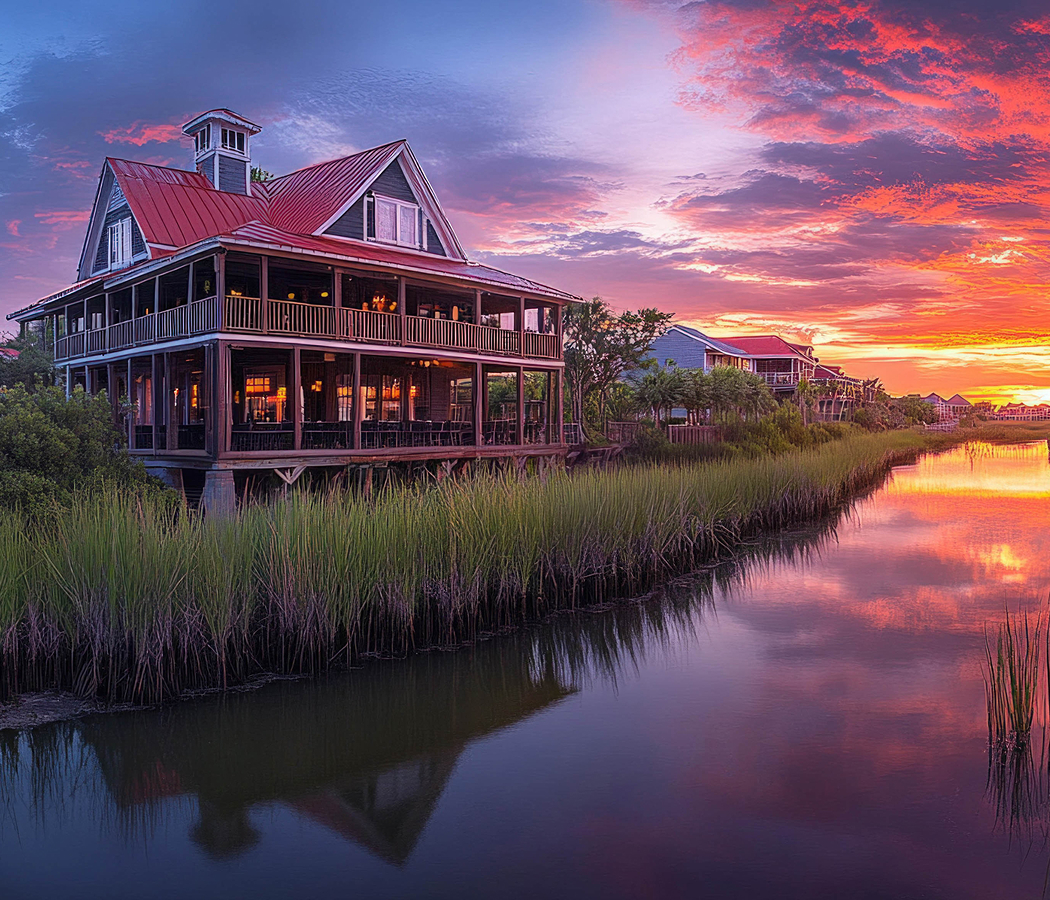
Skull Creek Boathouse is a waterfront seafood restaurant where Skull Creek's maritime character meets Steve Carb's long-held ambition for a restaurant directly on the water, Lowcountry cooking and a former boathouse recast around the creek itself.
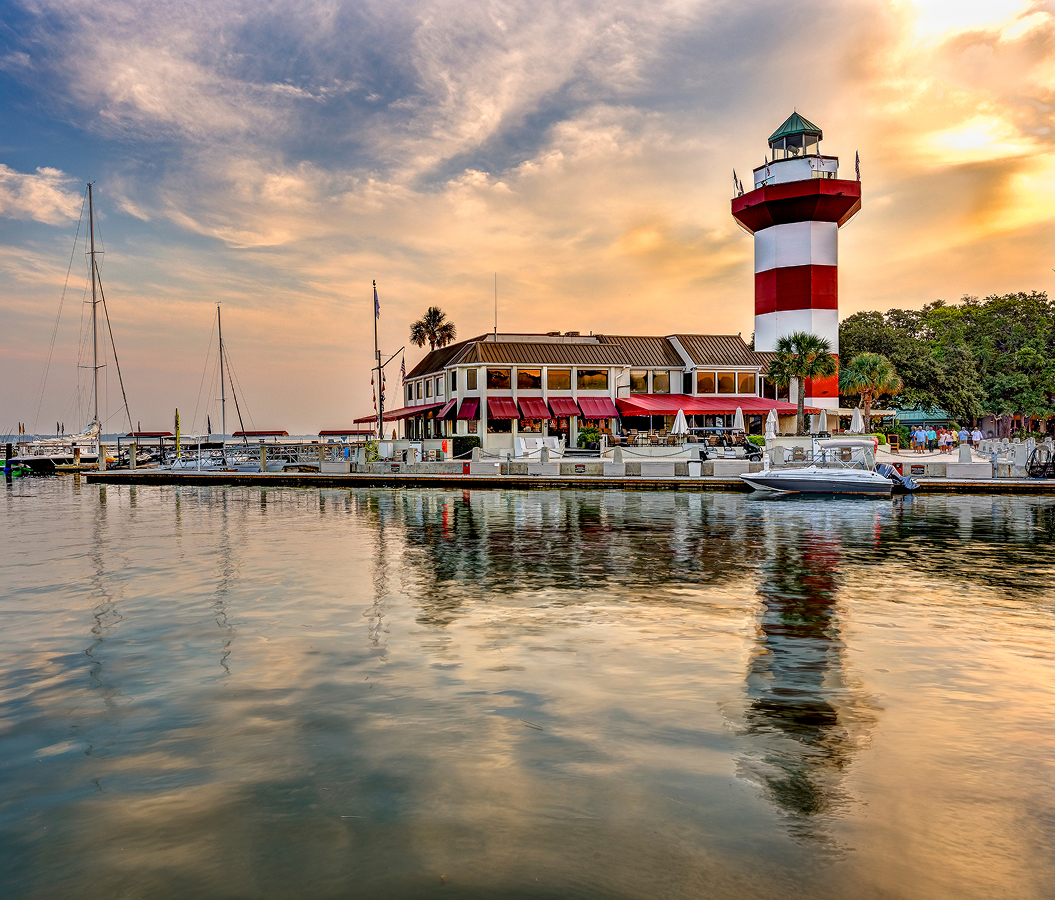
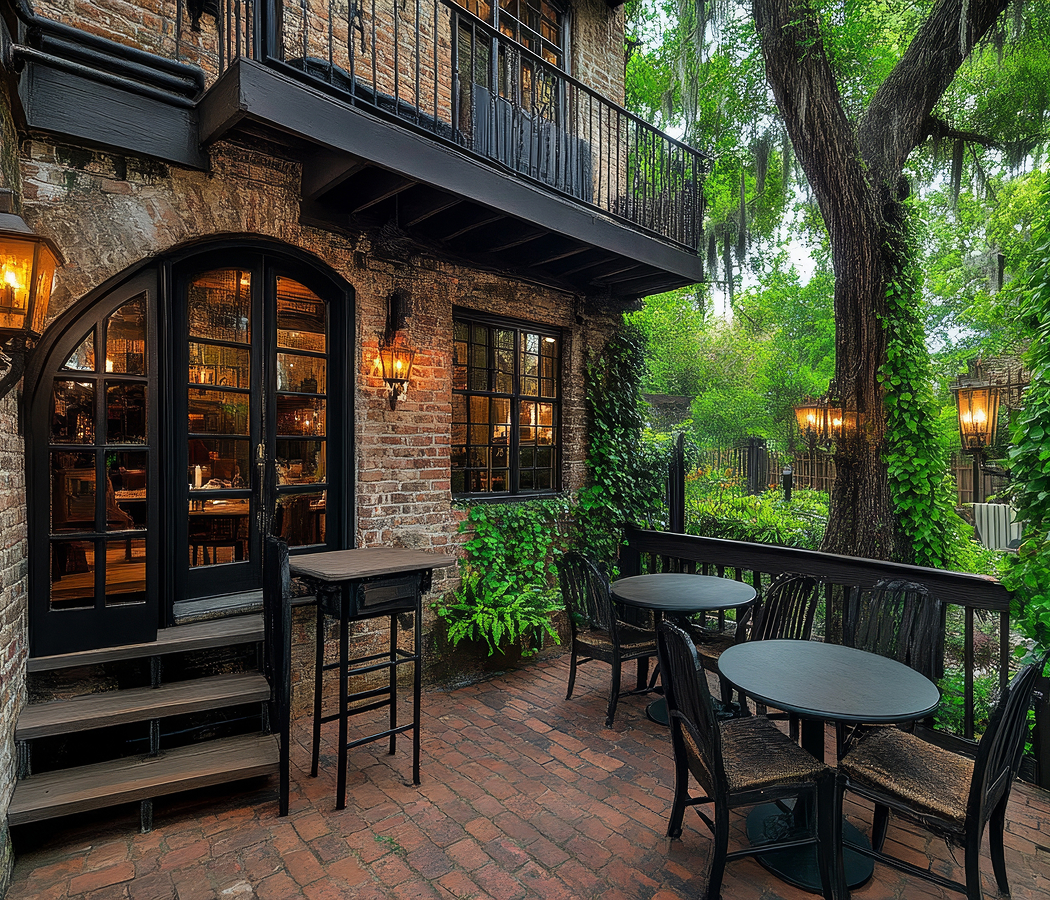
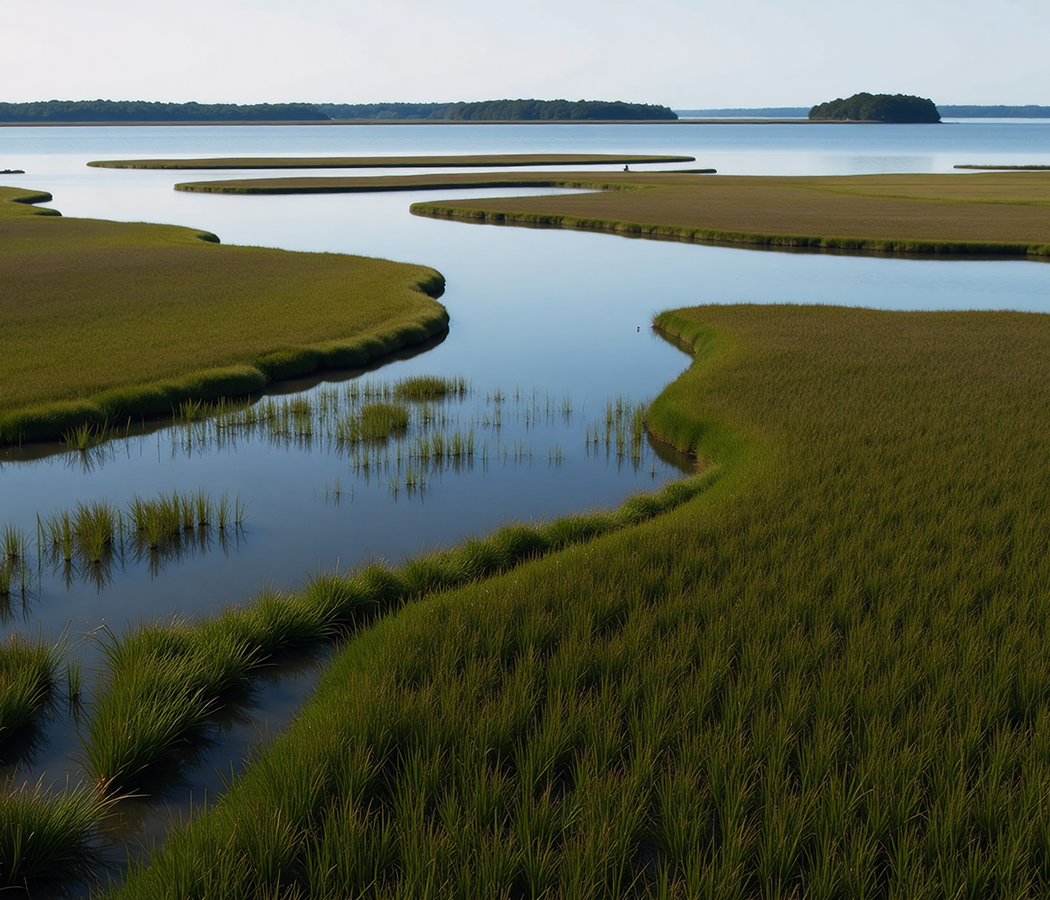
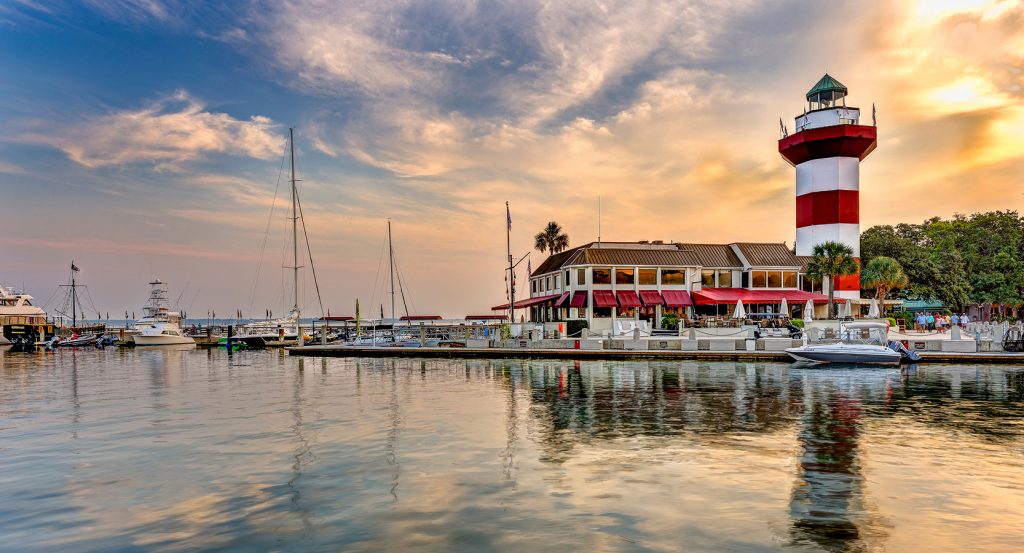
Set along Squire Pope Road near Skull Creek Drive and just steps from the working docks lining Skull Creek, the restaurant occupies Hilton Head's northwestern shoreline where tidal marsh, boating channels and Port Royal Sound define the horizon. A glass-walled dining room keeps the water visible from indoors, then broad exterior dining areas bring tables directly alongside the creek. Marker 13 Buoy Bar shifts the center of activity outdoors beside the water, with seasonal live music extending the property beyond conventional restaurant seating. Sunset Landing adds a waterfront pavilion to the complex, giving larger gatherings another direct relationship with the creek and its boat traffic. The result is a Skull Creek restaurant whose boathouse structure, docks, open-air bars and western exposure make the surrounding water an active component of the meal.
What defines Skull Creek Boathouse.
Skull Creek Boathouse is best known for the SERG Restaurant Group's 2009 acquisition and reinvention of an existing waterfront business that had operated first as Boathouse and later as Boathouse II. SERG purchased the property in November of that year, then renovated the former boathouse and reopened it in 2010 under the Skull Creek Boathouse name. The project fulfilled a specific ambition held by SERG leader Steve Carb, who had wanted a genuinely waterfront restaurant from the time he arrived on Hilton Head. That acquisition inserted the property into a locally built restaurant group whose development began with Giuseppi's Pizza & Pasta and subsequently expanded across Hilton Head through individually operated concepts including One Hot Mama's, Frankie Bones, Black Marlin Bayside Grill, WiseGuys and Poseidon. Skull Creek Boathouse developed its own format through the internal Dive Bar, combining sushi preparation with oysters, sashimi and ceviche inside a restaurant otherwise grounded in coastal Carolina cooking. National exposure followed through Food Network's Beach Eats USA, where chef Curtis Stone visited the restaurant and featured its fried green tomatoes with goat cheese; Food Network also singled out the Rainbow Rice Bowl and blackened catfish among the property's dishes. The restaurant later expanded its waterfront operation through Marker 13 Buoy Bar, Sunset Landing and an adjoining general store, turning the original SERG acquisition into a multi-part hospitality property organized around Skull Creek.
Local white shrimp provide one of the clearest Lowcountry threads through the cooking, appearing chilled with cocktail sauce or steamed in Boathouse spices before entering the Lowcountry Boil with smoked sausage, red-skin potatoes and corn. Carolina shrimp and grits take a richer direction through sautéed shrimp, smoked sausage, tasso ham gravy and South Carolina stone-ground grits. Blackened Carolina catfish combines Cajun seasoning with house-made pimento cheese, Savannah red rice and collard greens, bringing coastal fish into a distinctly Southern preparation. Raw seafood shifts to the Dive Bar, where bigeye tuna flown from Hawaii appears as carpaccio with soy vinaigrette, pepper-seared tataki with ponzu and poke with ginger, jalapeño, sesame oil and toasted macadamia nuts. Ceviche broadens the raw repertoire through fish, shrimp, calamari, conch, scallops, octopus, tuna or salmon paired with Tropical, Latin, Asian or Peruvian preparations, the latter using lime and aji amarillo. Fried green tomatoes introduce mild goat cheese, shrimp and five-pepper jelly, extending the dish featured during Curtis Stone's Food Network visit through sweetness, acidity, shellfish and crisp batter. Local shellfish, Southern smoke, stone-ground grits, raw-bar techniques and Pacific influences give the kitchen several distinct routes into seafood.
How Skull Creek Boathouse fits.
Skull Creek Boathouse works as the waterfront endpoint for a north-island outing tracing Hilton Head from Civil War fortification through the creation of a self-governed freedpeople's town and the military earthworks constructed to defend it.
Begin at Fort Mitchel, laid out on a bluff overlooking Skull Creek during late 1861 and early 1862 as part of Union defenses stretching across the northwestern portion of Hilton Head. General Thomas W. Sherman ordered the fortification system amid concern over Confederate attacks across Skull Creek from the mainland, and the earthwork later received the name of Major General Ormsby MacKnight Mitchel after his death from yellow fever in October 1862, linking the creek directly with the military occupation that transformed the island. Continue to Historic Mitchelville Freedom Park, where Ormsby Mitchel ordered construction of a town for formerly enslaved people in October 1862 after Union forces had captured Hilton Head the previous year. Residents built homes on laid-out lots, created their own government, enforced municipal rules and established compulsory schooling for children ages six through fifteen; by 1865 the population had reached 3,500, making Mitchelville an exceptional experiment in self-government during the transition from slavery to freedom. Conclude at Fort Howell, constructed from late August or early September through mid-October 1864 by soldiers including the 32nd United States Colored Infantry and 144th New York Infantry under engineering supervision led by Captain Patrick McGuire. The pentagonal earthwork was designed for as many as 27 artillery pieces and specifically protected Mitchelville, transforming the military defense of Hilton Head into physical protection for the freedpeople's community established two years earlier. The progression moves from Fort Mitchel's defense of Skull Creek through Mitchelville's creation of an autonomous freedpeople's community into Fort Howell's purpose-built protection of that settlement, connecting the north end of Hilton Head with a tightly linked sequence of Civil War occupation, emancipation and Black self-government.
Where your story begins.
Foresyte Travel reveals places that feel extraordinary long before you arrive.
Enjoy editorial crafted for luxury travelers.
Foresyte may earn a commission when you book.