
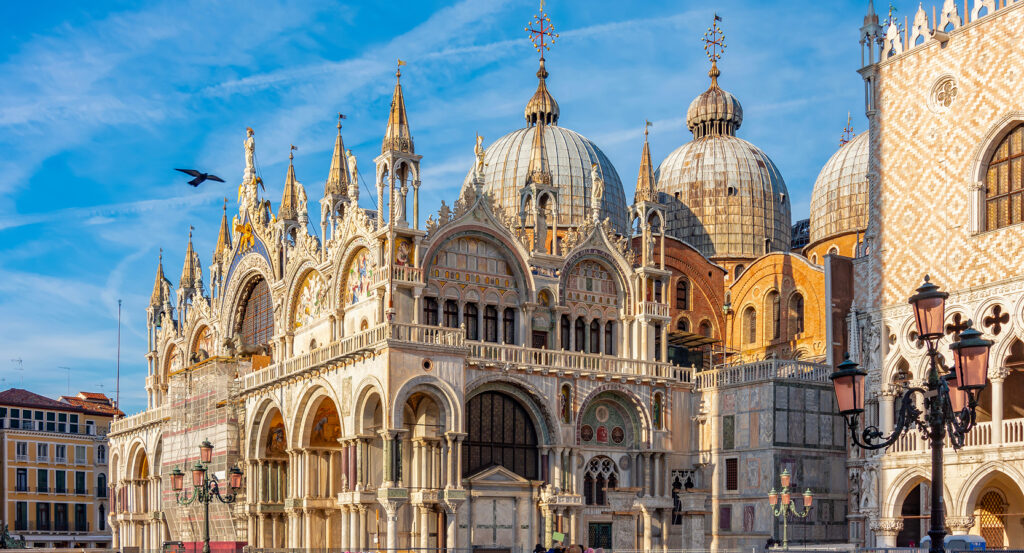
Why you should experience Treasury of St. Mark's Basilica in Venice, Italy.
The Treasury of St. Mark's is Venice's hidden sanctum, a chamber where faith, empire, and artistry converge in shimmering silence.
Step inside and the light changes instantly: dim, deliberate, almost sacred. Behind glass and gilded lattice, relics glow like embers, chalices of carved crystal, golden reliquaries shaped like miniature cathedrals, and Byzantine icons encrusted with jewels that still catch the same light that once danced across the Bosporus. This isn't a museum, it's a reliquary of civilization itself, a tribute to how Venice gathered the sacred from the farthest corners of the world and turned devotion into legacy. Every object here breathes history; every glint of gold carries the echo of sails and prayers.
What you should know about Treasury of St. Mark's Basilica.
The Treasury began as a guarded chamber for relics brought back from the East by Venetian merchants and crusaders.
Much of its collection arrived after the Fourth Crusade in 1204, when the armies of Venice and Constantinople collided in both faith and greed. What emerged from that collision was this, among the most extraordinary assemblages of sacred art outside the Byzantine world. Among its treasures are reliquaries said to contain fragments of the True Cross, the arm of St. George, and the mummified hand of St. Stephen. The chalices and patens, some of carved agate, others of emerald glass, are masterpieces of both Eastern and Western craftsmanship. The famed “Paten of Serres,” a gold plate inlaid with enamel scenes of Christ and the Apostles, represents the height of Byzantine enamel artistry. Even the display cases tell a story, they occupy the original treasury vault built within the basilica's south transept, a space that has survived fires, floods, and looting. During the Napoleonic occupation in 1797, French troops seized much of the treasury's gold, melting it for coin; what remains today was saved through quiet defiance and the Venetians' uncanny ability to hide what mattered most. Few visitors realize that the treasury's surviving collection is a fraction of what once existed, yet it still radiates the same timeless, weightless power.
How to fold Treasury of St. Mark's Basilica into your trip.
After exploring the basilica's main nave, turn toward the south transept, where a small doorway leads to the treasury's chamber.
Admission is separate, but the intimacy of the experience makes it essential. Move slowly, this is not a room to tour but to inhabit. The first impression is one of quiet astonishment: cases lined in velvet, glass shimmering in low light, and the faint scent of age in the air. Begin with the Byzantine pieces; their intricate enamels still pulse with color centuries later. Then linger before the reliquaries, whether or not you believe in the relics they hold, the craftsmanship commands reverence. The treasury's design encourages stillness; the longer you look, the more you see, reflections of gold on stone, halos of light around crystal. Visit early morning or late afternoon, when crowds thin and the air feels contemplative. When you emerge again into the basilica's golden nave, the mosaics above will seem even more radiant, their brilliance now contextualized by what lies below. The Treasury of St. Mark's isn't just a collection of sacred objects; it's Venice distilled, the city's faith, ambition, and artistry held in one small, eternal room.
Where your story begins.
Foresyte Travel reveals places that feel extraordinary long before you arrive.
Experience premium editorial crafted for luxury travelers.




















































































































