
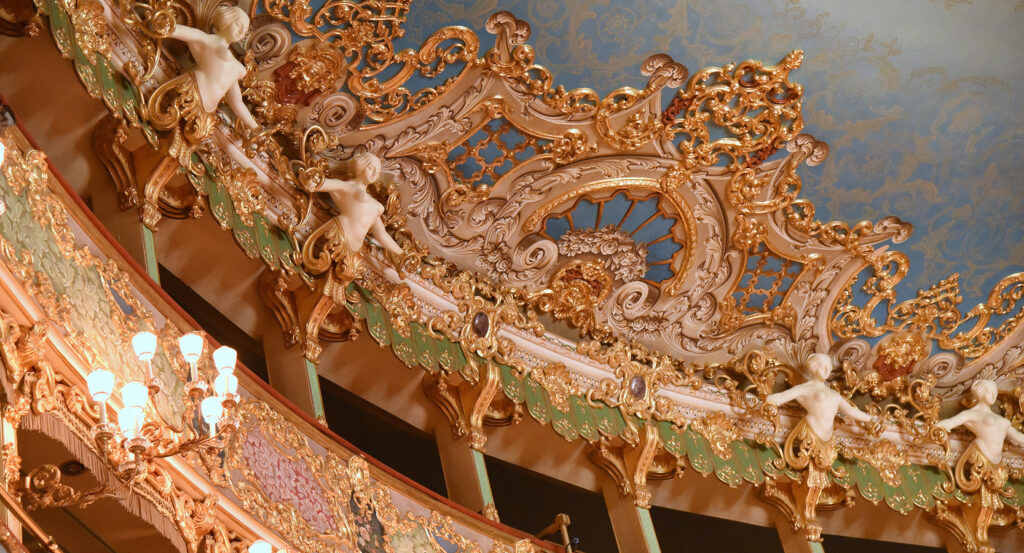
Why you should experience Royal Box at Teatro La Fenice in Venice, Italy.
The Royal Box is the crown of Teatro La Fenice, a private sanctuary of gold, velvet, and ceremony that once embodied the splendor of Venetian high society.
Positioned at the perfect height and axis of the Grand Opera Hall, it offers the most commanding view in the theater, not just of the stage, but of the audience itself. Stepping inside feels like crossing into another realm: the scent of aged wood and velvet, the shimmer of candlelight on gilt, the hush that precedes every overture. The box's carved balustrades, gilded cherubs, and deep crimson drapery speak to an era when opera was both art and diplomacy, when a glance from this balcony could seal alliances or start scandals. From here, Doges, dukes, and visiting royalty once watched the premieres of Verdi's Rigoletto and La Traviata, their applause echoing through centuries. Today, to stand in the Royal Box is to inherit that legacy, a place where power, passion, and performance remain perfectly intertwined.
What you should know about Royal Box at Teatro La Fenice.
The Royal Box is far more than a seat of honor, it is a masterpiece of design and symbolism.
During the 18th and 19th centuries, La Fenice's boxes functioned as social theaters within the theater, and the royal one was the ultimate stage of presence. Rebuilt faithfully after the fires of 1836 and 1996, the box's architecture was reconstructed from surviving blueprints and fragments of charred stucco. Every surface tells a story: the gilded phoenix emblem crowning the arch signifies rebirth, while the mirrored panels behind the seats were installed to reflect the chandelier's light, multiplying the hall's brilliance. Even the acoustic alignment is intentional, positioned slightly forward of the surrounding balconies, it receives the orchestra's full resonance. The private antechamber adjoining the box, known as the Salottino Reale, once hosted Venetian dignitaries and international guests, among them Emperor Ferdinand I and Empress Elisabeth of Austria. Few realize that its gilded moldings and silk wall coverings were reproduced using 18th-century Venetian looms during the last restoration, ensuring that the room's atmosphere remains untouched by time. Standing here, you feel the continuity of history, opulence reborn, dignity preserved.
How to fold Royal Box at Teatro La Fenice into your trip.
If you take a daytime tour of Teatro La Fenice, make the Royal Box your moment of pause.
Stand at its balustrade and look out over the Grand Opera Hall, the five golden tiers curve around you like the inside of a seashell, amplifying every whisper, every breath. Imagine the opening of La Traviata in 1853, the curtain rising, Verdi's orchestra surging beneath that same chandelier. Visit in the early afternoon, when natural light streams through the façade windows and sets the gold leaf ablaze. If you attend an evening performance, watch as the chandeliers dim, the entire room glows like a candle, the crimson velvet deepening to shadow. Between acts, linger in the antechamber to absorb the quiet weight of centuries. Every detail here, every brush of silk, every gleam of gilt, is an echo of Venice's vow to beauty. When you finally descend the grand staircase, you'll understand why the Royal Box remains more than a symbol of privilege. It is La Fenice's soul made visible: the perfect vantage from which to witness the city's eternal rebirth in sound and light.
Where your story begins.
Foresyte Travel reveals places that feel extraordinary long before you arrive.
Experience premium editorial crafted for luxury travelers.




















































































































