Why The Last Judgment matters.
The Last Judgment at Sistine Chapel in Vatican City is an experience of eternity caught in motion.
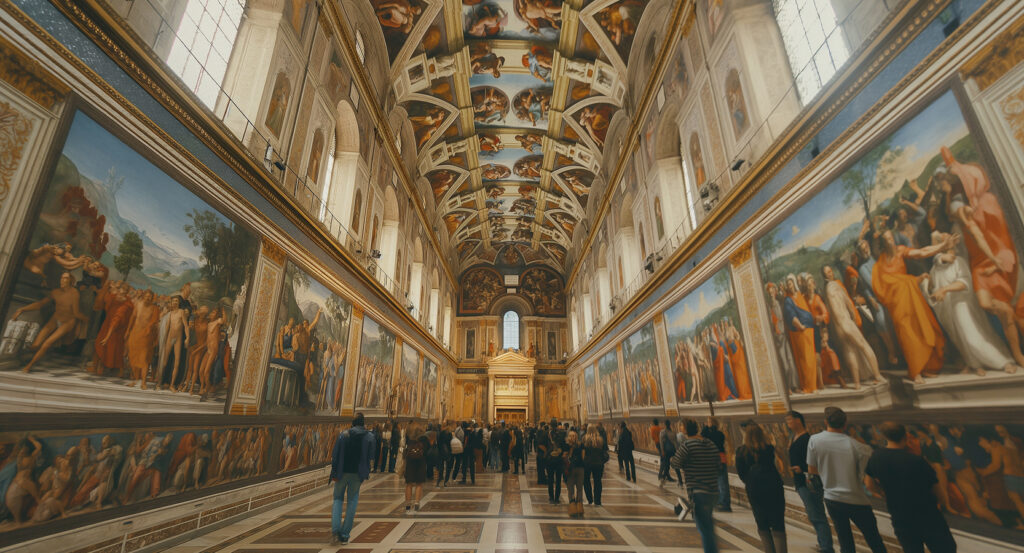
Stretching across the altar wall, Michelangelo's grand fresco seems to breathe, swirl, and thunder with divine energy. Christ stands at the center, arm raised in calm authority, surrounded by saints, angels, and souls ascending or falling in waves of celestial light and shadow. The sheer scale is staggering, more than 300 figures, each sculpted in paint with the intensity of marble. The color palette glows from within: azure skies, pale flesh, gold halos, and the shadow of judgment rendered in im human form. As your eyes travel from the radiant to the damned, awe becomes introspection. The Last Judgment is a vision so powerful it transforms the wall itself into revelation.
What defines The Last Judgment.
Michelangelo began this masterpiece in 1536, two decades after completing the Sistine ceiling, older, wiser, and wrestling with mortality.
Commissioned by Pope Paul III, the fresco took five years to complete, and its tone reflects the turbulence of the Reformation and the artist's own spiritual reckoning. The composition abandons the symmetry of the ceiling for a vortex of movement, chaos tempered by grace. At its center, Christ appears neither wrathful nor gentle, but inexorable: a divine force beyond appeal. To his right, the blessed rise in spirals toward heaven; to his left, the damned tumble into darkness, dragged by demons painted with a sculptor's precision. Among them, Michelangelo painted his own face, on the flayed skin of St. Bartholomew, a confession of humility before God. The fresco originally shocked viewers with its raw physicality and nudity, later partially censored by Daniele da Volterra, nicknamed “Il Braghettone” for adding modesty drapery. Yet even retouched, it remains the purest example of Renaissance theology: judgment not as punishment, but as truth unveiled. Few realize that the mural's placement, directly behind the papal altar, means every conclave, every mass, unfolds beneath this painted apocalypse.
How The Last Judgment fits.
When visiting the Sistine Chapel, save a moment of stillness for the mural itself, it commands attention even after the ceiling's celestial drama.
Stand near the back wall for the full perspective, letting your gaze rise slowly from the damned to the redeemed. Visit mid-morning when sunlight slants through the high windows, catching the blues and golds that animate the fresco's motion. Guided tours often rush this moment, resist that. This is where art and eternity meet; linger in it. Note the small details: angels blowing trumpets in the lower center, Charon ferrying souls across the underworld's waters, and the delicate hope in faces that look upward even in despair. The silence here is charged, hundreds of eyes lifted toward one vision of forever. As you leave the chapel, that image follows you, a reminder of your own brief place in the sweep of creation. The Last Judgment is a mirror painted in divine proportion, reflecting both heaven's justice and humanity's endless reach toward grace.
Where your story begins.
Foresyte Travel reveals places that feel extraordinary long before you arrive.
Enjoy editorial crafted for luxury travelers.
Foresyte may earn a commission when you book.