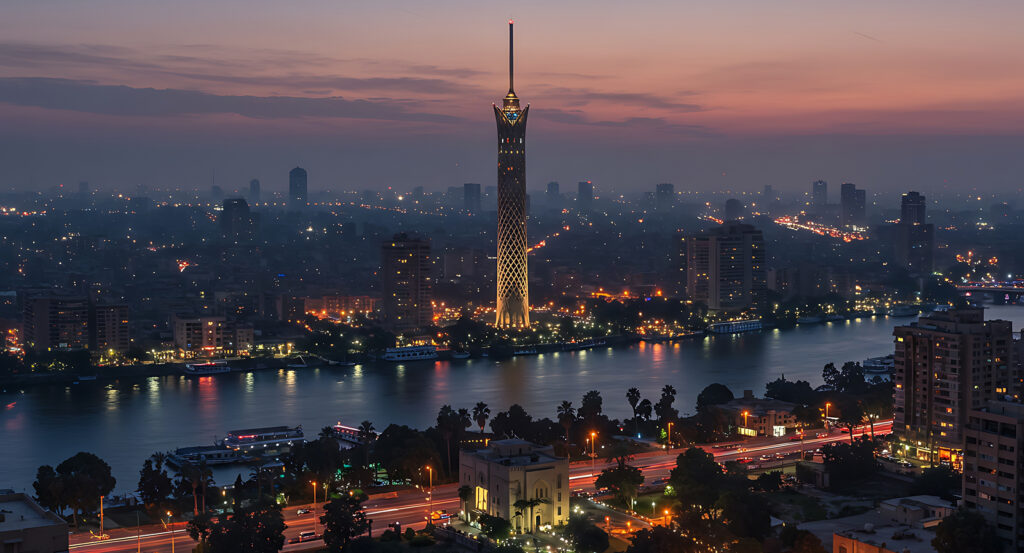
Why you should experience The President Hotel in Cairo, Egypt.
The President Hotel is a discreet Zamalek mainstay, where neighborhood familiarity, quiet confidence, and lived-in hospitality offer a grounded way to experience the city.
Set on a calm street in Zamalek, among Cairo's most balanced and enduring districts, The President Hotel does not attempt to compete with palaces, towers, or historic monuments. Its value lies elsewhere: in reliability, placement, and the rare feeling of staying somewhere that understands how people actually move through Cairo day after day. From the moment you arrive, the tone is unforced. The exterior is modest, professional, and unassuming, signaling continuity. This is a hotel that has long served diplomats, business travelers, and repeat visitors who prioritize location and ease over visual drama. Inside, the atmosphere is composed and familiar. Public spaces are clean, practical, and comfortably scaled, designed to function. There is an immediate sense that this is a place meant to support a stay, not define it. Guest rooms at The President Hotel are spacious by Zamalek standards and oriented toward comfort and function. Layouts are straightforward and sensible, with proper desks, seating areas, and storage that make longer stays feel manageable. Many rooms feature balconies or large windows overlooking Zamalek's streets, offering a glimpse into the neighborhood's daily rhythm, traffic moving steadily, pedestrians passing, cafés opening and closing, life unfolding. Interiors lean classic rather than contemporary, emphasizing durability and familiarity over trend. Beds are comfortable and substantial, designed for real rest after long days navigating the city. Bathrooms are clean, well-maintained, and practical, prioritizing routine and reliability over indulgence. What distinguishes the rooms is their neutrality, they do not impose mood or narrative, allowing guests to bring their own rhythm into the space. Dining at The President Hotel follows this same philosophy. Meals are straightforward and consistent, designed to support daily schedules. Breakfasts are calm and predictable, offering structure before the day begins. Other dining options feel functional and unfussy, suitable for casual meetings, quiet meals, or quick resets. Service throughout the hotel is professional, courteous, and low-friction. Staff interactions feel practiced and respectful, shaped by years of hosting guests who value efficiency and discretion. There is no over-personalization, no performative warmth, just a steady sense that things are handled competently and without drama. This reliability becomes a quiet luxury in a city where unpredictability is often the norm. Location is the hotel's defining strength. Zamalek offers a rare balance in Cairo: central without being chaotic, lively without being overwhelming. From The President Hotel, galleries, embassies, bookstores, cafés, and restaurants are all within easy reach. The Nile is nearby, but not dominant. Downtown Cairo is accessible, but not inescapable. This positioning allows days to unfold organically, walkable mornings, structured afternoons, calm evenings, without constant negotiation with traffic or noise.
What you should know about The President Hotel.
The President Hotel reflects a particular chapter of Cairo's hospitality history, one shaped by diplomacy, long stays, and functional internationalism.
Zamalek has long been a preferred district for embassies, foreign missions, cultural institutions, and international residents. As a result, hotels in this area evolved differently from those in downtown or along the Nile's most prominent stretches. Rather than catering primarily to short-term visitors or luxury seekers, properties like The President Hotel were designed to serve guests who stayed weeks or months at a time, professionals working on assignments, diplomats rotating through postings, consultants, and repeat visitors who needed consistency more than novelty. The hotel's design and operations reflect this legacy. Rooms are larger than average, layouts are practical, and services are structured to support routine. Over time, this has created a guest culture that feels residential. Many visitors return repeatedly, developing familiarity with staff, surroundings, and neighborhood rhythms. Architecturally, the building reflects a pragmatic period of Cairo's development, prioritizing function, durability, and accessibility over expressive design. Rather than undergoing rebellious rebranding or stylistic overhauls, the hotel has evolved incrementally, updating where necessary while preserving its core identity. This continuity has allowed it to maintain relevance. Culturally, The President Hotel has operated quietly alongside Cairo's shifting political and social landscape. During periods when Downtown Cairo became congested or politically charged, Zamalek often remained a calmer alternative, reinforcing the hotel's role as a stable base. It has hosted delegations, business travelers, and cultural figures who required discretion and proximity. Another lesser-known aspect of the hotel is how it has benefited from Zamalek's cultural density. Guests staying here are often engaged with Cairo beyond surface-level tourism, attending gallery openings, lectures, performances, or long-term projects. The hotel's understated character aligns naturally with this audience, offering a place to rest and reset. In an era when many hotels define themselves through branding narratives, The President Hotel remains defined by use. Its reputation has been built less on marketing than on repetition, guests returning because it works, because it is where they know how to live. This quiet persistence has become its most distinguishing feature.
How to fold The President Hotel into your trip.
The President Hotel works as a neighborhood base, a place that allows Cairo to be experienced at a sustainable pace.
Begin your mornings with a walk through Zamalek, stopping at a café or bookstore before the city reaches full volume. Use the hotel's location to explore nearby galleries, cultural centers, and embassies, letting the day unfold. Midday, return to the hotel to rest, organize, or simply recalibrate, using the room as a functional space. Afternoons are ideal for crossing into Downtown Cairo, Garden City, or along the Nile Corniche, knowing you can retreat easily to a quieter base. Evenings are best spent locally, dining in Zamalek, attending a performance, or walking along the river before returning to the familiarity of the hotel. Pair your stay here with day trips to Giza, Saqqara, or the Grand Egyptian Museum, allowing The President Hotel to serve as the place where those experiences are processed. For longer journeys through Egypt, the hotel works particularly well for extended stays, offering routine, predictability, and resonant ease. By the time you leave, The President Hotel will not feel like a highlight or a destination in itself. It will feel like a place that quietly did its job, giving you footing in the city, space to think, and a rhythm you could live with. In Cairo, that kind of reliability is not ordinary. It is earned.
Where your story begins.
Foresyte Travel reveals places that feel extraordinary long before you arrive.
Experience premium editorial crafted for luxury travelers.