Why you should experience Victoria Hotel Cairo in Cairo, Egypt.
Victoria Hotel Cairo is a time-layered downtown survivor, where faded grandeur, lived-in authenticity, and proximity to Cairo's everyday pulse create an experience rooted in continuity.
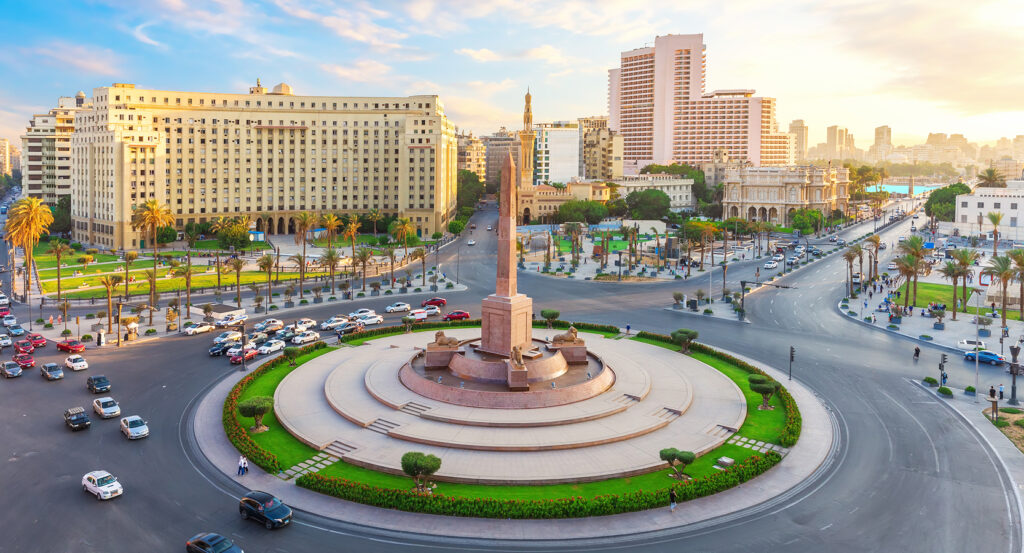
Located just north of Tahrir Square within the dense fabric of Central Cairo, Victoria Hotel Cairo does not present itself as a polished artifact or a carefully restored monument. Instead, it offers something rarer and more honest: the experience of inhabiting a place that has continued. From the moment you arrive, the hotel signals its character clearly. The exterior carries the marks of age and use, not neglect but endurance. You are stepping into a building that has absorbed decades of Cairo's movement, commerce, politics, travel, and ordinary life, without attempting to overwrite its own past. Inside, the atmosphere feels unmistakably old-world, but not theatrical. High ceilings, wide corridors, worn stone, and traditional furnishings create an environment that feels suspended between eras. This is not nostalgia curated for effect; it is history still in motion. Public spaces feel expansive and unhurried, shaped for a time when hotels were places to stay, not simply pass through. The lobby and shared areas invite pause. There is a softness to the pace here, a sense that the building itself resists urgency. Guest rooms reflect this same philosophy of continuity. They are spacious by downtown standards, arranged with proportions that feel generous and deliberate. Furnishings are traditional and functional, favoring solidity over refinement. Beds are substantial, designed for real rest. Windows open onto downtown streets, allowing the sounds and rhythms of Cairo to drift upward, filtered, distant, but unmistakably present. Staying here means accepting the city as a companion. Interiors do not compete for attention; they provide a container for the experience unfolding outside. Bathrooms are straightforward and serviceable, emphasizing routine and practicality over indulgence. What the rooms offer is not luxury, but inhabitation, the feeling that many lives have passed through these spaces, leaving behind a quiet sense of permanence. Dining at Victoria Hotel Cairo reinforces this grounded character. Meals are traditional, unembellished, and designed to sustain. Breakfasts feel anchored in routine, setting a steady tone for the day ahead. Dining spaces carry a quiet formality, echoing an earlier era of hospitality where meals were part of daily rhythm. Service throughout the hotel is measured, respectful, and rooted in familiarity. Staff interactions feel traditional and composed, shaped by long tenure and repetition. There is an understanding here that guests are not seeking novelty, they are seeking steadiness. The surrounding neighborhood is inseparable from the experience. Downtown Cairo unfolds immediately outside the doors: markets, workshops, cafés, government buildings, and streets where daily life moves with purpose. This is Cairo. From Victoria Hotel Cairo, you step directly into the city's working core, where history is not preserved behind glass but lived in real time.
What you should know about Victoria Hotel Cairo.
Victoria Hotel Cairo is part of a dwindling class of downtown institutions that once defined international travel through Cairo during the early and mid-20th century.
Built during a period when Cairo functioned as a major crossroads between Europe, Africa, and the Middle East, the hotel was designed to serve merchants, officials, travelers, and long-stay visitors who needed reliability. Its architecture reflects this purpose: broad spaces, durable materials, and layouts intended to withstand constant use. Unlike later luxury hotels that emphasized views, branding, or isolation, Victoria Hotel Cairo was conceived as an urban fixture, integrated into the city. Over the decades, the hotel witnessed Cairo's transformation from colonial-era capital to post-independence metropolis, absorbing shifts in politics, economy, and population. This continuity is not accidental. Many similar properties were demolished, radically modernized, or repurposed as the city evolved. Victoria Hotel Cairo remained, adapting incrementally rather than dramatically, preserving its role as a functional downtown residence rather than a curated heritage site. Culturally, the hotel has long attracted a specific guest profile: regional traders, long-term visitors, researchers, journalists, and travelers seeking affordability paired with location. Its rooms have hosted people staying weeks or months at a time, creating an atmosphere that feels residential. This long-stay culture shaped the hotel's rhythms, days unfolding slowly, routines forming, staff and guests recognizing one another over time. Architecturally, the building reflects a pragmatic European-influenced style common in Cairo's early hotel landscape, prioritizing ventilation, ceiling height, and spatial generosity in response to climate and use. The absence of heavy thematic decoration allows the structure itself to carry the narrative. The worn surfaces, aging fixtures, and layered modifications tell a story of adaptation. Another lesser-known aspect of Victoria Hotel Cairo is its quiet resilience during periods of upheaval. When Downtown Cairo experienced political unrest or economic disruption, the hotel often continued operating, serving as a stable presence for those who needed to remain close to the city's administrative and commercial heart. This endurance has given the hotel an institutional memory that few modern properties possess. It has been a witness rather than a participant, a place where events passed through, leaving traces rather than transformations. In a hospitality landscape increasingly dominated by reinvention and branding cycles, Victoria Hotel Cairo stands as an anomaly: a place defined not by aspiration, but by survival. Its value lies not in what it promises, but in what it has already lived through.
How to fold Victoria Hotel Cairo into your trip.
Victoria Hotel Cairo works as a grounding chapter, an opportunity to experience Cairo from within its working core.
Begin your mornings early, stepping directly into downtown streets as shops open and daily routines begin. Walk to nearby markets, government buildings, and cafés where Cairo reveals itself through repetition. Use the hotel's location to access Tahrir Square, the Egyptian Museum, and central transit routes. Midday, return to the hotel to rest, letting the building's quiet pace counterbalance the city's intensity. Afternoons are ideal for deeper exploration, wandering side streets, visiting bookstores, observing how commerce and conversation intertwine in this part of the city. Evenings unfold naturally here. Downtown Cairo changes character after dark, becoming slower, more conversational, more local. From Victoria Hotel Cairo, you can observe this transition. Pair your stay with time in another district, Zamalek, Garden City, or a Nile-front hotel, if you want contrast, allowing Victoria to represent Cairo's utilitarian, human-scale core. For travelers interested in understanding Cairo beyond monuments and museums, the hotel offers rare proximity to daily life. It is especially well-suited for those who prefer to live in a city. By the time you leave, Victoria Hotel Cairo will not feel like a hotel you chose for comfort or beauty. It will feel like a place that quietly educated you, about rhythm, resilience, and the way cities continue long after attention moves elsewhere. It does not romanticize Cairo. It normalizes it. And in doing so, it offers one of the most honest stays the city has left to give.
Where your story begins.
Foresyte Travel reveals places that feel extraordinary long before you arrive.
Experience premium editorial crafted for luxury travelers.