Why Wat Pho matters.
Wat Pho is a revered royal temple where Phra Nakhon's Buddhist heritage, royal patronage, architectural splendor, and centuries of scholarship preserve one of Thailand's most important cultural treasures.
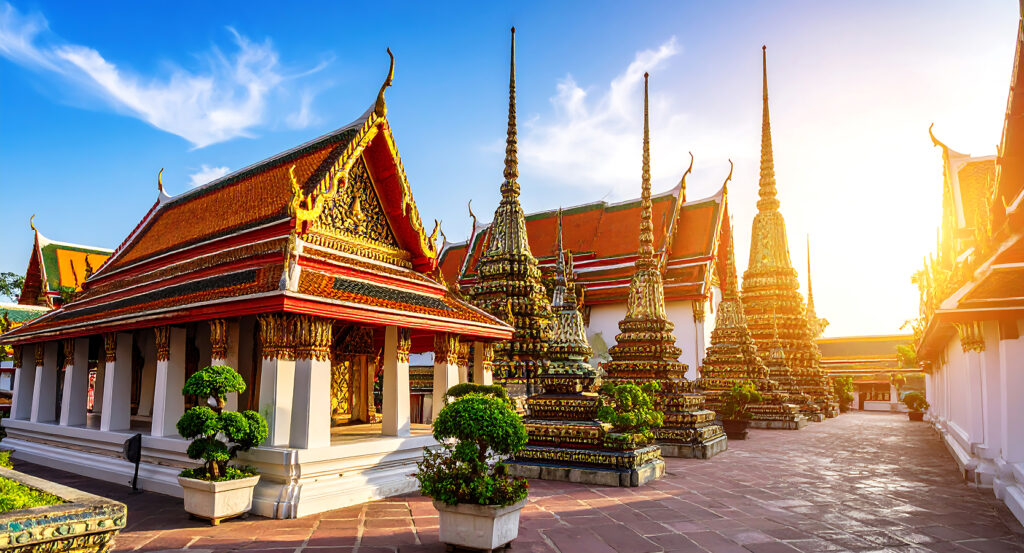
Set along Sanam Chai Road near Grand Palace and just steps from Wat Arun, this extraordinary temple complex encompasses grand ordination halls, soaring chedis, serene courtyards, exquisite murals, and hundreds of sacred Buddha images that collectively represent one of the finest achievements of early Rattanakosin architecture. Gilded ornamentation, intricate porcelain mosaics, tranquil gardens, and masterful craftsmanship create an atmosphere of profound spiritual beauty. Every courtyard reveals another chapter in Thailand's artistic and religious history. The result is an experience defined by sacred tradition, architectural excellence, and one of Bangkok's most celebrated temples.
What defines Wat Pho.
Wat Pho is best known for housing the 46-meter-long Reclining Buddha while serving as Thailand's oldest and largest royal temple complex in Bangkok, comprehensively rebuilt by King Rama I shortly after the founding of Rattanakosin in 1782 and transformed into the spiritual and intellectual heart of the new Siamese capital. Originally occupying the site of the earlier Wat Phodharam dating to the Ayutthaya period, the temple underwent a complete reconstruction between 1788 and 1801, followed by an even more ambitious expansion under King Rama III (1824-1851) that nearly doubled its size while introducing the grand Reclining Buddha, the Phra Maha Chedi Si Rajakarn honoring the first four Chakri kings, and one of the world's finest collections of early Rattanakosin Buddhist art. Encompassing eight hectares, the complex contains more than 1,000 Buddha images, making it Thailand's largest collection of Buddha statues, alongside 394 UNESCO-recognized stone inscriptions documenting medicine, anatomy, astronomy, literature, religion, and traditional Thai massage. These inscriptions earned inclusion on UNESCO's Memory of the World Register in 2011, recognizing Wat Pho as the birthplace of Thailand's first public university and one of Southeast Asia's greatest centers of traditional knowledge. The temple also remains internationally recognized as the birthplace of traditional Thai massage, with its renowned medical school continuing centuries-old teaching traditions that trace directly to the reforms of King Rama III. As an active royal monastery, Wat Pho continues hosting Buddhist ceremonies, monastic education, cultural preservation, and international visitors while preserving extraordinary examples of royal architecture, mural painting, sculpture, and decorative craftsmanship that collectively define the early Rattanakosin period. Together, royal patronage, exceptional artistic achievement, Buddhist scholarship, and enduring spiritual significance establish Wat Pho as one of the most important temple complexes in Southeast Asia.
The temple continues demonstrating how religious architecture can unite worship, education, medicine, art, and royal history within a single living institution that has remained central to Thai culture for more than two centuries. Grand restoration efforts, uninterrupted monastic traditions, internationally significant artistic collections, and continued recognition as the birthplace of traditional Thai massage reinforce Wat Pho's standing among the world's foremost Buddhist temple complexes while illustrating the enduring relationship between Thai monarchy, religion, and scholarship.
How Wat Pho fits.
Wat Pho works as part of an exploration through Bangkok's historic royal district.
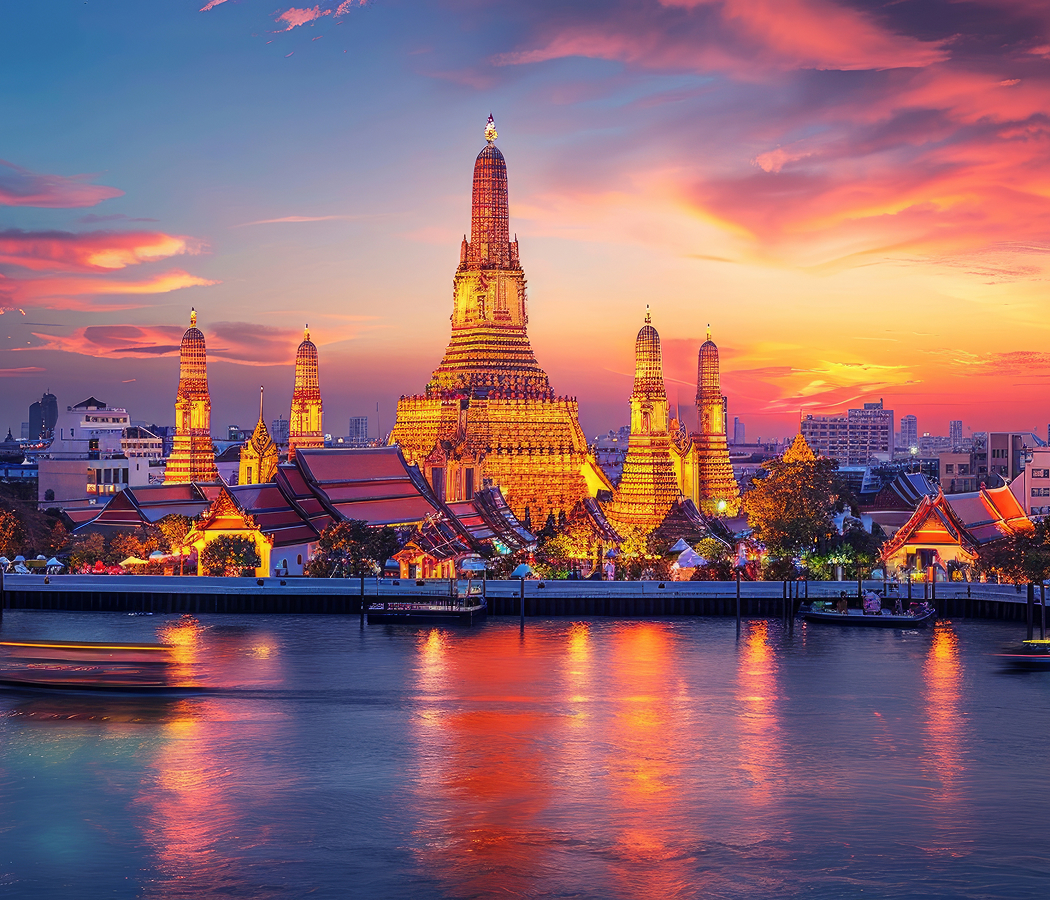
Begin at Grand Palace, where the ceremonial heart of the Chakri dynasty introduces the royal heritage surrounding Wat Pho before entering the temple complex. Continue to Reclining Buddha, whose extraordinary scale and artistry represent one of Thailand's greatest religious masterpieces within Wat Pho itself. Conclude at Wat Arun, where the grand riverside prang provides a memorable finale celebrating the architectural brilliance and spiritual traditions that define Bangkok's historic center. The progression moves naturally from royal grandeur to one of Buddhism's greatest sculptural achievements before concluding at Thailand's celebrated Temple of Dawn, revealing why Wat Pho remains one of Southeast Asia's essential cultural experiences.
Where your story begins.
Foresyte Travel reveals places that feel extraordinary long before you arrive.
Enjoy editorial crafted for luxury travelers.
Foresyte may earn a commission when you book.