Why Widder Restaurant matters.
Widder Restaurant is a two-MICHELIN-starred fine-dining establishment where Zürich's Altstadt's medieval merchant architecture meets Stefan Heilemann's precise integration of classical French cooking, Southeast Asian flavors and carefully balanced acidity.
Set along Rennweg near Augustinergasse and a short walk from Bahnhofstrasse, the restaurant occupies interconnected historic townhouses within Zürich's pedestrianized old town, between the commercial streets descending toward the Limmat and the medieval lanes extending toward Lindenhof. Its dining rooms extend through two historic properties known as Kleinen Widder and Haus zum Bauknecht. The latter retains a rare medieval ceiling construction, preserving substantial elements of the buildings' earlier architectural character. Contemporary furnishings and carefully arranged tables complement the historic interiors, and a dedicated chef's table provides direct views into the open kitchen. The result is a restaurant whose preserved architecture and intimate dining arrangements establish a distinctive setting for contemporary European haute cuisine.
What defines Widder Restaurant.
Widder Restaurant is best known for the arrival of chef Stefan Heilemann in 2020, which established the restaurant as one of Switzerland's leading destinations for contemporary French cuisine incorporating Southeast Asian influences. Its institutional history belongs to Widder Hotel, a hospitality development created through the restoration and integration of nine historic Zürich townhouses. The buildings preserve architectural elements associated with different periods of the city's development, including medieval structural features and later residential adaptations. Swiss architect Tilla Theus directed the ambitious transformation, developing a hotel that connected individual historic properties through contemporary circulation and carefully integrated architectural interventions. The project opened in 1995, establishing a distinctive example of historic preservation within Zürich's luxury hospitality industry. Its restaurant became an important component of the hotel's culinary program, developing a reputation for formal dining within the preserved old-town setting. Heilemann's professional formation began in Germany, where he developed his culinary skills through demanding European restaurant kitchens. His career included an important appointment at Schwarzwaldstube in the Hotel Traube Tonbach, where he worked under Harald Wohlfahrt, among Germany's most influential practitioners of classical French haute cuisine. Wohlfahrt's kitchen emphasized exacting preparation, disciplined organization and the development of concentrated flavor through traditional techniques. Heilemann subsequently joined the Dolder Grand in Zürich, working within the hotel's fine-dining operations before assuming leadership of Ecco Zürich. At Ecco, he earned two MICHELIN stars, establishing his standing within Switzerland's gastronomic industry. His appointment at Widder Restaurant brought that professional experience into the hotel's historic dining rooms, supported by an established hospitality organization and a specialist culinary team. MICHELIN subsequently awarded the restaurant two stars, recognizing the precision of its cooking and the distinctive integration of international influences. GaultMillau Switzerland awarded it eighteen points, placing the establishment among the country's most highly rated restaurants. Heilemann's work expanded through collaboration with The Living Circle, the hospitality collection associated with Widder Hotel and agricultural properties supplying ingredients to its restaurants. The chef also supported Fundaziun Uccelin, the independent foundation established by Andreas Caminada to provide training opportunities for young culinary and service professionals. Widder Restaurant developed into an important meeting point between Zürich's architectural inheritance, Swiss fine-dining institutions and Heilemann's international culinary career.
Stefan Heilemann's cooking develops classical French preparations through the concentrated aromatic character of Southeast Asian ingredients, using acidity to sharpen rich sauces and preserve the natural sweetness of seafood and meat. His Massaman duck bao provides a compact introduction to this approach through duck leg cooked sous-vide for twenty-four hours before being combined with a fragrant curry sauce. Coconut milk supplies richness, and cinnamon, star anise and cumin develop warm aromatic depth around the tender meat. Tamarind introduces acidity that balances the duck's fat and the sweetness of the coconut, giving the preparation a distinct finish. The soft steamed bun absorbs the concentrated sauce, connecting the curry's intensity with the delicate texture of the bread. Seafood preparations develop the same relationship through lighter ingredients, particularly langoustine cooked until its flesh retains a translucent, yielding texture. A preparation with tom yam, peanut and kaffir lime combines the shellfish's sweetness with the acidity and aromatic heat associated with Thai cuisine. Peanut contributes richness and a contrasting roasted flavor, and kaffir lime introduces a sharper citrus fragrance that keeps the sauce distinct from the langoustine. The kitchen's treatment of Algarve prawns demonstrates a more delicate balance through sweet shellfish accompanied by cauliflower foam and crisp herb pearls. The foam contributes a soft vegetal sweetness, and the herb garnish introduces a contrasting texture that emphasizes the prawns' tenderness. Balfegó tuna receives a different preparation through finely cut tartare, allowing the quality and fat content of the fish to remain central to the dish. Heilemann's classical training becomes particularly apparent in the control of sauces, where reductions and emulsions provide depth while carefully measured acidity maintains clarity around the principal ingredient. Seasonal produce from agricultural partners contributes additional variation, connecting the menu with ingredients cultivated within Switzerland. The restaurant's four- to six-course tasting menu coordinates these preparations into a sequence that moves between delicate seafood, aromatic sauces and richer savory courses. A vegetarian tasting menu applies comparable attention to vegetables, using roasting, fermentation and carefully developed seasonings to concentrate natural flavors. Wine service accompanies the changing intensity of the meal through selections suited to the acidity, aromatic complexity and richness of individual dishes. The chef's table extends the culinary program into the open kitchen, allowing diners to observe the preparation and finishing of courses at close range. Widder Restaurant's distinctive cooking develops through this sustained relationship between classical French technique and Southeast Asian seasoning, using precise control of acidity to connect contrasting culinary traditions within a coherent tasting-menu format.
How Widder Restaurant fits.
Widder Restaurant works as the culinary centerpiece for a Zürich itinerary connecting the medieval civic history of the old town, the religious architecture of the Reformation and the development of Switzerland's principal financial and commercial center.
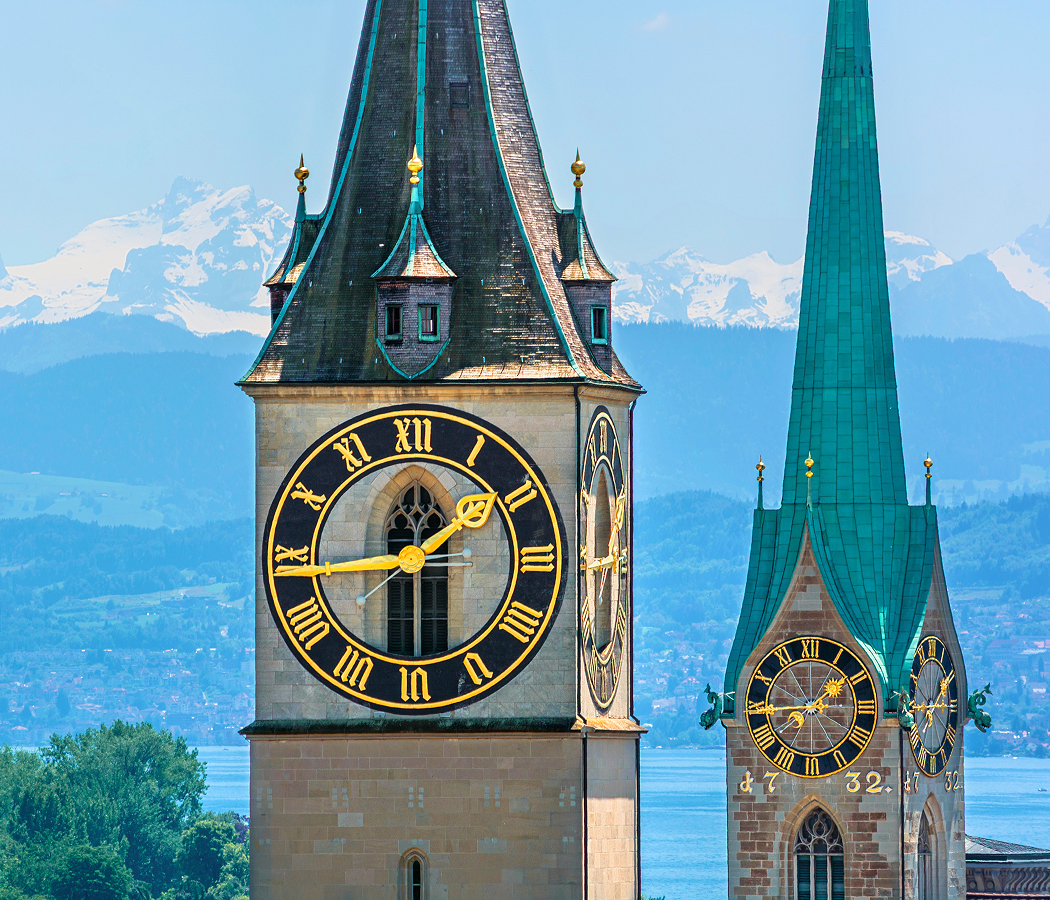
Begin at Lindenhof, the elevated historic square overlooking the Limmat and the eastern bank of Zürich's old town. The hill formed part of the Roman settlement of Turicum, whose strategic position controlled movement along the river and surrounding routes. A Roman fortification occupied the site during the fourth century, establishing an important military presence within the developing settlement. During the medieval period, the hill became associated with royal authority and the political institutions of the city. Its tree-lined terrace provides views across the river toward the principal church towers and historic residential buildings, preserving the relationship between Zürich's early defensive geography and its later urban development. Continue to Fraumünster, the church established in 853 by King Louis the German for his daughter Hildegard. Its associated abbey became an influential religious and political institution, with its abbesses exercising substantial authority over the medieval city. The church's architecture incorporates Romanesque elements and later Gothic construction, preserving several stages of its development. Its stained-glass windows include the celebrated cycle created by Marc Chagall and installed in 1970, introducing biblical subjects through intense color and carefully arranged figurative compositions. The church connects Zürich's early ecclesiastical institutions with the artistic developments of the twentieth century. Conclude at the Swiss National Museum, housed in a historicist building beside Zürich Hauptbahnhof. Opened in 1898, the museum was designed by Gustav Gull, whose architecture incorporates towers, courtyards and decorative elements associated with Swiss historical building traditions. Its collections examine the development of Switzerland through archaeological objects, decorative arts, textiles, weapons and historical documents. A contemporary extension completed in 2016 expanded the exhibition facilities and introduced new architectural spaces connected with the original building. The museum's exhibitions trace the political, social and cultural development of the Swiss Confederation, placing Zürich's local history within a broader national context. The progression moves from the city's Roman and medieval foundations through its religious institutions and culminates in the collections preserving Switzerland's national history.
Where your story begins.
Foresyte Travel reveals places that feel extraordinary long before you arrive.
Enjoy editorial crafted for luxury travelers.
Foresyte may earn a commission when you book.