Why 15th Street matters.
15th Street is a sophisticated corridor where LoDo's commercial heritage, architectural ambition, entrepreneurial spirit, and enduring urban character converge across one of Denver's defining streets.
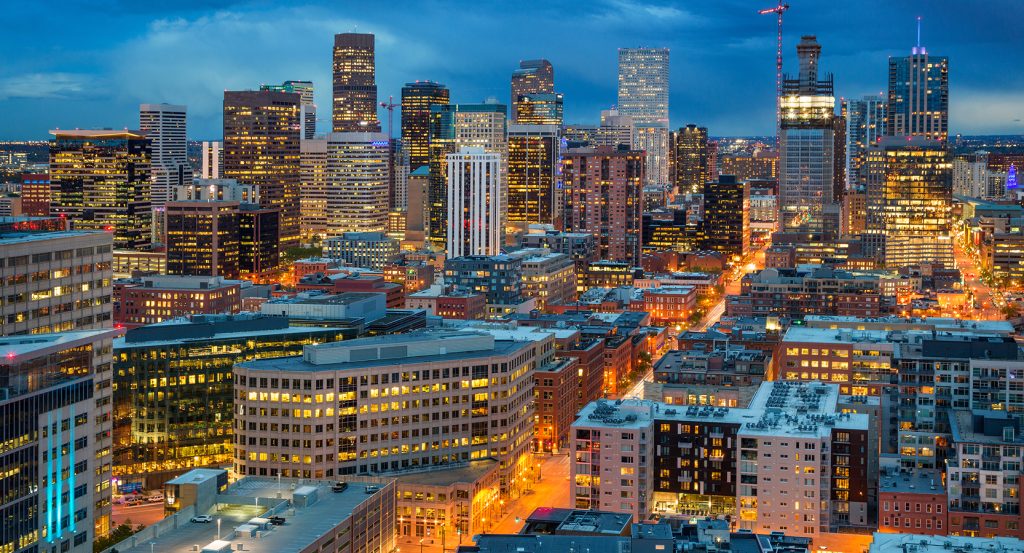
Running through LoDo between Auraria and Union Station, the corridor traces the evolution of Denver from a frontier mercantile center into the commercial capital of the Rocky Mountain West, where successive generations of builders left an unusually cohesive collection of historic business architecture. Brick warehouses, cast-iron storefronts, early skyscrapers, restored commercial blocks, and broad pedestrian corridors preserve a streetscape shaped by more than a century of continuous investment. The corridor ultimately reflects how commerce, engineering, and preservation collectively established one of Denver's most recognizable urban environments. The result is an experience defined by architectural distinction, commercial vitality, and enduring historical character.
What you should know 15th Street.
15th Street is best known for developing as one of Denver's earliest commercial corridors following the city's founding in 1858, where merchants, bankers, commission houses, and wholesale businesses concentrated along adjoining blocks as regional commerce expanded across the Colorado Territory. The corridor witnessed successive building campaigns after devastating downtown fires during the 1860s and 1870s, encouraging more permanent brick and stone construction that reshaped Denver's commercial architecture. Historic business directories and Sanborn Fire Insurance Maps document hardware companies, dry goods merchants, hotels, printing establishments, banking offices, wholesale grocers, and manufacturing enterprises occupying the surrounding streets throughout the late nineteenth and early twentieth centuries. Commercial buildings introduced load-bearing masonry, cast-iron storefront systems, heavy timber framing, freight elevators, and ornamental brick detailing that collectively established the durable architectural character still associated with Lower Downtown.
Corporate investment continued reshaping the corridor as architects commissioned progressively taller office buildings incorporating structural steel frames, reinforced concrete floor systems, terra-cotta cladding, high-speed elevators, and increasingly sophisticated fireproofing techniques during the early twentieth century. Property records and commercial directories identify long-term occupancy by mining corporations, financial institutions, engineering firms, insurance companies, publishing houses, and regional distributors whose sustained investment reinforced the corridor's role within Denver's expanding business economy. Historic preservation documentation also records original cornices, decorative metal storefronts, ghost signs, pressed-brick façades, and intact warehouse interiors that collectively preserve tangible evidence of successive commercial eras across the corridor. Together, nineteenth-century mercantile expansion, documented construction technology, architectural innovation, business succession, and preserved commercial craftsmanship establish 15th Street as one of LoDo's defining historic business corridors.
How 15th Street fits.
15th Street works as an exploration of Lower Downtown's commercial heritage, architectural preservation, and cultural evolution.
Begin at Larimer Square, where Denver's oldest surviving commercial block introduces the city's nineteenth-century business origins and establishes the architectural style that continues defining the surrounding historic district before moving deeper into Lower Downtown. Continue to Union Station, whose restored public spaces and transportation history broaden the narrative by illustrating how regional connectivity accelerated commercial expansion throughout the surrounding warehouse and business districts. Conclude at McGregor Square, where contemporary public gathering spaces provide the historical payoff by demonstrating how thoughtful reinvestment extends Lower Downtown's commercial legacy while respecting the district's remarkable architectural inheritance. The sequence moves from Denver's earliest commercial streets through regional transportation before culminating in a contemporary destination that synthesizes the district's continuing evolution.
Where your story begins.
Foresyte Travel reveals places that feel extraordinary long before you arrive.
Enjoy editorial crafted for luxury travelers.
Foresyte may earn a commission when you book.