Why 20th Street matters.
20th Street is a spirited corridor where Five Points' railroad heritage, commercial enterprise, architectural evolution, and cultural legacy converge across one of Denver's oldest urban streets.
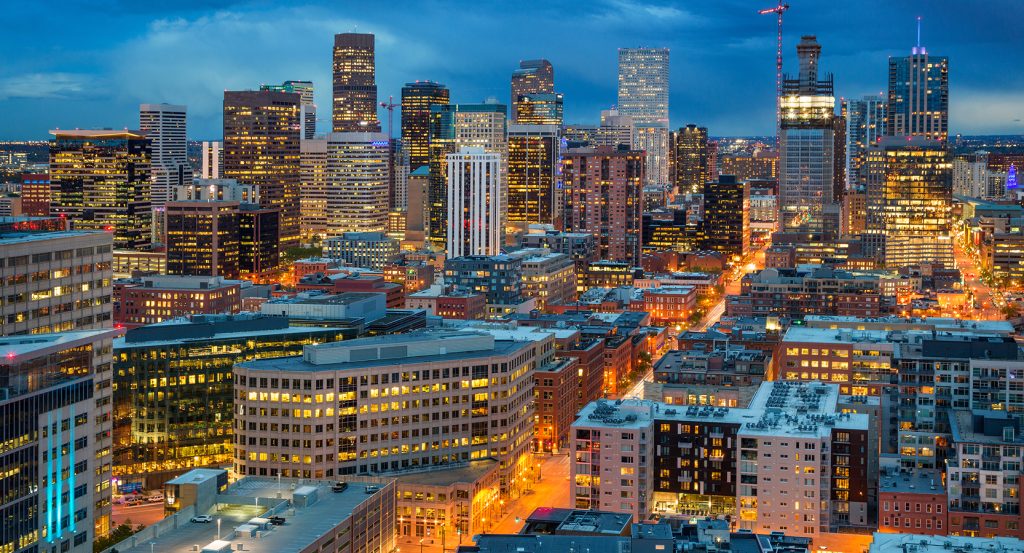
Running through Five Points between Ballpark and Union Station, the corridor developed beside the city's expanding rail network, where warehouses, wholesale houses, residential blocks, and commercial buildings established an essential link between Downtown and its industrial north side. Brick warehouses, early twentieth-century commercial architecture, broad rights-of-way, and surviving masonry façades preserve the physical record of successive generations of economic growth. The corridor ultimately demonstrates how transportation infrastructure and neighborhood commerce collectively shaped one of Denver's most historically significant districts. The result is an experience defined by industrial character, historical continuity, and enduring urban energy.
What you should know 20th Street.
20th Street is best known for serving as a principal approach to Denver's wholesale district after the arrival of the Denver Pacific Railway in 1870 and the expansion of Union Pacific Railroad freight operations, developments that transformed adjoining blocks into one of the city's busiest commercial distribution centers. The corridor became lined with produce houses, transfer companies, warehouses, cold-storage facilities, and manufacturing businesses during the late nineteenth and early twentieth centuries, while nearby construction of Union Station established an integrated freight and passenger transportation network supporting regional commerce. Sanborn Fire Insurance Maps from the early 1900s document wholesale grocery firms, machine shops, coal yards, livestock-related businesses, and brick warehouse construction along the surrounding corridor, illustrating its role within Denver's expanding industrial economy. Successive transportation improvements reinforced 20th Street's importance as freight traffic connected railroad terminals with commercial enterprises throughout Central Denver.
Commercial investment accelerated as nationally recognized companies established distribution facilities along the corridor, including regional produce merchants, agricultural suppliers, storage operators, and manufacturing firms whose buildings introduced reinforced concrete construction, heavy timber framing, freight elevators, and expansive loading docks suited to twentieth-century logistics. Documentary records also trace the gradual transition from rail-dependent wholesale commerce toward automotive freight distribution after World War II, leaving a remarkable concentration of surviving industrial architecture that continues illustrating Denver's commercial evolution. Historic surveys identify numerous warehouse buildings retaining original brick masonry, structural steel windows, decorative parapets, and painted ghost signs that collectively preserve the corridor's economic history independent of later cultural destinations. Together, railroad expansion, wholesale commerce, industrial engineering, documented building technology, and adaptive commercial evolution establish 20th Street as one of Five Points' defining transportation and business corridors.
How 20th Street fits.
20th Street works as an exploration of Five Points' transportation history, cultural legacy, and architectural evolution.
Begin at Five Points Plaza, where interpretive artwork and neighborhood history establish the cultural foundation of one of Denver's most influential communities while providing the context that makes the surrounding streets and buildings more meaningful. Continue to the Blair-Caldwell African American Research Library, whose archival collections and exhibitions deepen that historical narrative by introducing the individuals, institutions, and achievements that transformed Five Points into Colorado's center of Black civic life. Conclude at the Rossonian Hotel, where the neighborhood's architectural presence and celebrated jazz legacy merge into the defining historical payoff, demonstrating how decades of artistic excellence elevated Five Points onto the national stage. The sequence progresses from neighborhood character to documented history before culminating in the cultural symbol that best captures the corridor's enduring significance.
Where your story begins.
Foresyte Travel reveals places that feel extraordinary long before you arrive.
Enjoy editorial crafted for luxury travelers.
Foresyte may earn a commission when you book.