Why you should experience Luxor Obelisks in Paris, France.
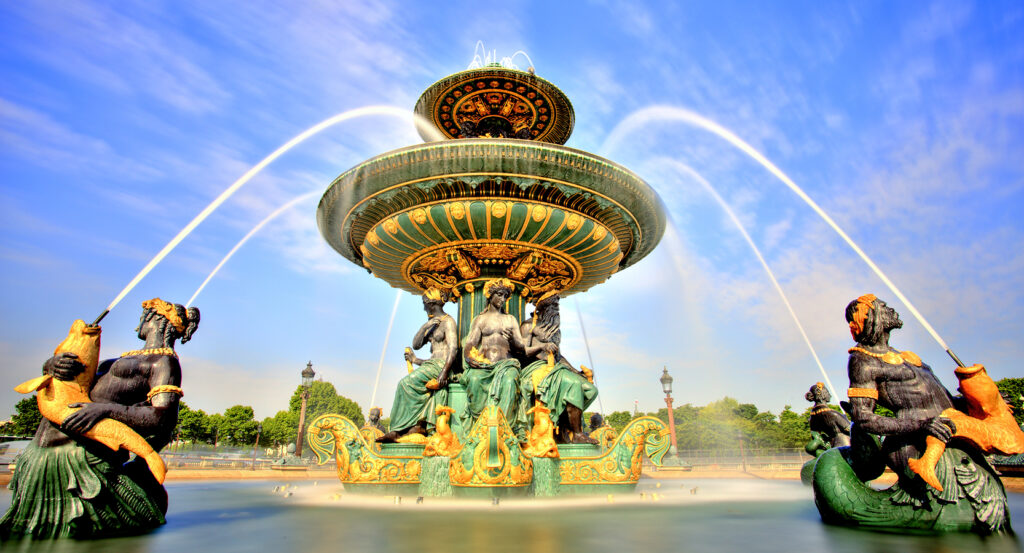
Rising at the heart of Place de la Concorde, Luxor Obelisks are a marvel of both engineering and endurance, a 75-foot monolith that ties ancient Egypt to the pulse of modern Paris.
Carved over 3,000 years ago from pink granite and once guarding the entrance to the Temple of Luxor, it now stands where guillotines once fell, transforming a place of turmoil into one of timeless reverence. Luxor Obelisks’ golden capstone glints above the twin fountains, commanding symmetry and serenity amid the grand expanse of the square. As you walk around it, every angle refracts history, the revolution, empire, enlightenment, condensed into a single vertical breath of stone. It is the still point around which the city's energy turns, ancient and alive in the same instant.
What you didn’t know about Luxor Obelisks.
Gifted to France by Egypt's ruler Muhammad Ali Pasha in 1829, Luxor Obelisks arrived in Paris after a six-year odyssey involving complex river transport and a specially built vessel named the Luxor.
Its installation in 1836 under King Louis-Philippe was a feat of 19th-century engineering, orchestrated before massive crowds. The hieroglyphs running its length praise the pharaoh Ramses II, yet today they seem to sing of a broader endurance, civilization's continuity across continents and centuries. The gilded pyramidion, added in 1998, replaced a long-lost capstone, restoring the monument's brilliance to its intended celestial shimmer. Few realize that at its base lies an intricate diagram showing the mechanical ingenuity that hoisted it upright, a tribute to both ancient craftsmen and modern ambition.
How to fold Luxor Obelisks into your trip.
Visit Luxor Obelisks in early evening when the fading sun gilds its hieroglyphs and the fountains surrounding it sparkle in unison.
Stand at its base and look east toward the Tuileries Gardens or west along the Champs-Élysées, the alignment forms one of Paris's most breathtaking perspectives. From here, each vista unfolds like a timeline of French art and politics, anchored by this single, ancient stone. Return after dusk to see Luxor Obelisks bathed in golden light, its surface reflecting the rhythm of passing cars and city glow. Whether you see it as artifact, symbol, or miracle of survival, Luxor Obelisks remain one of the purest reminders that Paris's beauty has always reached beyond its own age.
Hear it from the Foresyte community.
Just enough life around you not to be overwhelming. Right pace.
Where your story begins.
Start your planning journey with Foresyte Travel.
Experience immersive stories crafted for luxury travelers.