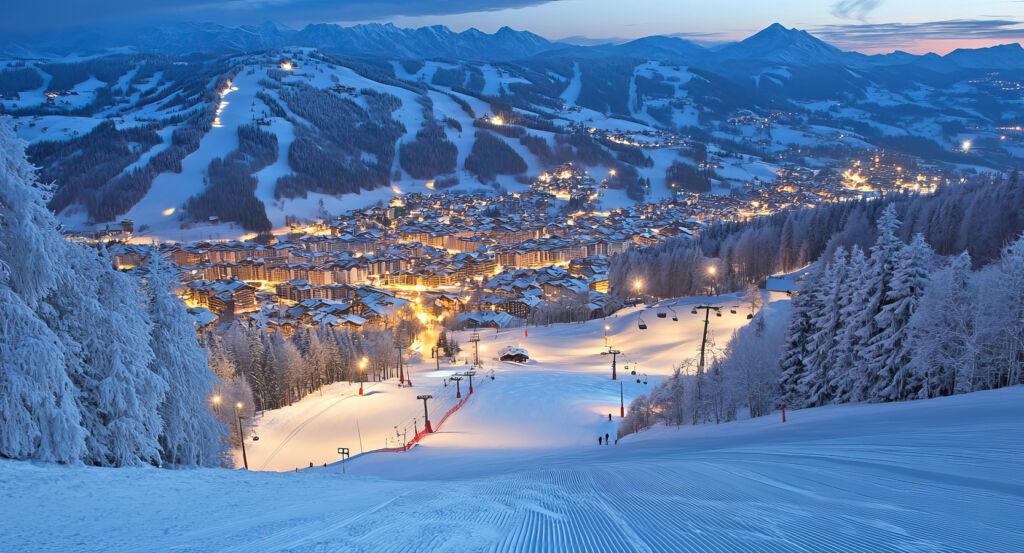
Why you should experience Arlberg Pass in St. Anton am Arlberg.
Arlberg Pass in St. Anton am Arlberg is the mountain's true frontier, a wind-carved threshold between Tyrol and Vorarlberg where altitude becomes memory.
Rising to 1,793 meters, it's the high crossing that has shaped this part of the Alps for centuries, connecting valleys, cultures, and generations of travelers. The road bends like a thought through rock and snow, its curves smooth and silent until winter storms swallow the peaks in white. On clear days, the view stretches from the Rosanna Valley to the jagged ridges of the Lechtal Alps, a panorama that feels both vast and immediate. Driving or cycling the pass is like tracing the spine of the mountain itself: tunnels and viaducts giving way to open air, each turn revealing another layer of blue and stone. The feeling isn't just altitude, it's arrival. Arlberg Pass doesn't lead somewhere new; it leads through everything that defines the Alps: wind, slope, silence, and the slow rhythm of motion over height.
What you didn't know about Arlberg Pass.
Arlberg Pass has been a crossroads since long before skiing or tourism, the kind of place that carried history on its back.
As early as the 14th century, traders and shepherds used this route to move salt, wool, and wine between Tyrol and the Rhine Valley. The name “Arlberg” itself likely comes from the arle trees, a kind of mountain alder, that once lined the slopes. In 1824, the Habsburg Empire built the first modern road across the pass, a feat of engineering that transformed the region's fortunes and made year-round access possible. When the Arlberg railway tunnel opened in 1884, over ten kilometers of track burrowed through granite, St. Anton emerged from isolation, becoming one of Europe's first mountain resorts. That same spirit of connection defines the area today: the pass marks not just a boundary, but a bond. Few realize how extreme the conditions can be here, snowfall measured in meters, avalanches shaping the road's design, maintenance crews working through the night to keep it open. Beneath its serenity lies an infrastructure of precision and endurance, a living testament to Austria's relationship with its terrain. Even in summer, when cyclists replace snowplows, you can feel that tension, the constant negotiation between mountain and motion.
How to fold Arlberg Pass into your trip.
Crossing Arlberg Pass is more than a drive, it's a pilgrimage through the heart of alpine identity.
If you're arriving in St. Anton from the west, take the route slowly, starting from Langen or Klösterle, where the valley begins to rise in long green folds. Stop at the summit parking area to stretch your legs and take in the panorama, wind turbines spinning quietly against the sky, snow lingering in the hollows even in June. From there, you can continue toward St. Anton, dropping down through curves that reveal the village one glimpse at a time, its rooftops gleaming like coins in the distance. In winter, the pass can close during heavy snow, so plan your journey around the forecast; the Arlberg Tunnel offers a safe and quick alternative beneath the peaks. For those on foot, the old Arlberg Trail still winds across the ridge, a hiking path that follows the same contours merchants once walked centuries ago. Bring a camera, but more importantly, bring time. The weather here shifts in minutes, fog to sun to snow, and that volatility is part of the magic. End your day in St. Christoph or St. Anton, warming up over cheese fondue or a glass of Grüner Veltliner while the lights of the pass fade into mist. Arlberg Pass isn't just geography. It's a threshold, the place where Tyrol exhales, Vorarlberg inhales, and the Alps remind you that every boundary worth crossing comes with altitude.
Where your story begins.
Start your planning journey with Foresyte Travel.
Experience immersive stories crafted for luxury travelers.