Why you should experience Arthur Hills Golf Course in South Carolina.
Arthur Hills Golf Course is a strategic Lowcountry golf course where Leamington's maritime and resort landscape meets Arthur Hills's preference for precision, rolling contours and hazards integrated directly into the natural terrain.
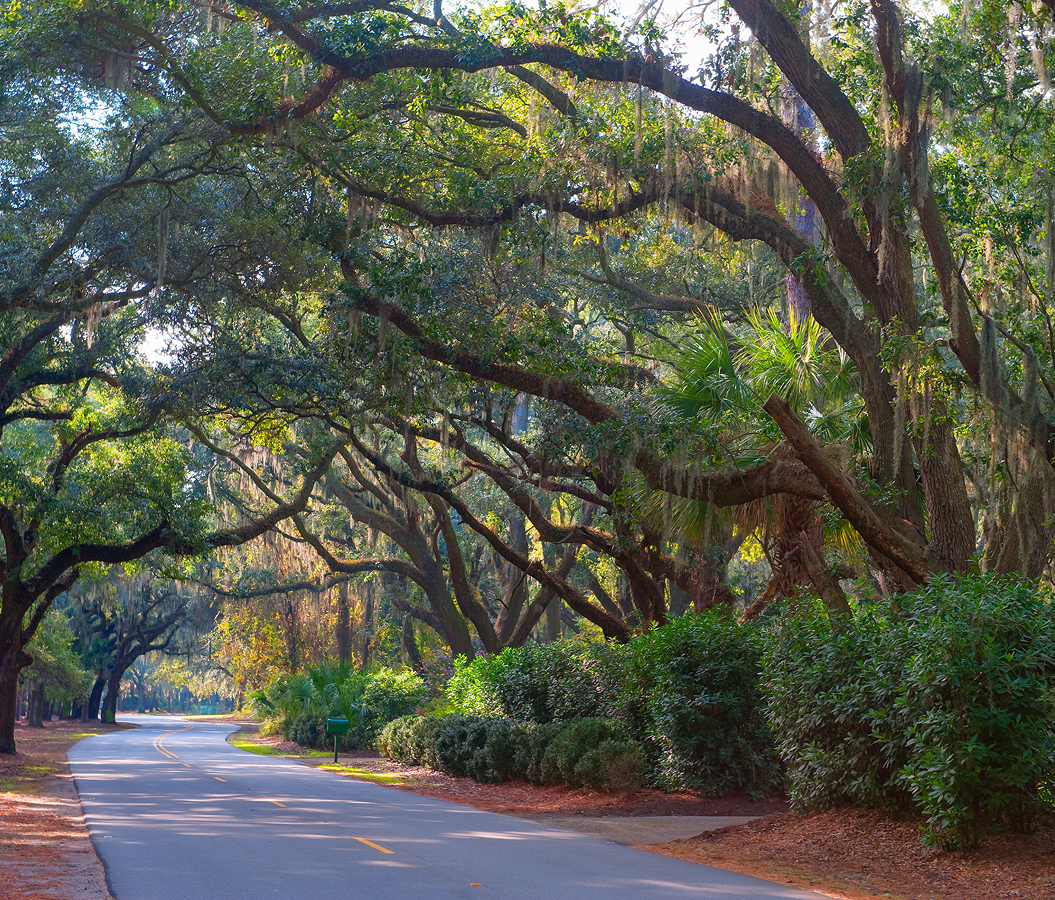
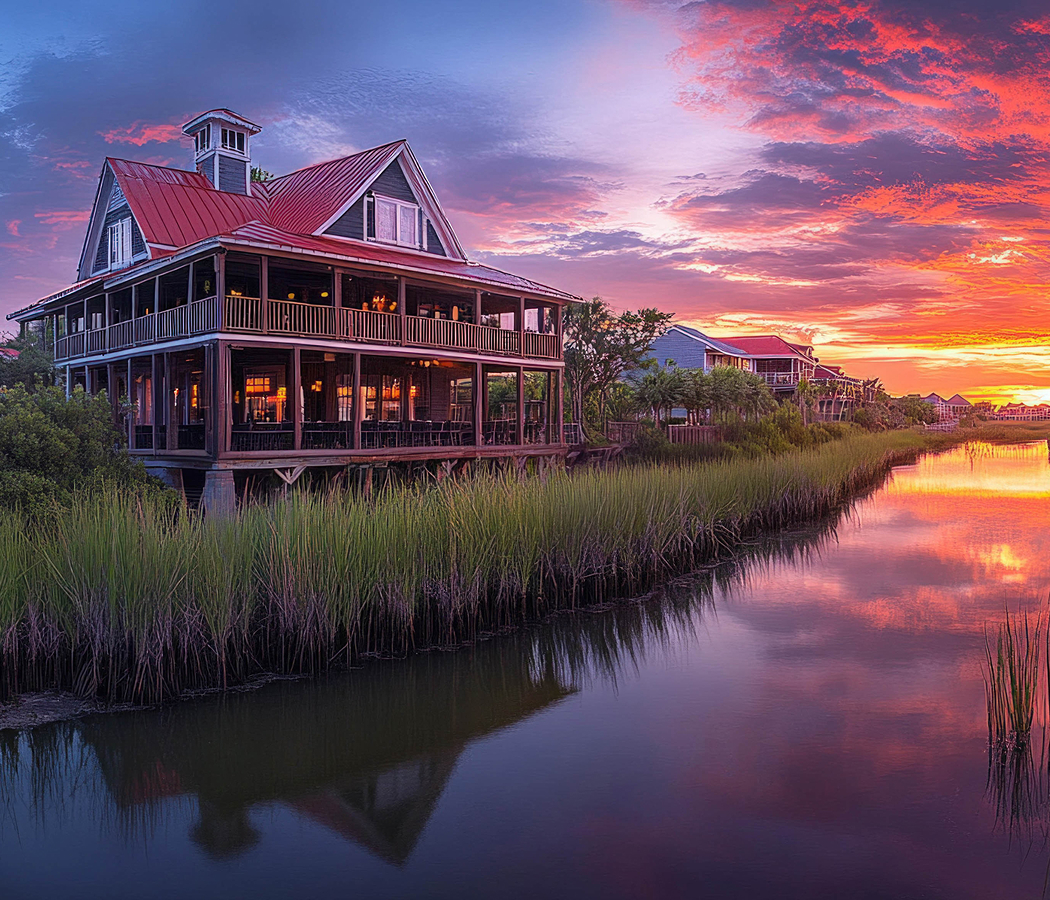
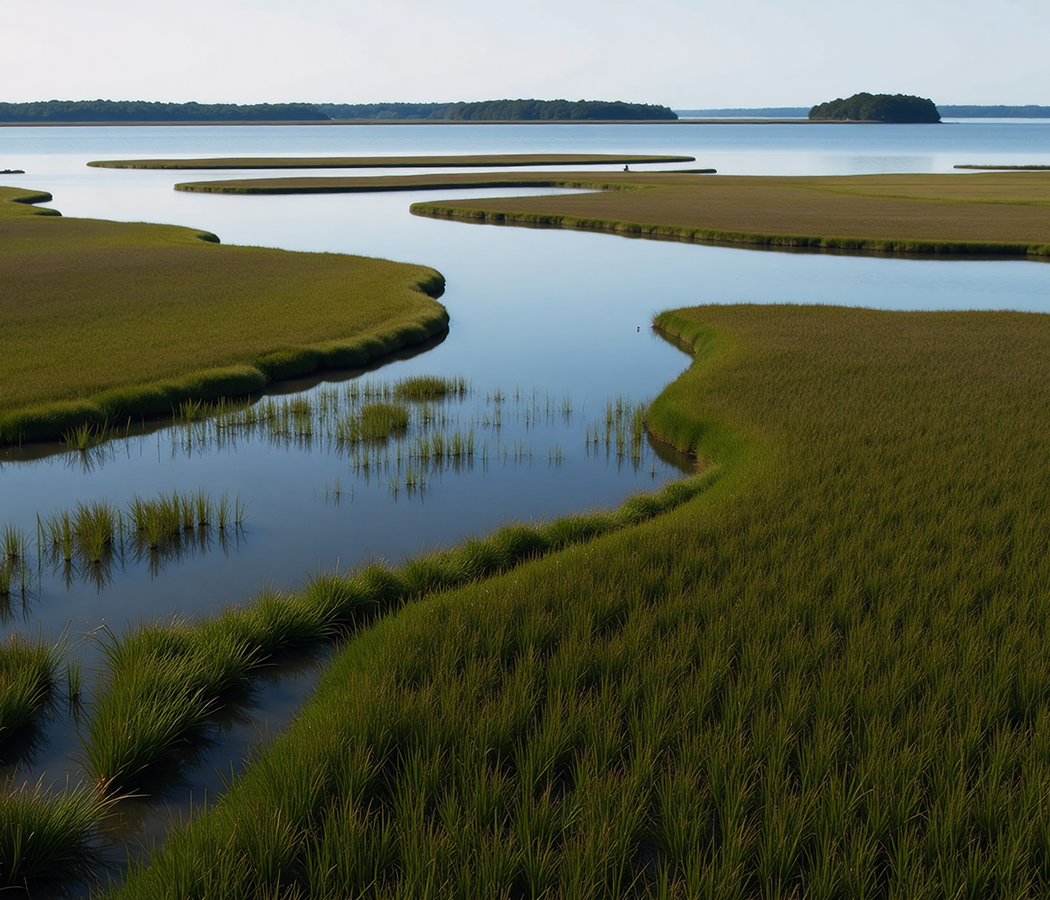
Set along Leamington Lane near Ocean Lane and just steps from the Hilton Head Rear Range Lighthouse, the course occupies a secluded section of Palmetto Dunes where mature live oaks, pines, coastal vegetation and interconnected lagoons surround residential enclaves close to the Atlantic. Rolling dunes create elevation changes unusual for Hilton Head, producing uneven stances and obscured landing areas across fairways that rarely reward indiscriminate distance. Water enters play on ten holes, with narrow approaches and compact greens repeatedly shifting the emphasis toward placement and controlled trajectory. Ocean breezes add another variable across holes that change direction through the routing, forcing club selection to respond continuously to terrain and wind. The result is a Leamington course whose coastal topography keeps strategic decision-making active from the opening drive through the final approach.
What you should know about Arthur Hills Golf Course, Hilton Head.
Arthur Hills Golf Course is best known for the architect's 1986 design within Palmetto Dunes, an assignment that added his strategic approach to a resort already containing courses by Robert Trent Jones Sr. and George Fazio. Hills arrived during a prolific phase of his career: his original designs during the surrounding years included Bonita Bay's Marsh Course in 1985, TPC at Eagle Trace in 1984 and The Standard Club in Atlanta in 1986, placing the Hilton Head project within an expanding national portfolio that eventually exceeded 200 new courses. His Palmetto Dunes routing emphasized accuracy over raw length, using rolling ground, compact greens, irregular lies and the existing Lowcountry environment to generate difficulty across a par-72 course measuring 6,651 yards from its longest current tees. The course subsequently became a collegiate tournament venue during an exceptional generation of American golf, hosting Tiger Woods, Phil Mickelson and David Duval during their college careers before all three became major champions and world No. 1 players. South Carolina's National Golf Course Owners Association named the Hills layout the state's Golf Course of the Year in 2009, placing it alongside the resort's Robert Trent Jones course, honored in 2003, and George Fazio course, honored in 2014. Its architect continued working internationally and on major renovations through a career encompassing more than 125 redesign projects, including work at Congressional, Oakmont, Oakland Hills and Inverness. Twenty-eight Hills designs eventually hosted events sanctioned by organizations including the USGA, PGA, LPGA, NCAA and PGA of America, giving the Hilton Head course a place within a body of work spanning elite competition and resort golf.
The first hole establishes the central demand with a medium-length par four whose shallow green makes wind and approach distance more consequential than the modest yardage suggests. The second compresses that lesson into a shorter par four, placing out-of-bounds along the left and water along the right before a deep green rewards an accurately positioned drive. Lagoons recur across ten holes, repeatedly narrowing preferred angles and bringing lateral misses into direct contact with the Lowcountry water system. Rolling fairways produce sidehill and uneven stances uncommon on the island's flatter courses, altering ball position and trajectory before the player reaches Hills's small putting surfaces. The routing changes direction through the property, so an ocean breeze that assists one shot returns from another angle later in the round. Compact targets, variable lies, water and wind make position the course's recurring strategic currency, giving a well-placed tee shot greater value than distance detached from the next angle.
How to fold Arthur Hills Golf Course, Hilton Head into your trip.
Arthur Hills Golf Course works as the recreational anchor for an outing connecting Hilton Head's nineteenth-century maritime infrastructure with the engineering that created Palmetto Dunes and the public sculpture commissioned for its later expansion around Shelter Cove.
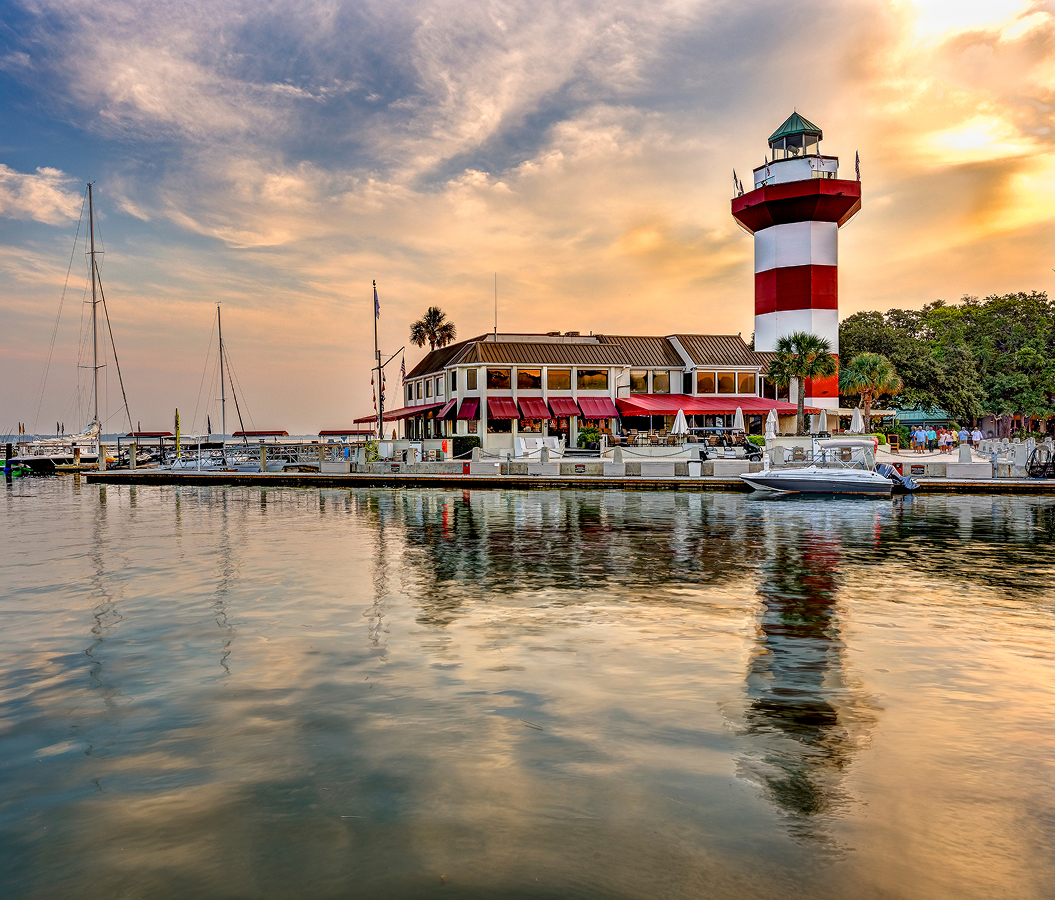
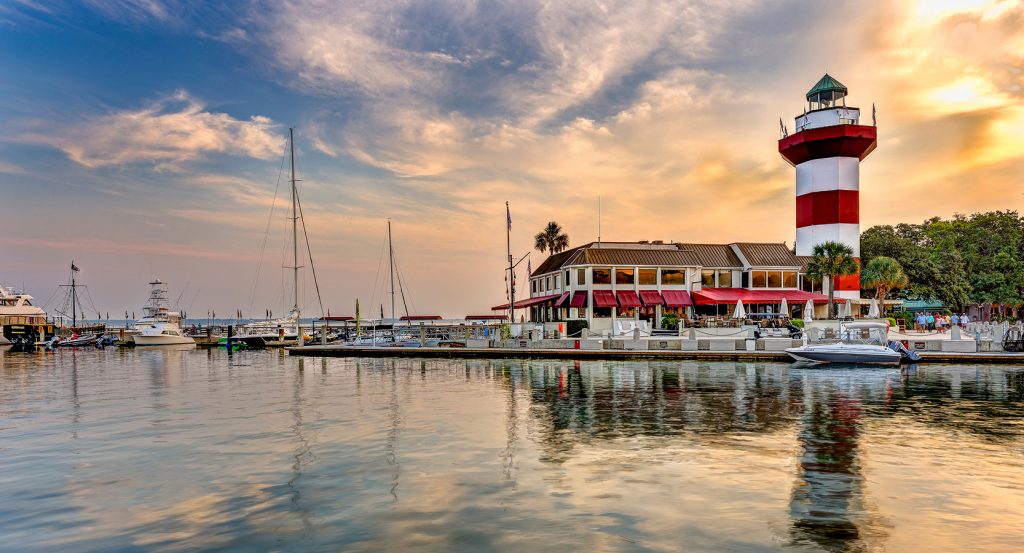
Begin at Hilton Head Rear Range Lighthouse, constructed between 1879 and 1880 after Congress authorized $40,000 for a paired range-light system directing vessels toward Port Royal Sound. The surviving cast-iron tower rises 92 feet from six concrete piers and originally worked with a shorter coastal beacon whose vertical alignment indicated the correct shipping channel; deactivated in 1932, it later served as a Second World War lookout, underwent restoration in 1985 and entered the National Register of Historic Places that same year. Continue to Palmetto Dunes Lagoon System, created as developers confronted severe beachfront erosion across property acquired during the 1960s and engineer Per Bruun advanced an ambitious response joining dredging with dune construction. Nearly two million cubic yards of sand were pumped from the interior excavation to construct dunes reaching 11 feet high, leaving an 11-mile network of navigable lagoons regulated by tidal gates and permanently changing the hydrology and physical form of the resort. Conclude at King Neptune Sundial, the one-ton bronze sculpture created by Wayne Edwards for Shelter Cove Harbour and dedicated on August 11, 1983 after engineers oriented the installation to true south using celestial alignment. Neptune stands 12 feet high above a 26-foot circular dial, with the trident casting the shadow that turns the sculpture into a working timepiece; its arrival accompanied the new harbour created through another immense dredging campaign that supplied sand for Palmetto Dunes' beaches. The progression moves from nineteenth-century range lights engineered to guide ships through Port Royal Sound through a twentieth-century lagoon network engineered to stabilize an oceanfront resort into a grand sundial commissioned for the harbour created during its western expansion, tracing successive attempts to measure, redirect and inhabit Hilton Head's coastal environment.
Where your story begins.
Foresyte Travel reveals places that feel extraordinary long before you arrive.
Experience premium editorial crafted for luxury travelers.