
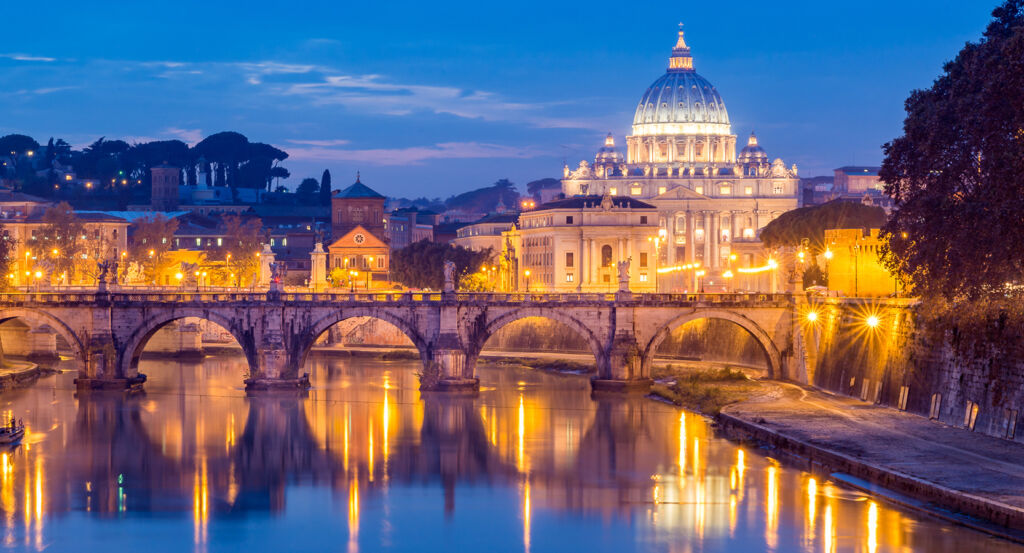
Why you should experience Aurelio in Rome, Italy.
Aurelio is a district of pilgrimage and passage, where ancient roads, religious heritage, and modern Roman life converge along one of the city's most historic western corridors.
Historic thoroughfares, religious institutions, residential communities, neighborhood markets, public parks, cultural landmarks, healthcare centers, and thriving commercial streets create a district shaped by centuries of movement and settlement. Anchored by the ancient Via Aurelia, among the principal roads connecting Rome to the Tyrrhenian coast, the area developed as an important gateway for travelers, merchants, pilgrims, and residents entering and leaving the capital. Clergy, landowners, families, civic leaders, and entrepreneurs helped shape a neighborhood defined by accessibility, continuity, and growth. Over generations, Aurelio evolved into one of Rome's largest residential districts while preserving strong connections to its historical roots. Today, visitors encounter a neighborhood where ancient pathways and contemporary urban life remain closely intertwined. The result is a neighborhood that feels connected, established, and unmistakably Roman. To the east, Vatican City's celebrated religious landmarks, cultural institutions, and historic sites extend naturally from Aurelio across one of Christianity's most significant urban landscapes, reinforcing the district's role within Rome's spiritual and historical identity. Every boulevard, church, and public square reflects a district shaped by movement, faith, and continuity.
What you should know about Aurelio.
Aurelio is best known for being built along Via Aurelia, an ancient Roman road that connected the capital to the western Mediterranean coast and served travelers for more than two thousand years.
Constructed during the Roman Republic, the route became one of the empire's most important transportation corridors, linking Rome with coastal settlements, military outposts, trading centers, and agricultural regions. Merchants transported goods, pilgrims traveled toward sacred destinations, and officials moved between communities using the roadway for centuries. Its strategic importance contributed significantly to Rome's economic integration and regional influence. The corridor also encouraged the development of religious institutions, estates, and settlements along its path. Today, the legacy of Via Aurelia remains embedded within the district's geography and identity. Few neighborhoods possess such a direct connection to one of the foundational road networks of the Roman world.
How to fold Aurelio into your trip.
Aurelio works as an exploration of the historic routes, religious landmarks, and neighborhood destinations that define one of western Rome's most significant districts.
Begin along Via Aurelia, where the neighborhood's defining connection to Roman transportation and expansion immediately comes into focus. Continue toward Villa Carpegna, whose landscaped grounds and historic setting reveal the environmental and cultural influences that shaped the district for generations. From there, make your way to the Church of Santa Maria della Visitazione, where community traditions and religious heritage provide a broader perspective on the character that continues to define Aurelio today. Along the route, you'll encounter historic roadways, neighborhood parks, religious institutions, residential avenues, cultural landmarks, public spaces, and local gathering places that reveal the district's remarkable depth. The progression moves naturally from ancient transportation corridor to historic green space to community landmark, revealing the forces that shaped the neighborhood. The experience showcases a side of Rome defined by continuity, accessibility, and centuries of connection between the capital and the wider Mediterranean world.
Where your story begins.
Foresyte Travel reveals places that feel extraordinary long before you arrive.
Experience premium editorial crafted for luxury travelers.




















































































































