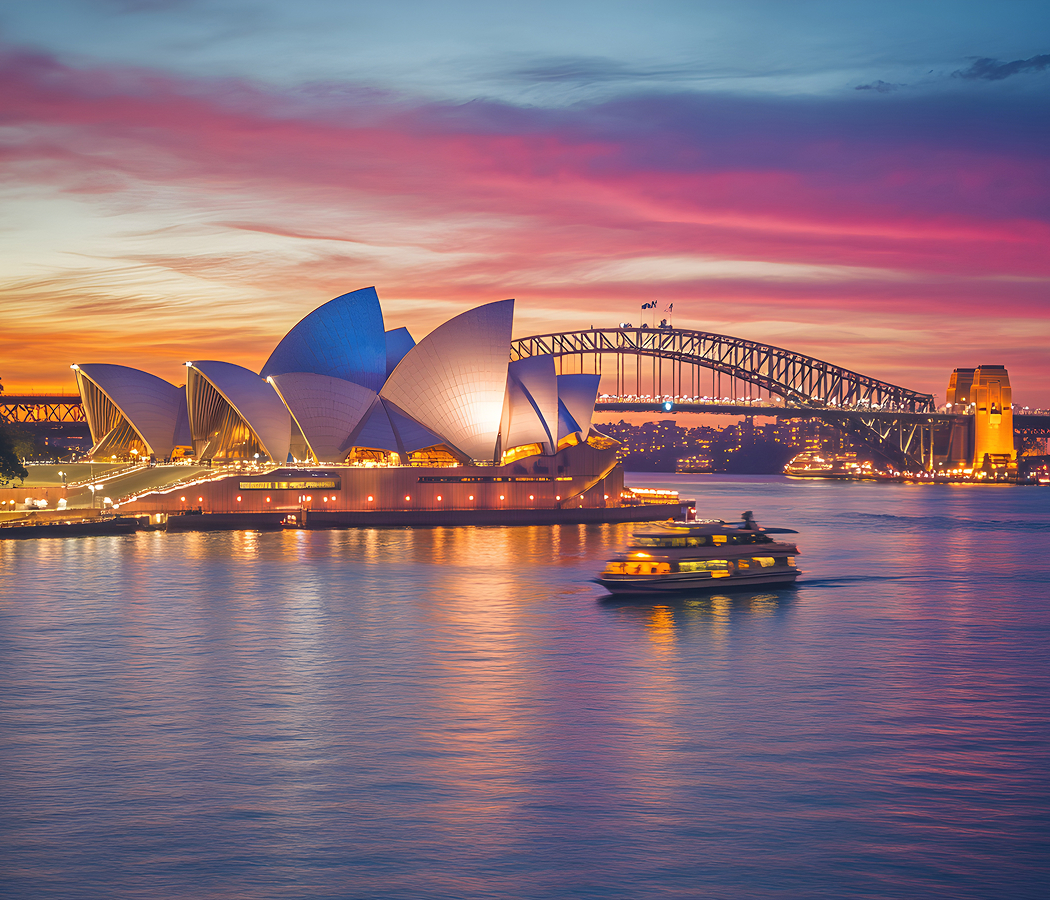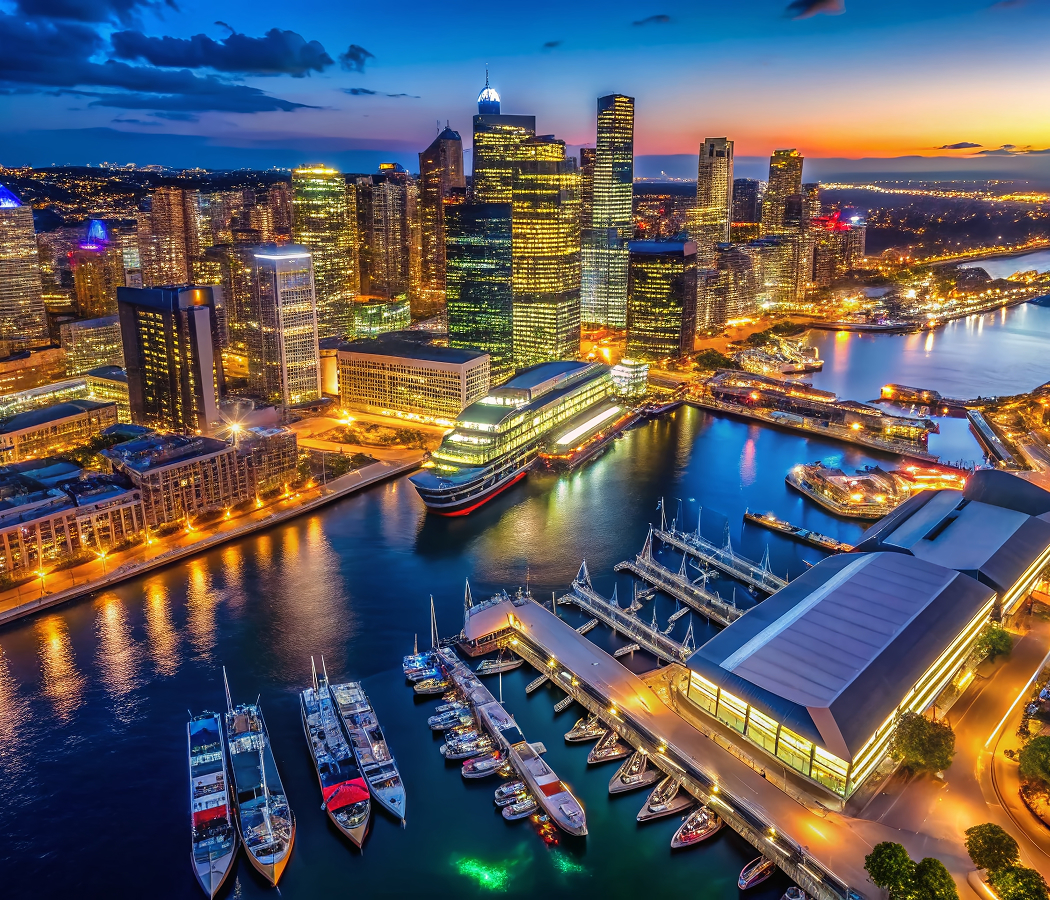
Why you should experience Wharf 7 in Sydney, Australia.
Wharf 7, or Maritime Heritage Wharf, in Sydney is where Australia's seafaring legacy comes to life, not behind glass, but moored in the open air, surrounded by the hum of the harbor and the wind that carried centuries of exploration.
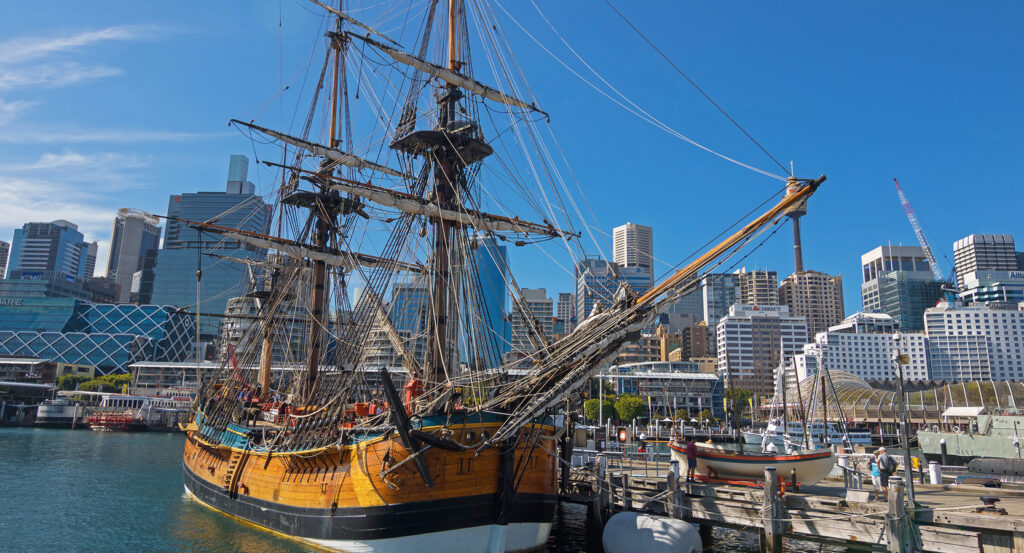
Stretching along Darling Harbour, this living pier serves as the beating heart of Australian National Maritime Museum's outdoor collection. It's not a static display but a living timeline, a place where the decks creak, the flags snap in the breeze, and the salt air smells exactly as it did when these vessels first sailed. Here, history feels physical: you can walk the decks of the destroyer HMAS Vampire, descend into the submarine HMAS Onslow, and step back even further aboard the 18th-century HMB Endeavour Replica. Around you, every gangway leads to a different chapter of maritime history, from naval warfare and oceanic science to trade, migration, and exploration. The Wharf captures something rare in museums today: the sound and movement of history, alive and immediate. It's the kind of place where children look up in awe, sailors grow nostalgic, and travelers pause to realize that Sydney's story has always been one written by the sea.
What you should know about Wharf 7.
Wharf 7 is more than a dock for historic ships, it's an evolving exhibit that connects past and present through real vessels that once shaped Australia's maritime destiny.
Officially opened with the museum in 1991, the wharf was conceived as an interactive extension of the galleries inside. It's home to one of the largest floating heritage fleets in the Southern Hemisphere, each ship preserved in seaworthy condition through ongoing maintenance by skilled maritime conservators. Beyond Vampire, Onslow, and Endeavour, the collection includes working vessels like the Cape Bowling Green Lighthouse Tender, the Krait, a World War II commando vessel used in Operation Jaywick, and a rotating lineup of guest ships that dock throughout the year. The wharf's design allows visitors to move seamlessly from one era to another, tracing Australia's transformation from colonial settlement to modern maritime power. Every mooring has a story, and every rivet, rope, and rusted cleat bears witness to the passage of time. Restoration crews, often visible at work, add another layer of authenticity; they sand, paint, and rig under the same open sky that once guided these vessels across oceans. Wharf 7 also plays a vital role in ongoing cultural exchange, it regularly hosts tall ship festivals, naval visits, and maritime reenactments, turning Darling Harbour into a stage for global seafaring culture. Many visitors don't realize that the wharf's underwater pylons were reinforced to allow even heavy warships to dock safely, a feat of engineering that quietly underscores Sydney's bond with the sea. By day, the decks gleam under the sun; by night, they glow under soft golden lighting, their reflections rippling like ghosts of voyages past. It's this coexistence, of preservation and presence, memory and motion, that makes the Wharf more than an exhibit. It's a discussion between generations who have all stood, in one way or another, at the water's edge.
How to fold Wharf 7 into your trip.
A visit to Wharf 7 is an experience that balances reflection with adventure, an open-air museum walk that feels alive with movement, sound, and story.
Start the journey at Australian National Maritime Museum's entrance, where the Wharf extends westward into Darling Harbour. Begin with the towering HMAS Vampire destroyer to get a sense of postwar naval might, then move to HMAS Onslow for a plunge into the confined intensity of submarine life. From there, the HMB Endeavour Replica offers a humbling contrast, wood instead of steel, candlelight instead of radar, a reminder of how far human ingenuity has sailed in just a few centuries. Plan the timing around midday or late afternoon when sunlight glints off the water and the ships' hulls gleam like burnished history. Between vessels, take a moment to lean against the railing and watch ferries and yachts pass by, the living harbor surrounding these static titans adds texture to the experience. For a fuller immersion, visit during a tall ship festival or maritime weekend, when the Wharf comes alive with music, rigging demonstrations, and sailors swapping stories from deck to deck. Families will find interactive tours that allow kids to explore ship cabins and learn maritime signals, while history buffs can linger with guides who've served aboard these vessels. Don't rush, the Wharf rewards slow exploration. Each gangplank crossed is a step deeper into time, and each gust of sea wind seems to whisper the same truth: every great city begins with a harbor. Finish your visit with a drink at one of Darling Harbour's nearby cafés or restaurants, the view of the ships framed by Sydney's skyline, a perfect reminder that this modern metropolis still carries the heart of a seafaring nation.
Where your story begins.
Foresyte Travel reveals places that feel extraordinary long before you arrive.
Experience premium editorial crafted for luxury travelers.