Why you should experience Bec des Rosses (Bec des Rosses Peak) in Verbier.
Verbier isn’t just a ski resort, it’s an altitude lifestyle, balanced somewhere between adrenaline and elegance.
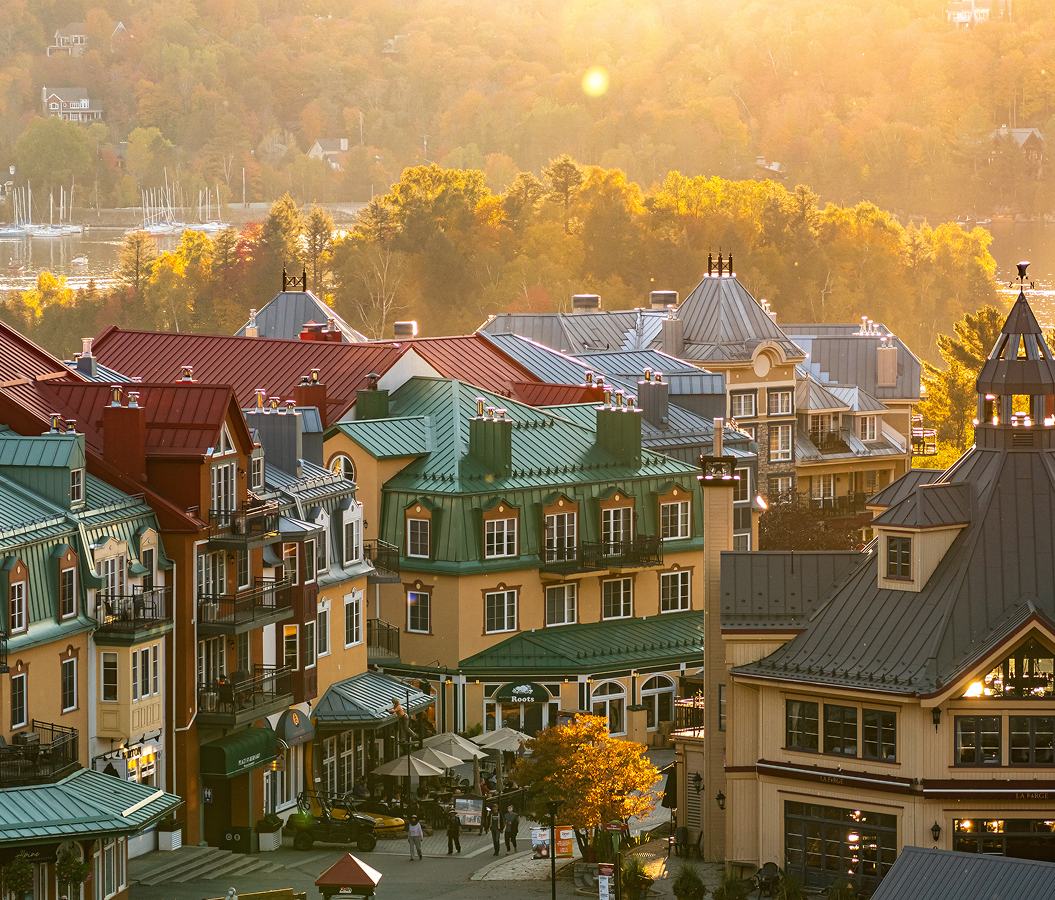
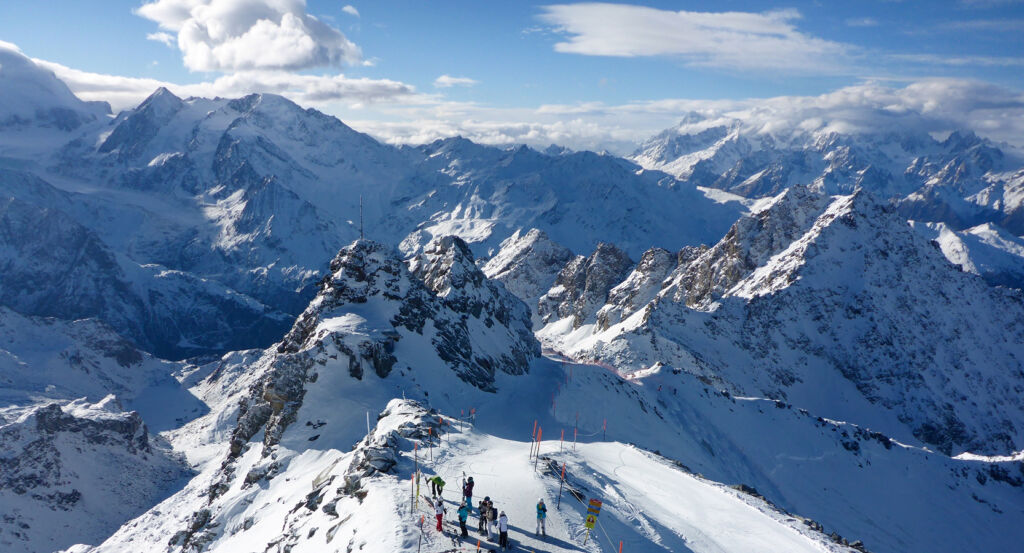
Set high in the Swiss canton of Valais, the village rests on a broad south-facing plateau with views that stretch endlessly toward the Grand Combin and Mont Blanc ranges. Every street hums with a kind of mountain rhythm, mornings of motion, afternoons of light, evenings of quiet indulgence. You wake to the crunch of snow under boots and the smell of espresso drifting from bakeries, then step into a world built for movement. The lifts rise straight from the village, linking you to over 400 kilometers of pistes, from soft beginner runs to hairline ridges that drop into powder fields so pure they seem untouched by time. Yet Verbier’s energy isn’t just on the slopes. It lingers in the calm that follows, in the low golden light spilling across wooden terraces, in the glass of wine sipped slowly as the sun fades over the peaks. The beauty of Verbier is in its balance: wild mountain outside, quiet refinement within.
What you didn’t know about Bec des Rosses.
Bec des Rosses earned its fame not through tourism, but through audacity, it’s the spiritual home of the Freeride World Tour.
Since 1996, the planet’s best big-mountain skiers and snowboarders have converged here each spring for the final event of the circuit, a 600-meter vertical face littered with cliffs, chutes, and blind drops that demand absolute commitment. The rules are simple: no practice runs, no fixed lines, no safety nets. Riders stand at the summit, pick their route by instinct, and trust gravity to do the rest. Over the decades, this competition has turned Bec des Rosses into legend, a proving ground for skill, courage, and artistry on snow. But long before the cameras arrived, the peak was sacred to local guides. Its flanks served as avalanche study zones and wildlife corridors, home to ibex and golden eagles that still nest on its cliffs. Few realize that the rock itself is among the oldest in the region, metamorphic layers forged under unimaginable pressure, older than the glaciers that now trace its base. Every crack and ledge tells a story of survival, of nature, of climbers, of everything that endures when nothing else can.
How to fold Bec des Rosses into your trip.
You don’t have to ski the face to feel its pull, visiting Bec des Rosses is about proximity, not conquest.
Start from Verbier’s Médran lift system and ascend toward Col des Gentianes or Mont Fort, then follow the marked trail or take the gondola to the Mont Gelé ridge for the best vantage. From there, the peak rises just across the valley, black, sculpted, alive. In winter, spend an afternoon at the spectator zone during the Freeride World Tour finals; the energy is unmatched, a mix of reverence and adrenaline as thousands gather in silence before each drop. In summer, hike up from La Chaux through alpine meadow to the shoulder below the peak, where marmots scatter and the view opens into a world of snow and sky. Bring water, a camera, and no expectations, the scale will undo them all. At sunset, the rock glows copper while the valley beneath sinks into shadow, the entire face transforming into a cathedral of light. Back in Verbier, lift a glass to what you just saw, not just a mountain, but a moment where humanity and nature still meet on equal terms. Bec des Rosses isn’t a summit to conquer; it’s a truth to witness. Stand close enough, and you’ll feel the hum of everything that matters, gravity, silence, and awe.
Hear it from the Foresyte community.
“Up here, everything feels louder and quieter at the same time. You end up staring at the horizon like it’s got answers you didn’t know you were looking for.”
Where meaningful travel begins.
Start your journey with Foresyte, where the planning is part of the magic.
Discover the experiences that matter most.