
Why the Betty Ford Alpine Gardens matters.
Betty Ford Alpine Gardens is a high-altitude botanical sanctuary where Vail's Rocky Mountain setting meets the horticultural legacy of former First Lady Betty Ford and an international conservation program dedicated to protecting alpine plants threatened by habitat loss and climatic change.
Positioned within Ford Park along Gore Creek, east of Vail Village and below South Frontage Road, the botanical garden occupies five cultivated acres at an elevation of 8,200 feet, between the landscaped parkland of the Gore Valley and the forested slopes rising toward Vail Mountain. Winding stone paths connect terraced planting beds, rock gardens and water features arranged across the property's sloping terrain. The surrounding mountain scenery provides a natural backdrop for cultivated collections originating in alpine regions across several continents. An educational facility beside the creek extends the gardens' activities into indoor exhibitions and year-round botanical programming. The result is a mountain botanical institution whose cultivated landscapes, specialized collections and conservation facilities connect public horticulture with the protection of fragile high-elevation environments.
What defines the Betty Ford Alpine Gardens.
Betty Ford Alpine Gardens is best known for being the highest-elevation botanical garden in North America, preserving more than 3,000 alpine plant varieties through a horticultural institution founded in 1985 and named for former First Lady Betty Ford in 1988. Its origins lie in a 1983 conversation between landscape designer Marty Jones and gardening enthusiast Helen Fritch during a journey through the Colorado mountains. Jones envisioned a public garden demonstrating the plants capable of surviving the Gore Valley's demanding growing conditions, and Fritch helped turn the proposal into an organized community initiative. Their efforts coincided with municipal plans to develop a substantial public park on the former Antholz Ranch property east of the village. June Simonton advocated incorporating a botanical garden into the park, securing an initial planting area near the planned outdoor amphitheater. The Vail Alpine Garden Foundation brought together local horticulturists, civic supporters and volunteers to finance and establish the project. Hotelier Sheika Gramshammer participated in early fundraising alongside Fritch and Betty Ford, whose longstanding relationship with the mountain community gave the initiative additional support. The gardens received Betty Ford's name in July 1988, honoring her personal interest in horticulture and her contributions to Vail's civic development. A formal dedication followed on August 11, 1989, attended by the Fords, foundation members, representatives of Denver Botanic Gardens and municipal officials. Subsequent expansion introduced the Mountain Meditation Garden in 1991, the Alpine Rock Garden in 1999 and the Children's Garden in 2002. The institution gradually broadened its original demonstration-garden purpose into botanical conservation, developing relationships with federal land managers and organizations responsible for protecting rare plant species. Its 2015 Education Center created permanent facilities for exhibitions, botanical instruction and specialized plant cultivation. In 2020, the gardens partnered with Denver Botanic Gardens to publish the North American Botanic Garden Strategy for Alpine Plant Conservation, coordinating efforts to protect threatened alpine flora. The institution's fortieth-anniversary programming in 2026 marked four decades of expansion from a small community planting project into an internationally recognized center for mountain horticulture and conservation.
Marty Jones' original landscape design established the garden's relationship between cultivated alpine plants, rocky terrain and the surrounding mountain environment. The Mountain Perennial Garden contains flowering species adapted to the Gore Valley's short growing season, arranging plants according to their horticultural characteristics and seasonal development. The Mountain Meditation Garden incorporates sheltered seating, ornamental plantings and carefully positioned paths, creating a quieter section within the larger botanical grounds. The Alpine Rock Garden reproduces the rocky substrates and steep drainage conditions associated with high-elevation habitats, supporting specialized plants whose root systems require precise moisture control. Its cascading waterfall introduces moving water into the planted terraces, connecting the cultivated slopes with the mountain streams characteristic of Colorado's alpine environment. The nationally accredited Alpines of Colorado collection preserves species associated with the state's high mountains, supporting horticultural conservation and botanical education. The Silk Road Garden incorporates plants originating in mountainous regions along the historical trade routes connecting Asia and Europe. The Children's Garden introduces younger audiences to mountain vegetation through accessible planting beds and interactive educational features. Seasonal flowering changes the appearance of the grounds throughout the warmer months, with early blooms followed by species adapted to later summer conditions. The Education Center contains a specialized Alpine House whose controlled temperature and environmental systems support plants requiring conditions unavailable in the outdoor gardens throughout the year. Its collections include rare alpine species originating in different mountain ranges, extending the institution's conservation work beyond the Colorado Rockies. Botanical staff maintain living collections and seed-preservation programs, supporting the protection of species affected by changing environmental conditions. Partnerships with the Bureau of Land Management, Botanic Gardens Conservation International and the Colorado Natural Heritage Program contribute to the conservation of rare regional flora. Educational activities include guided botanical walks, horticultural workshops and programs examining plant adaptations to cold temperatures, intense sunlight and limited growing seasons. The garden's 3,000 cultivated taxa provide an extensive living collection through which the biological diversity of mountain environments receives sustained public interpretation.
How the Betty Ford Alpine Gardens fits.
Betty Ford Alpine Gardens works as the botanical centerpiece for a Vail itinerary connecting the Gore Valley's performing arts institutions, Colorado's military skiing heritage and the pedestrian mountain community established during the development of Vail Resort.
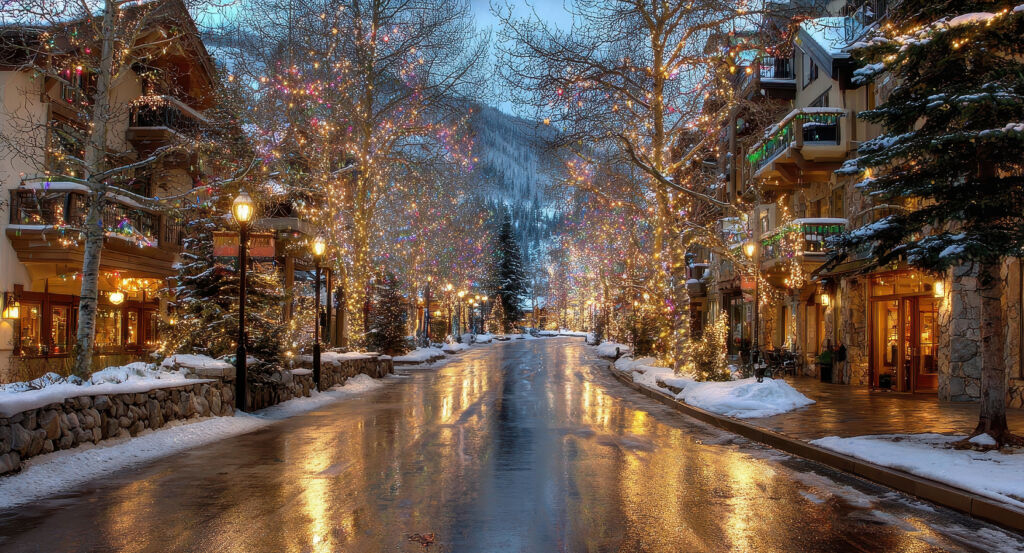
Begin at Gerald R. Ford Amphitheater, the outdoor performing arts venue situated within the surrounding parkland. Opened in 1987 and named for President Gerald Ford, the amphitheater became an important center for the mountain community's summer cultural programming. Its covered stage, terraced seating and landscaped lawn accommodate orchestral concerts, dance productions and community gatherings against a backdrop of forested slopes. The venue hosts the Vail Dance Festival and performances associated with Bravo! Vail, connecting the resort community with internationally recognized musicians and dance companies. Its development expanded the cultural importance of the Gore Valley beyond winter recreation. Continue to Colorado Snowsports Museum, situated beside the principal village parking structure near South Frontage Road. The institution preserves historical skis, snowboards, uniforms, photographs and equipment associated with the development of winter sports throughout Colorado. Its exhibitions examine the United States Army's 10th Mountain Division, whose soldiers trained at Camp Hale before undertaking combat operations in Italy during World War II. Military artifacts connect specialized mountain training with the subsequent development of American recreational skiing. The Colorado Snowsports Hall of Fame recognizes athletes, instructors, equipment innovators and industry figures whose contributions shaped the state's winter sports institutions. Conclude at Vail Village, the Alpine-inspired pedestrian district established alongside the opening of Vail Mountain in December 1962. Its original development involved Pete Seibert, Earl Eaton and architect Fitzhugh Scott, whose planning established a compact commercial center beneath the ski slopes. Bridge Street follows a gently curving alignment between traditional mountain buildings, with timber balconies, steep roofs and stone-paved passages recalling European resort towns. The Clock Tower provides a recognizable architectural focal point, and Gondola One connects the pedestrian district with the upper mountain. The progression moves from the Gore Valley's performing arts traditions through Colorado's skiing history and culminates in the planned mountain community that established Vail's international reputation.
Where your story begins.
Foresyte Travel reveals places that feel extraordinary long before you arrive.
Enjoy editorial crafted for luxury travelers.
Foresyte may earn a commission when you book.


























































































































