Why you should experience Pariser Platz in Berlin, Germany.
Pariser Platz is Berlin's grand urban stage, a space where history, architecture, and modern life blend into a single, cinematic frame.
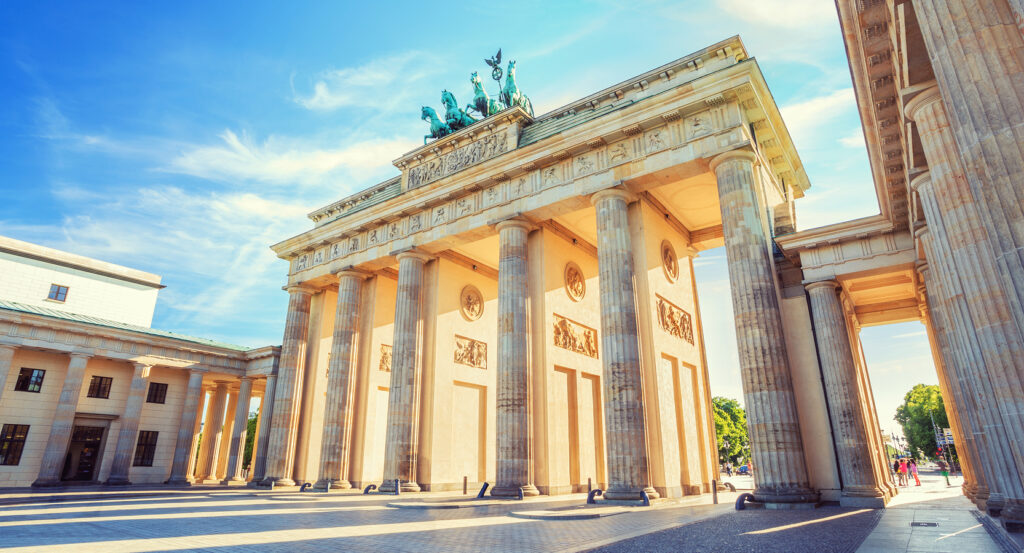
At the heart of it stands the Brandenburg Gate, its neoclassical columns anchoring a square that has witnessed everything from royal parades to Cold War stand-offs. But today, Pariser Platz hums with a calm, cosmopolitan rhythm. The cobblestones gleam in the morning light, framed by stately facades, the French Embassy, the Adlon Kempinski Hotel, and sleek modern buildings housing embassies, banks, and cultural foundations. Street performers play violin beneath the Quadriga's bronze horses while cyclists weave through the open plaza. There's a serenity here that feels hard-won, a quiet dignity that only cities with deep scars can possess. To stand in Pariser Platz is to feel Berlin's contradictions, its grandeur and humility, its tragedy and triumph, all held in perfect balance beneath the vast, open sky.
What you should know about Pariser Platz.
Pariser Platz has been both Berlin's showpiece and its wound.
Named in 1814 after the Prussian victory over Napoleon, “Paris Square”, it once marked the beginning of the city's grandest boulevard, Unter den Linden. Before World War II, it was a glittering address: embassies, the Academy of Arts, and elegant cafés filled its perimeter. But the war left it in ruins, and when the Berlin Wall rose in 1961, the square fell into desolation, a ghostly no-man's-land flanked by barbed wire and watchtowers. Only the Brandenburg Gate remained, isolated and untouchable, a silent witness to division. After reunification, Pariser Platz became the centerpiece of Berlin's rebirth. Architects from around the world were invited to rebuild it with a blend of reverence and modernity, restoring its historic footprint while ushering in a new era of transparency and diplomacy. Few visitors realize that every building here, from the glass-fronted U.S. Embassy to the restored Adlon, was designed to mirror the gate's proportions, creating a subtle architectural harmony that symbolizes the city's reunified identity.
How to fold Pariser Platz into your trip.
Start the exploration of Berlin here, in Pariser Platz, where every direction leads to a different layer of history.
Arrive early to see the Brandenburg Gate glowing in the morning sun, then linger to watch the city wake up: tourists snapping photos, locals sipping espresso at Hotel Adlon's terrace, embassy staff rushing to their offices. Take a seat on one of the benches along the square and simply observe, the rhythm of footsteps echoing off stone, the distant sound of trams, the occasional street musician playing Bach beneath the open sky. From here, stroll east down Unter den Linden toward Museum Island or west toward the Tiergarten park for a seamless transition from cityscape to nature. If you return at night, Pariser Platz transforms again, softly lit, almost cinematic, with the Brandenburg Gate glowing at its edge like a golden proscenium. In that quiet hour, you'll understand what Berlin has mastered better than almost any city: how to turn memory into movement, and how to let beauty rise exactly where history once broke.
Where your story begins.
Foresyte Travel reveals places that feel extraordinary long before you arrive.
Experience premium editorial crafted for luxury travelers.