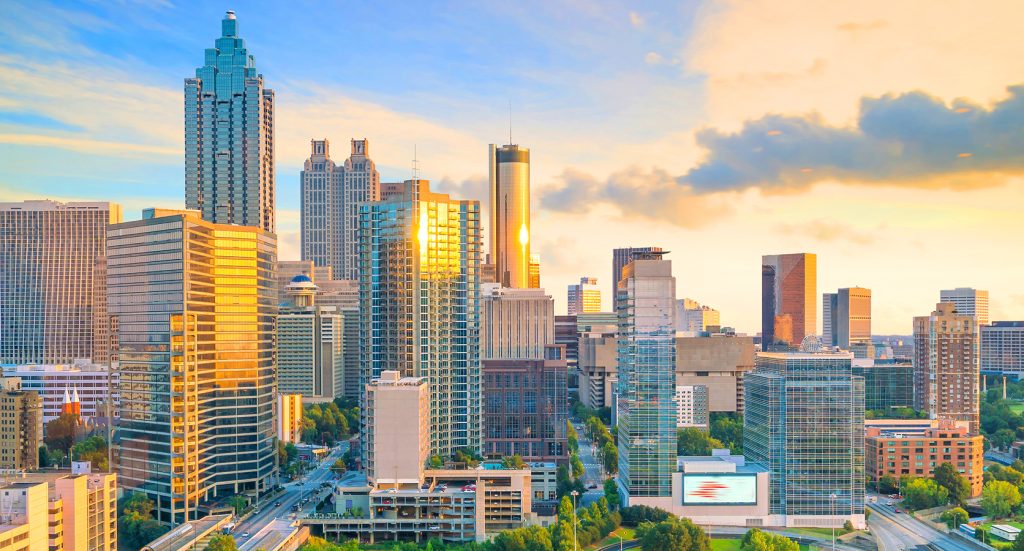
Why you should experience Broad Street in Atlanta, Georgia.
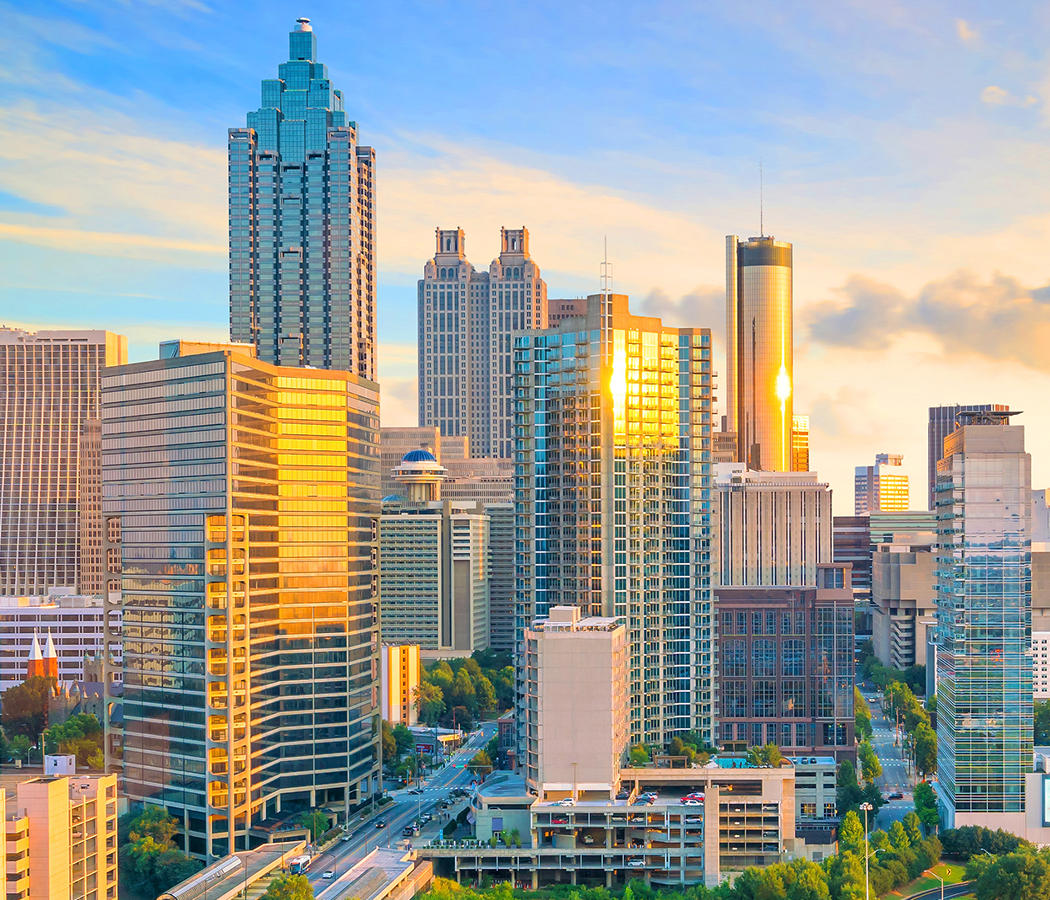
Broad Street is a historic Downtown corridor where commercial innovation, architectural heritage, and civic life converge along one of the city's oldest and most influential streets.
Running through Downtown between Marietta Street and Alabama Street, this storied corridor connects historic commercial buildings, local businesses, restaurants, civic institutions, and pedestrian-friendly public spaces that have shaped Atlanta's economic heart for more than a century. Early twentieth-century architecture, restored storefronts, thriving sidewalks, and enduring commercial blocks create a streetscape where the city's entrepreneurial spirit remains on full display. From Atlanta's emergence as a railroad crossroads through its rise as the capital of the modern South, Broad Street has remained one of the city's defining commercial corridors. The result is a street defined by commerce, resilience, and enduring urban character.
What you should know about Broad Street.
Broad Street is best known for preserving the legacy of the Great Atlanta Fire of 1917, the most destructive fire in the city's history, which destroyed nearly 2,000 buildings, left 10,000 people homeless, and burned more than 300 acres before permanently reshaping Atlanta's building codes, commercial architecture, and approach to urban development.
Although the fire devastated neighborhoods northeast of Downtown, its aftermath fundamentally influenced rebuilding efforts throughout the city, including Broad Street's commercial core. New construction emphasized fire-resistant materials, wider setbacks, and more durable architectural practices that transformed Atlanta's urban landscape during the decades that followed. The disaster became one of the defining turning points in the city's history, accelerating modernization while demonstrating the remarkable resilience of Atlanta's business community. Today, Broad Street continues to reflect that legacy through the historic commercial buildings and resilient streetscape that emerged during the city's remarkable recovery.
How to fold Broad Street into your trip.
Broad Street works as an exploration of Downtown's commercial heritage, historic architecture, and civic landmarks.
Begin at The Healey Building, where one of Atlanta's finest Beaux-Arts skyscrapers immediately establishes the corridor's architectural significance. Continue toward Five Points, whose historic crossroads reveal why Atlanta developed into the South's premier transportation hub. From there, make your way to Underground Atlanta, where preserved nineteenth-century streets provide a broader perspective on the city's remarkable commercial evolution. Along the route, you'll encounter historic storefronts, neighborhood cafés, architecturally significant buildings, public art, locally owned businesses, and lively pedestrian spaces that demonstrate how Broad Street seamlessly connects Atlanta's commercial past with its contemporary downtown energy. The progression moves naturally from landmark skyscraper to historic crossroads to preserved commercial district, revealing why Broad Street remains one of the city's defining corridors.
Where your story begins.
Foresyte Travel reveals places that feel extraordinary long before you arrive.
Experience premium editorial crafted for luxury travelers.