Why you should experience Customs House in Sydney, Australia.
Customs House is more than a landmark, it's Sydney's architectural autobiography, written in sandstone and light, where the city's colonial roots and modern rhythm converge under one timeless façade.
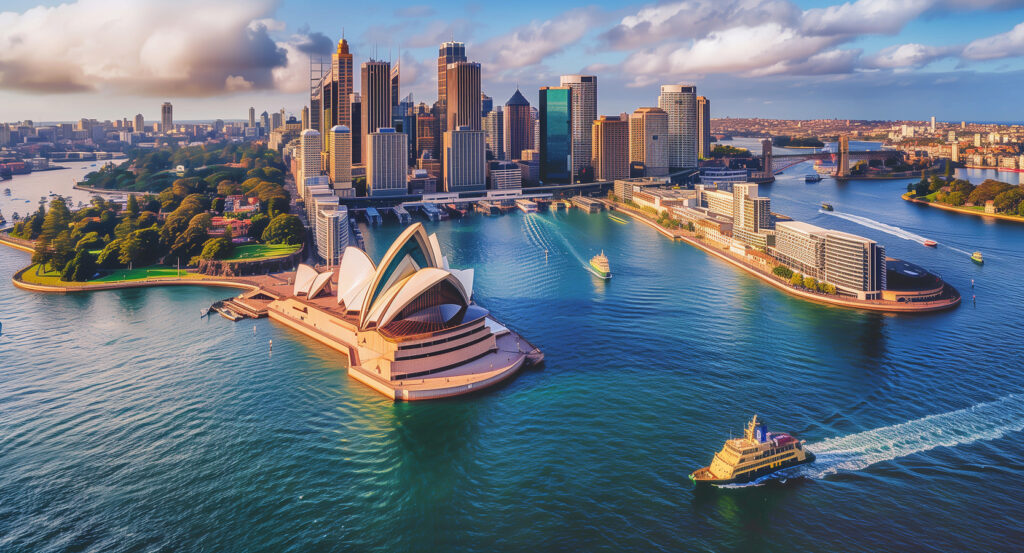
Standing proudly at Circular Quay since 1845 once served as the literal gateway to Australia, where ships were inspected, goods were taxed, and passengers first stepped into the colony. Today, it hums with a different energy, a civic and cultural hub alive with exhibitions, public reading rooms, and cafés that spill out beneath its neoclassical colonnade. The building itself feels alive: polished staircases curve beneath vaulted ceilings, sunlight glances off marble floors, and the great clock tower tolls above the harbor. Step inside and the din of the quay fades, replaced by a sense of measured calm, the same stillness that once marked the pause between voyages and the beginning of new lives. Few places capture Sydney's evolution so completely: from maritime outpost to modern metropolis, every brick of Customs House still beats with the rhythm of arrival.
What you didn't know about Customs House.
Customs House was among the first permanent government structures built after Sydney's founding, and for more than a century it functioned as the city's beating administrative heart.
Its foundation stone was laid in 1844 using convict labor, and its sandstone façade was carved from blocks quarried just across the harbor in Pyrmont. The building grew in stages as Australia itself expanded, new wings were added in the 1880s, crowned by the clock tower that became a navigational beacon for ships entering Port Jackson. During the late 19th century, over two-thirds of the nation's imported goods were processed within these walls; beneath the grand marble atrium, customs officers recorded manifests, inspected contraband, and assessed tariffs that helped finance the young colony. During World War II, Customs House was fortified with blackout curtains and signal stations, monitoring every vessel that passed through the Heads. After the decline of maritime trade in the mid-20th century, the building faced potential demolition, only to be saved through a passionate preservation campaign led by local historians. Its rebirth in 2003 transformed it into a public space once again, this time as a library, exhibition venue, and architectural showcase. Beneath its glass atrium floor, a detailed scale model of Sydney stretches from The Rocks to Kings Cross, illuminated by fiber optics that trace the city's arteries in miniature. The design itself is symbolic: the new glass roof admits light through the same axis once used for ship navigation, aligning the building with the harbor's true north. Hidden within its walls are relics of the past, original wooden lifts, the 19th-century vault room, and fragments of handwritten ledgers still etched with the signatures of sailors long departed. Customs House, in its quiet dignity, remains a story of reinvention, proof that history can modernize.
How to fold Customs House into your trip.
Visiting Customs House is like opening a living time capsule, part museum, part meeting place, and entirely woven into the rhythm of the quay.
Begin at the forecourt, where fountains ripple in the shadow of the great clock tower, and pause to admire the building's symmetrical façade, its flagpoles standing like masts against the skyline. Step inside through the main arched entrance and descend into the atrium, where the illuminated glass floor reveals Sydney's intricate urban model, a favorite among photographers and children alike. From there, wander through the upper floors to explore rotating exhibitions on Australian design, history, and maritime heritage, or retreat to the tranquil reading rooms lined with oak and brass lamps. The top floor café offers sweeping harbor views, perfect for morning coffee or late afternoon tea as ferries drift past below. Customs House is best visited in tandem with other Circular Quay icons: pair it with a harbor walk toward the Opera House or an evening meal at the nearby Quay Dining Precinct. Admission is free, and guided tours operate on select weekends, offering rare access to the clock tower and its 19th-century mechanisms. Plan at least an hour for exploration, longer if you linger in the reading rooms or exhibitions. Whether you enter for architecture, history, or simple curiosity, you'll leave with the sense that Customs House is more than a building, it's Sydney, standing still long enough to remember where it came from.
Where your story begins.
Start your planning journey with Foresyte Travel.
Experience immersive stories crafted for luxury travelers.