Why Drayton Hall matters.
Drayton Hall in Charleston is a masterpiece of restraint, a hauntingly beautiful reminder of America's colonial past preserved in its purest form.
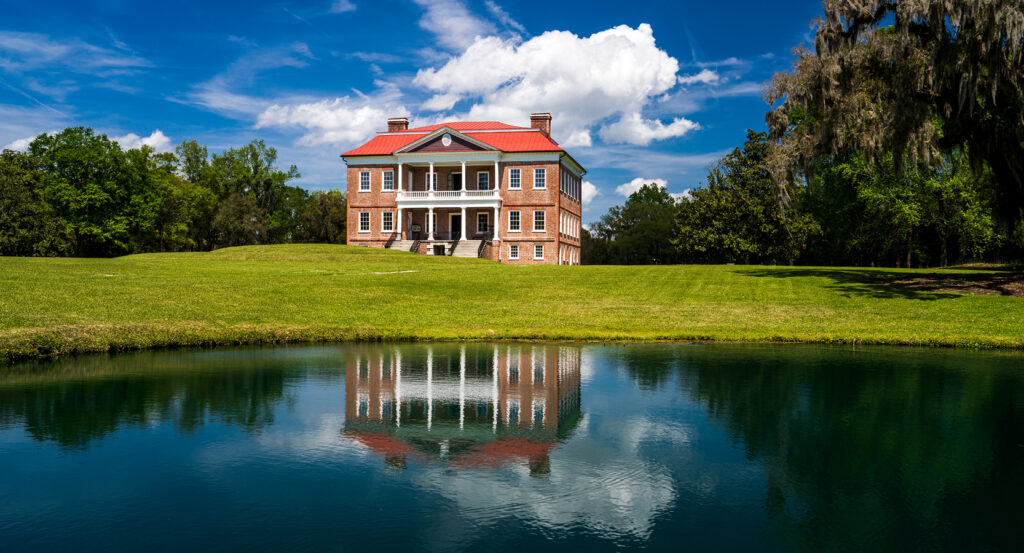
Completed in 1742, this stately Georgian-Palladian mansion stands on the banks of the Ashley River, untouched by modern reconstruction or embellishment. Unlike many of Charleston's restored plantation homes, Drayton Hall has been preserved “as found”, its weathered brick, sun-faded plaster, and uneven floors left intentionally intact. The result is a time capsule that feels suspended between centuries. Its symmetrical façade, crowned by a pedimented portico and grand double staircases, captures the Enlightenment ideals of proportion, order, and reason. Step inside, and you'll find no velvet ropes or period furniture, just raw history etched into every wall and floorboard. The absence of ornamentation gives the house a ghostly honesty; the echoes of its builders, enslaved and free, resonate more powerfully than any curated display could convey. Drayton Hall is not about performance, it's about authenticity. It invites reflection rather than nostalgia, standing as one of the finest examples of early American architecture and the only plantation house on the Ashley River to survive both the Revolutionary and Civil Wars fully intact.
What defines Drayton Hall.
Drayton Hall's power lies in its paradox: grand yet humble, enduring yet fragile, frozen yet alive.
Built by John Drayton Sr., a wealthy rice planter and civic leader, the estate was designed as both a family home and a statement of intellectual and cultural sophistication. Its design drew directly from the architectural ideals of 18th-century England, blending Palladian symmetry with Lowcountry practicality, wide windows for air circulation, elevated floors for flood protection, and a riverfront alignment to welcome visitors arriving by boat. Yet beneath its elegance lies a story of labor and loss. The estate's prosperity was built on the backs of hundreds of enslaved Africans, whose craftsmanship gave Drayton Hall its precision and grace. Archaeological excavations continue to uncover artifacts from their lives, pottery fragments, tools, and traces of the once-thriving community that surrounded the main house. Remarkably, Drayton Hall survived every major war that ravaged Charleston. During the Revolutionary War, both British and American troops occupied the property; during the Civil War, it was spared the torch that destroyed many neighboring plantations. The family's descendants continued to inhabit the home until the mid-20th century, when it was sold to the National Trust for Historic Preservation in 1974. Since then, it has remained a benchmark of preservation philosophy: “preserved, not restored.” That distinction matters deeply. Rather than recreating an imagined past, Drayton Hall preserves the evidence of real time, the patina of age, the marks of hands that built and maintained it, the unspoken memory of those who lived and toiled there. Its surviving features, the original staircases, plaster moldings, hand-carved cornices, and ornate ceiling medallions, reveal a level of craftsmanship unmatched in the American South. Even the surrounding grounds are treated as archaeological resources rather than manicured gardens, allowing history to reveal itself slowly, authentically, and with reverence.
How Drayton Hall fits.
A visit to Drayton Hall offers one of the most contemplative experiences in Charleston, an encounter with history in its raw, unembellished form.
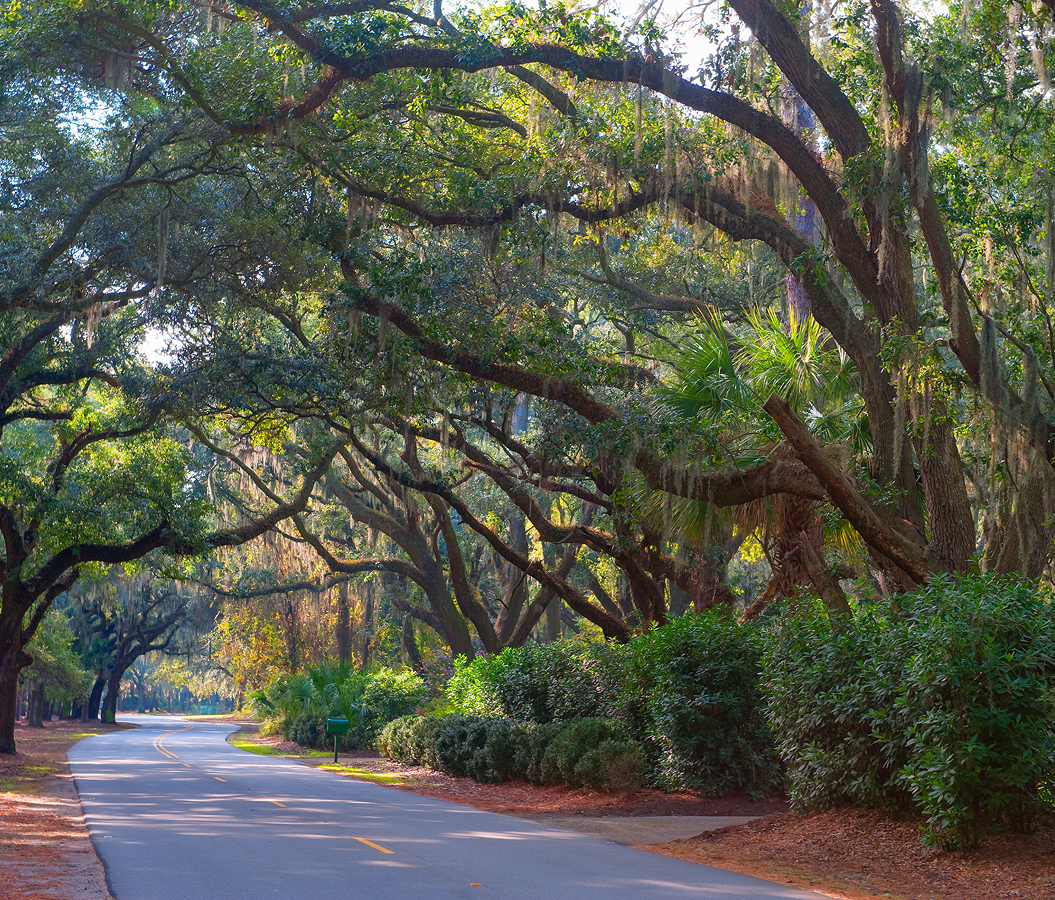
Located just 30 minutes from downtown along the scenic Ashley River Road, the site pairs beautifully with nearby Magnolia Plantation and Middleton Place for a day immersed in Charleston's plantation corridor. Begin at the modern visitor center, which features an award-winning orientation film, museum exhibits, and the Ashley River Gallery, all designed to contextualize the lives of the Drayton family and the enslaved people who sustained them. Guided house tours provide a rare opportunity to step through 18th-century halls still bearing original paint, plaster, and heart pine floors. The absence of furniture draws your eye to the architecture itself, the play of light across the grand double-height Great Hall, the symmetry of doorways that open like portals through time. Outside, take the self-guided landscape tour, tracing the path from the riverside allée of oaks to the site of the former slave quarters and gardens. Don't miss the on-site African American Cemetery, among the oldest documented burial grounds for the enslaved in the nation, still active today and maintained with solemn dignity. For those drawn to the artistry of architecture, Drayton Hall stands as a textbook example of Palladian influence in early America, rivaled only by estates like Mount Airy and Westover in Virginia. But for most visitors, its power is resonant, the feeling of standing in a place where history breathes, unfiltered. Bring water, comfortable shoes, and time; Drayton Hall rewards those who linger, who listen, and who look closely. As the sun sets over the Ashley River, the brick façade glows a deep, earthen red, a fitting color for a house that has endured fire, flood, and the full span of human history. Drayton Hall is not a relic of the past; it is the past, preserved with quiet, unwavering truth.
Where your story begins.
Foresyte Travel reveals places that feel extraordinary long before you arrive.
Enjoy editorial crafted for luxury travelers.
Foresyte may earn a commission when you book.