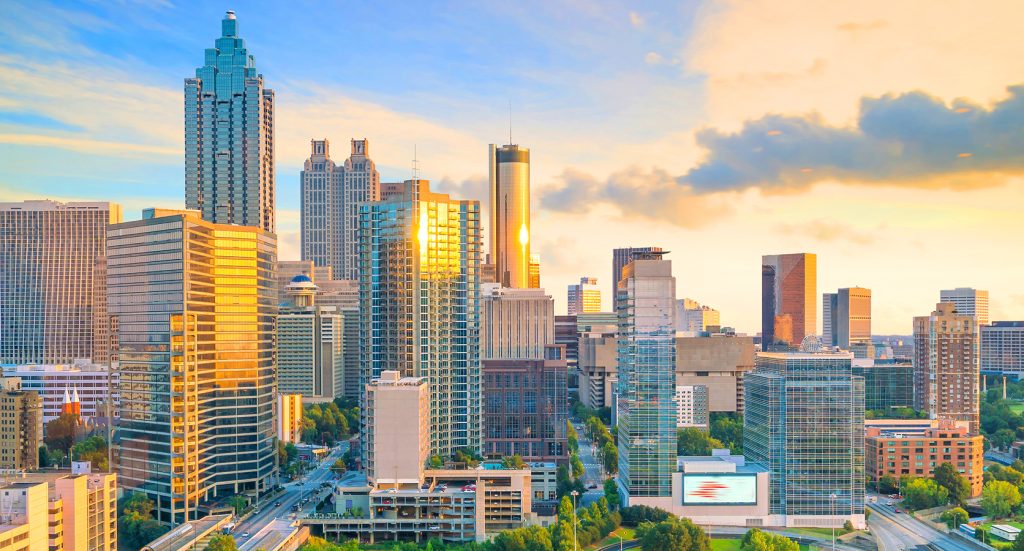
Why you should experience Forsyth Street in Atlanta, Georgia.
Forsyth Street is a historic Downtown corridor where railroad commerce, civic leadership, and architectural heritage converge along one of the city's most enduring urban streets.
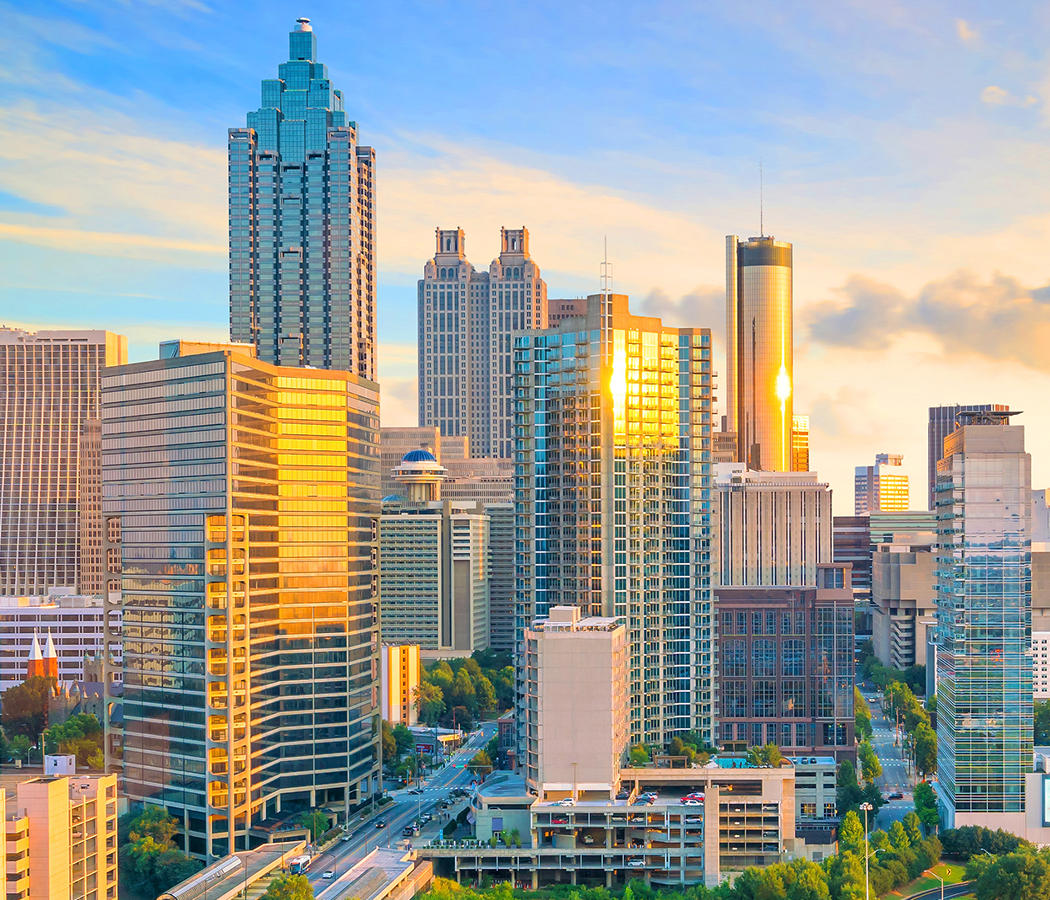
Running through Downtown between Fairlie-Poplar and South Downtown, this influential corridor connects historic office buildings, landmark hotels, government institutions, theaters, transit hubs, and preserved commercial blocks that have shaped Atlanta's civic and economic character since the nineteenth century. Early skyscrapers, restored masonry façades, active streetscapes, and contemporary redevelopment projects create a corridor where Atlanta's commercial origins remain woven into its modern metropolitan landscape. As the city expanded into the commercial capital of the Southeast, Forsyth Street became an essential artery linking rail passengers, merchants, civic leaders, and businesses at the heart of Downtown. The result is a corridor defined by enterprise, continuity, and enduring historical significance.
What you should know about Forsyth Street.
Forsyth Street is best known for passing The Healey Building, the 16-story Gothic Revival skyscraper completed in 1914, whose pioneering fireproof steel-frame construction, ornate terra-cotta façade, and designation as a National Historic Landmark established it as one of Atlanta's finest early skyscrapers and one of the city's most architecturally significant commercial buildings.
Commissioned by prominent businessman Joel Hurt and financed by the Healey family, the building represented Atlanta's growing confidence as a modern commercial center during the early twentieth century. Its innovative engineering, richly detailed Gothic ornamentation, and state-of-the-art office design reflected national advances in skyscraper construction while helping redefine the city's skyline. Over the following century, the tower housed generations of businesses, professional offices, and civic organizations before undergoing an acclaimed restoration that preserved its historic character for future generations. Forsyth Street remains closely associated with this architectural masterpiece, offering visitors a direct connection to one of the defining landmarks of Atlanta's commercial and design history.
How to fold Forsyth Street into your trip.
Forsyth Street works as an exploration of Downtown's architectural heritage, civic landmarks, and historic commercial core.
Begin at The Healey Building, where one of Atlanta's greatest early skyscrapers immediately establishes the corridor's architectural significance. Continue toward Woodruff Park, whose central greenspace and public art reveal the civic heart of Downtown. From there, make your way to Underground Atlanta, where preserved nineteenth-century streets and historic storefronts provide a broader perspective on the railroad city that gave rise to modern Atlanta. Along the route, you'll encounter historic office buildings, neighborhood cafés, restored commercial façades, public plazas, civic institutions, and energetic pedestrian corridors that demonstrate how Forsyth Street seamlessly connects Atlanta's architectural legacy with its contemporary downtown vitality. The progression moves naturally from landmark skyscraper to civic gathering space to preserved historic district, revealing why Forsyth Street remains one of the city's defining historic corridors.
Where your story begins.
Foresyte Travel reveals places that feel extraordinary long before you arrive.
Experience premium editorial crafted for luxury travelers.