
Why Four Seasons Resort and Residences Vail matters.
Four Seasons Resort and Residences Vail is a mountain resort where Vail's alpine village meets Colorado's ski history, Rocky Mountain ecology and the traditions of year-round hospitality in one of the American West's most carefully planned mountain towns.
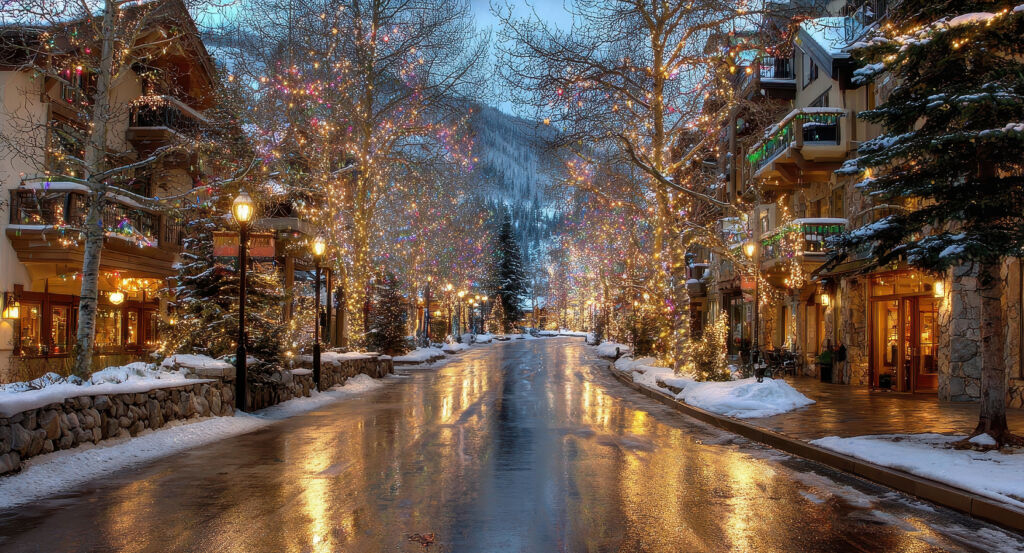
Set along Vail Road beside Gore Creek, Four Seasons Resort and Residences Vail occupies a wooded position near Vail Village and the base routes toward the ski mountain, with the Gore Range rising behind the town and the valley extending west toward Eagle. Its stone-and-timber architecture draws on alpine lodges while incorporating broad windows, steep rooflines, balconies and sheltered terraces suited to heavy winter snow. The buildings step through a wooded slope rather than forming a single vertical block, creating a sequence of guest rooms, residences, courtyards and outdoor gathering spaces. Gore Creek runs below the property, connecting the resort with walking paths, bridges and the forested landscape that defines Vail's valley floor. Guest rooms and residences face the creek, village or mountains, with views changing from snow-covered slopes in winter to green aspen groves and open meadows in summer. The resort's arrival court creates a formal transition from Vail Road to the lobby, restaurants, spa and private accommodation areas. Paths lead toward the pedestrian village, ski lifts, galleries, restaurants and the commercial streets that make Vail distinct from a conventional mountain subdivision. The surrounding forest remains visible from the property, while the steep mountain terrain establishes a continuous relationship between the resort and the ski landscape beyond. The result is a substantial Colorado resort whose architecture, river setting and village access connect Four Seasons hospitality with the geography of the Central Rocky Mountains.
What defines Four Seasons Resort and Residences Vail.
Four Seasons Resort and Residences Vail is best known for bringing the Four Seasons model to a year-round mountain destination shaped by skiing, alpine recreation and the planned village architecture of Vail. The property opened in 2011 as a major luxury resort within Vail's central residential and commercial district, adding a large hospitality and ownership component to the town's established ski economy. Its location beside Gore Creek places the resort within walking distance of Vail Village while preserving direct access to forests, trails and mountain views. The property contains 121 guest rooms and suites together with private residences arranged through a low-rise alpine complex. The accommodations combine generous living areas, fireplaces, balconies, kitchens or kitchen areas and views toward the creek, village or mountains. The residences create a longer-stay dimension, allowing families and owners to use the property as a private mountain home supported by hotel services. Its architecture uses stone, timber, glass and pitched roofs to establish continuity with the surrounding lodge tradition while providing contemporary interiors and expansive public spaces. The resort's importance rests on the integration of luxury service, private ownership and mountain recreation within one of Colorado's most recognized ski towns. It operates across all four seasons, supporting skiing, snowboarding and snowshoeing in winter and hiking, cycling, fly-fishing and golf in warmer months. Four Seasons Resort and Residences Vail represents the evolution of American ski hospitality from seasonal lodge accommodation into a sophisticated year-round resort economy. Its position along Gore Creek also preserves a visible relationship with the natural systems that support the valley's forests, waterways and wildlife. The resort functions as both a private alpine retreat and an urban hotel within a pedestrian mountain village.
Gore Creek provides the environmental presence that shapes the resort's setting, carrying water through the valley beneath aspens, spruce and lodgepole pine. Its banks support walking, fishing and quiet observation, creating a natural counterpoint to the ski lifts, restaurants and pedestrian paths of the village. The resort's spa develops a restorative program through treatment rooms, hydrotherapy, relaxation areas and therapies influenced by the seasons and altitude of Colorado. Fitness facilities, yoga, guided hikes and outdoor activities support movement and recovery across the mountain landscape. Dining venues combine Colorado ingredients, seasonal cuisine, international technique and warm lodge interiors, creating settings suited to both après-ski gatherings and formal evening meals. The pool and outdoor terraces provide spaces for swimming, relaxation and mountain views, while fireplaces and sheltered lounges maintain a strong sense of winter comfort. Guest rooms preserve a residential character through sitting areas, fireplaces, balconies, large bathrooms and views that keep the mountains or creek present throughout the stay. Private residences extend this atmosphere through larger living rooms, full kitchens, multiple bedrooms and dining areas designed for family gatherings and extended visits. Ski services connect the resort to equipment, instruction, mountain transportation and the daily routines of winter recreation. Summer programming shifts toward hiking, cycling, rafting, fishing and excursions through the forests and alpine valleys surrounding Vail. Event spaces support weddings, corporate retreats, private celebrations and seasonal gatherings within a setting defined by timber, stone, fire and mountain light. The service culture emphasizes personal attention, outdoor access and the careful coordination required by an active mountain destination. Four Seasons Resort and Residences Vail functions as a complete alpine destination, combining residential accommodation, wellness, dining and recreation within the forested landscape of the Gore Valley.
How Four Seasons Resort and Residences Vail fits.
Four Seasons Resort and Residences Vail works as the starting point for an exploration connecting Vail's ski history, its alpine botanical landscape and the mountain communities that developed around recreation, conservation and Rocky Mountain culture.
Begin at Colorado Snowsports Museum and Hall of Fame, the Vail Village institution dedicated to the history of skiing and snowboarding in Colorado and the athletes, equipment and competitions that shaped the state's winter identity. Its exhibits connect Vail's local development with the broader history of American snow sports, from early ski technology to professional competition and Olympic achievement. The museum's position within the pedestrian village places the resort town's historical memory directly beside shops, restaurants and mountain access routes. Its collections reveal how skiing transformed the economies, architecture and seasonal rhythms of Colorado mountain communities. Continue to Betty Ford Alpine Gardens, the high-altitude botanical garden where rock gardens, alpine plants, water features and mountain views create a living collection within the Vail landscape. The gardens preserve species adapted to harsh conditions while presenting the ecological diversity of alpine and subalpine environments. Their pathways move through planted terraces, streams and shaded areas, demonstrating the relationship between horticulture, elevation and Rocky Mountain climate. The garden provides a quieter cultural setting within the resort town and connects Vail's visitor economy to conservation and environmental education. Conclude at Vail Nature Center, the educational and ecological facility along Gore Creek where trails, meadows, forests and interpretive programs introduce visitors to the wildlife and habitats of the valley. The center's setting reveals the natural systems that existed before Vail's development, including wetlands, riparian vegetation and mountain forests. Guided programs examine birds, mammals, wildflowers and the seasonal changes that shape the local environment. Its position beside the creek connects the resort's urban setting with the broader ecological corridor running through the valley. The progression moves from Colorado Snowsports Museum and Hall of Fame's winter history through Betty Ford Alpine Gardens' alpine collections and concludes at Vail Nature Center, where the forests and waterways of the Gore Valley become the focus of environmental study.
Where your story begins.
Foresyte Travel reveals places that feel extraordinary long before you arrive.
Enjoy editorial crafted for luxury travelers.
Foresyte may earn a commission when you book.


























































































































