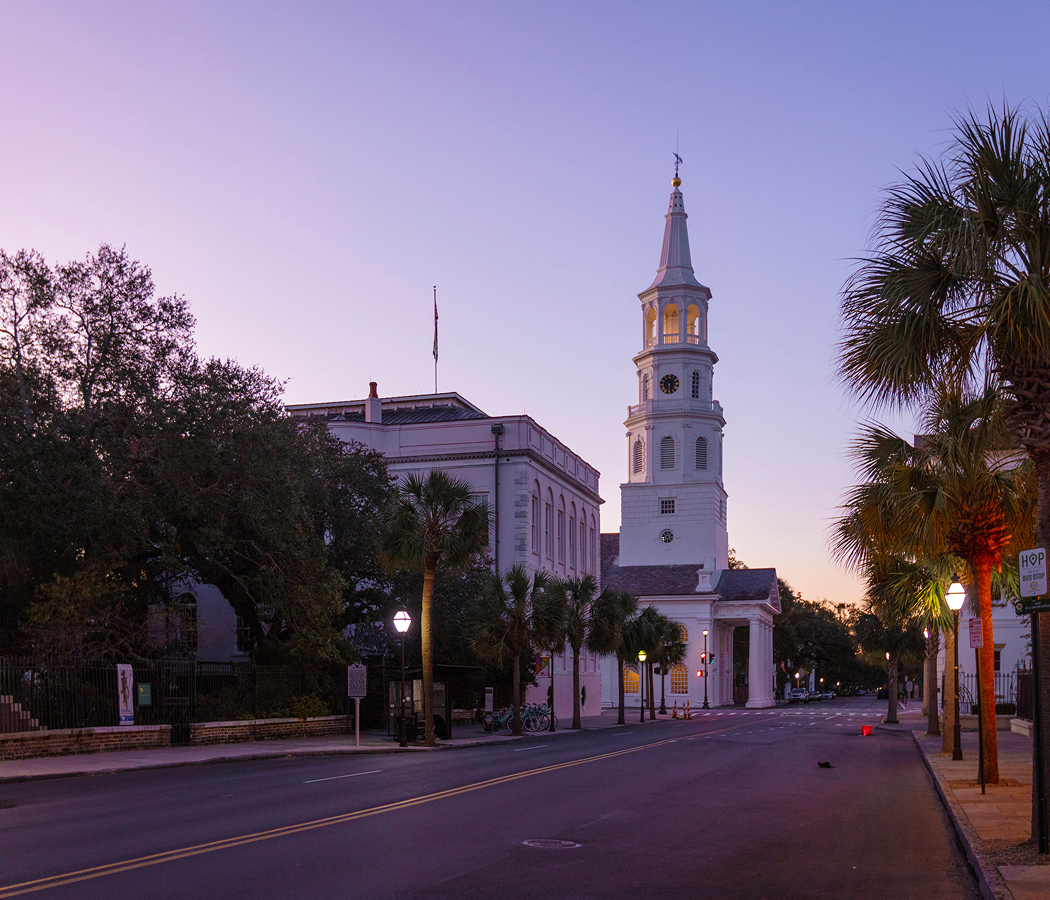
Why you should experience Historic St. Peter's Church and Historical Marker in South Carolina.
Historic St. Peter's Church and Historical Marker is a revered church where Downtown Beaufort's African American Catholic heritage, Reconstruction legacy, and enduring spirit of faith preserve one of the city's most significant religious institutions.
Set along Carteret Street near Craven Street and just steps from Reconstruction Era National Historical Park, this beautifully preserved Gothic Revival church welcomes visitors through pointed-arch windows, handsome brick masonry, historic stained glass, and a tranquil sanctuary that has served generations of Beaufort families for well over a century. Refined ecclesiastical architecture, peaceful grounds, and interpretive signage reinforce the church's enduring role within one of South Carolina's most historically important communities. The result is an experience defined by spiritual continuity, historical significance, and the enduring legacy of Beaufort's African American Catholic community.
What you should know about Historic St. Peter's Church and Historical Marker.
Historic St. Peter's Church and Historical Marker is best known as the home of St. Peter's Catholic Church, founded in 1894 as one of coastal South Carolina's earliest African American Catholic parishes, preserving more than 130 years of continuous worship while reflecting the rapid expansion of Black religious institutions following Reconstruction. The present Gothic Revival sanctuary was completed in 1910 under the direction of the Josephites, formally the Society of St. Joseph of the Sacred Heart, a missionary order established in Mill Hill, England, in 1866 by Herbert Vaughan before beginning ministry in the United States in 1871 with a singular mission of serving African American Catholics through churches, schools, and pastoral outreach. Early parish leadership, including Father John J. McCarthy, expanded educational opportunities alongside religious ministry, establishing St. Peter's as both a place of worship and an important center of community life during the era of segregation. The accompanying South Carolina Historical Marker recognizes the parish's lasting contributions to Beaufort's religious, educational, and cultural history while documenting its role within one of the South's most historically significant African American Catholic communities. Standing within the nationally significant Reconstruction landscape, the church occupies ground closely connected to the Port Royal Experiment, Union occupation beginning in 1861, the emergence of public education for formerly enslaved people, and the political transformation that reshaped Beaufort during the Civil War and Reconstruction. Continued preservation has secured the church's place among Beaufort's most important historic religious institutions, where architecture, faith, education, and African American history remain inseparable from the city's broader historical narrative.
Original stained glass, pointed Gothic windows, traditional liturgical furnishings, and carefully preserved interior detailing continue reflecting the craftsmanship of the 1910 sanctuary while illustrating the restrained Gothic Revival style widely employed for Catholic churches during the late nineteenth and early twentieth centuries. Active parish life, ongoing preservation, and the adjacent historical marker ensure the site remains both a living congregation and an important destination for understanding Beaufort's religious diversity, Catholic missionary history, and Reconstruction-era legacy.
How to fold Historic St. Peter's Church and Historical Marker into your trip.
Historic St. Peter's Church and Historical Marker works as part of a walking exploration through Beaufort's nationally significant religious and Reconstruction sites.
Begin at Reconstruction Era National Historical Park, where exhibits exploring the Port Royal Experiment and emancipation provide essential historical context before continuing to Historic St. Peter's Church and Historical Marker. Continue to St. Helena Church, whose eighteenth-century origins broaden appreciation for Beaufort's remarkable religious heritage across successive generations. Conclude at Henry C. Chambers Waterfront Park, where sweeping Beaufort River views provide a memorable finale overlooking the waterfront that shaped the city's commercial prosperity and historical development. The progression moves naturally from Reconstruction history to African American Catholic heritage before concluding beside the harbor that defined Beaufort's rise as one of the South's most important coastal communities.
Where your story begins.
Foresyte Travel reveals places that feel extraordinary long before you arrive.
Experience premium editorial crafted for luxury travelers.