Why you should experience Austrian National Library in Vienna, Austria.
The Austrian National Library isn't just a repository of books, it's a cathedral of knowledge, built to glorify human curiosity as much as divine wisdom.
Located within the Hofburg Palace, this Baroque masterpiece feels more like an imperial throne room than a reading hall. Marble columns rise beneath frescoed ceilings painted by Daniel Gran, depicting the triumph of enlightenment over ignorance. Sunlight pours through arched windows, illuminating shelves that hold over 200,000 leather-bound volumes, some with gilded crests of the Habsburgs still glinting on their spines. The scent of old paper and polished wood evokes a serenity that borders on the sacred. It's not merely a library; it's Vienna's mind made visible, a living monument to the age when knowledge was power, and beauty was its language.
What you didn't know about Austrian National Library.
The library was founded in the 14th century as the court library of the Habsburg emperors, but its transformation into a Baroque marvel came under Emperor Charles VI.
He commissioned court architect Johann Bernhard Fischer von Erlach to design the grand hall, the Prunksaal, which was completed in 1735. At its center stands a statue of Charles VI himself, surrounded by four majestic globes representing heaven and earth, science and art. The collection includes priceless manuscripts, papyri, and early printed books, among them the Vienna Dioscurides, a 6th-century illuminated botanical codex, and rare maps from the earliest days of global exploration. The library also shelters secretive archives once reserved for imperial eyes only, including the Habsburg family's personal correspondences. Every shelf, every vault, whispers of Vienna's centuries-long pursuit to order the chaos of knowledge into elegance.
How to fold Austrian National Library into your trip.
Visiting the library is best done mid-morning, when sunlight best reveals the frescoed domes and marble floors.
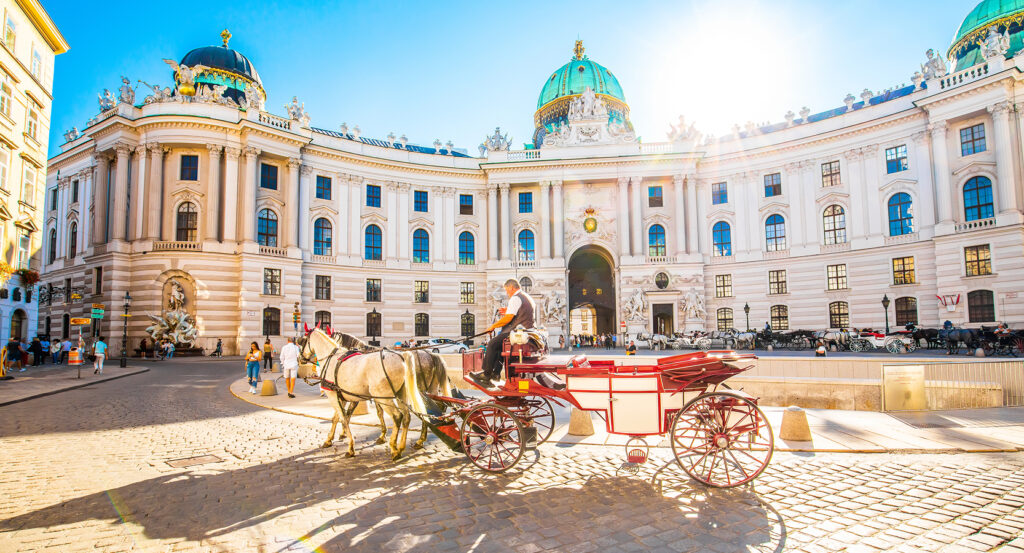
Begin in the Prunksaal, moving slowly beneath its soaring cupola and taking in the intricate sculptures that frame each alcove. The best view is from the central rotunda, where the interplay of symmetry and grandeur feels almost otherworldly. If time allows, explore the adjoining museums, the Papyrus Museum and the Globe Museum, which add depth to Vienna's intellectual heritage. Afterward, step outside into Josefsplatz to admire the library's graceful façade before wandering through the palace courtyards. End your visit with a short walk to Café Demel or Café Central, where you can reflect on what you've seen, proof that knowledge, when revered, can be as breathtaking as art.
Hear it from the Foresyte community.
Just enough life around you not to be overwhelming. Right pace.
Where your story begins.
Start your planning journey with Foresyte Travel.
Experience immersive stories crafted for luxury travelers.