Why John Mark Verdier House matters.
John Mark Verdier House is one of Beaufort's most important historic house museums, where Downtown Beaufort's mercantile prosperity, Federal architecture, and preservation legacy reveal the sophistication of South Carolina's antebellum coast.
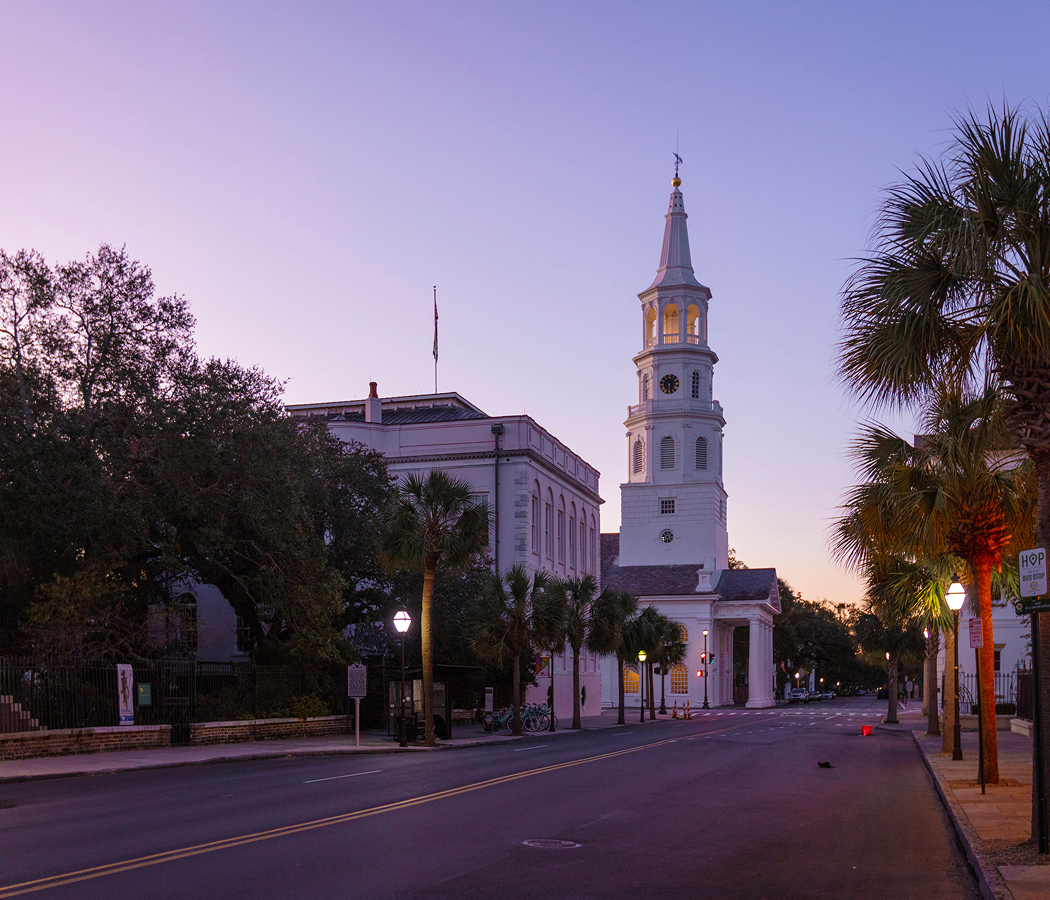
Set along Bay Street near Carteret Street and just steps from Henry C. Chambers Waterfront Park, this meticulously preserved residence invites visitors through elegant reception rooms, original period furnishings, decorative plasterwork, refined stair halls, and carefully interpreted interiors reflecting the lifestyle of one of Beaufort's wealthiest nineteenth-century merchant families. Graceful proportions, intricate craftsmanship, and commanding views across the Beaufort River establish an immersive setting where architectural preservation and local history converge. The result is an experience defined by historical authenticity, exceptional craftsmanship, and one of the South's finest surviving Federal residences.
What defines John Mark Verdier House.
John Mark Verdier House is best known as the Beaufort home of merchant, planter, and slave trader John Mark Verdier, completed 1804 and recognized today as one of the finest surviving examples of Federal architecture in South Carolina while preserving an unusually complete record of Beaufort's commercial, architectural, and social history during the early nineteenth century. Designed around a sophisticated three-story plan featuring Flemish-bond brick masonry, finely carved Adamesque woodwork, elliptical fanlights, an elegant cantilevered staircase, and a raised basement adapted to the Lowcountry climate, the residence reflects the influence of refined British and American neoclassical design that spread throughout prosperous Atlantic port cities following the American Revolution. Following the Union occupation of Beaufort in November 1861, the house became headquarters for Union officers and later served as the residence of Brigadier General Rufus Saxton, whose administration oversaw the Port Royal Experiment, among the nation's earliest large-scale efforts to transition formerly enslaved people toward education, land ownership, and wage labor. Restored by the Historic Beaufort Foundation after decades of alteration and deterioration, the house opened as a museum in 1975, was designated a National Historic Landmark in 1974, and today contains one of the South's finest collections of Federal-period decorative arts, archaeological discoveries, historic furnishings, and interpretation examining both Beaufort's prosperity and the enslaved labor that sustained it. Continued scholarship has expanded the museum's interpretation through archaeological research, documentary evidence, and preservation studies, positioning the house among the most important sites for understanding Beaufort's role within the Atlantic economy, plantation society, Civil War occupation, and Reconstruction.
Original architectural details, including hand-carved mantels, elaborate plaster cornices, period fireplaces, heart pine flooring, and restored service spaces, provide an unusually complete view of elite domestic life during the Federal era while also revealing the skilled craftsmanship of the enslaved artisans and laborers who constructed and maintained the property. Museum interpretation now places equal emphasis on architecture, commerce, slavery, military occupation, preservation, and social history, creating one of South Carolina's most comprehensive examinations of an antebellum urban residence.
How John Mark Verdier House fits.
John Mark Verdier House works as part of a walking exploration through Beaufort's exceptional collection of preserved historic sites.
Begin at Henry C. Chambers Waterfront Park, where panoramic Beaufort River views introduce the maritime commerce that fueled the city's early prosperity before continuing to John Mark Verdier House. Continue to St. Helena Church, whose eighteenth-century origins deepen appreciation for Beaufort's colonial foundations and architectural heritage. Conclude at Reconstruction Era National Historical Park, where nationally significant interpretation provides a memorable finale connecting the Civil War, the Port Royal Experiment, and the transformative years that followed emancipation. The progression moves naturally from Beaufort's commercial waterfront to its finest Federal residence before concluding with one of the nation's most significant chapters in American history.
Where your story begins.
Foresyte Travel reveals places that feel extraordinary long before you arrive.
Enjoy editorial crafted for luxury travelers.
Foresyte may earn a commission when you book.