Why La Boca matters.
La Boca is a distinguished Spanish tapas restaurant where Downtown Santa Fe's historic cultural crossroads meets James Campbell Caruso's Mediterranean culinary heritage, James Beard Award-recognized cooking and an influential commitment to the regional traditions of Spanish food and wine.
Positioned along West Marcy Street near Lincoln Avenue and a short walk north of Santa Fe Plaza, the restaurant occupies the historic downtown district between the Palace Avenue corridor, the Santa Fe Community Convention Center and the commercial streets surrounding the Plaza. Its intimate dining room draws upon the character of traditional Spanish wine bars, with closely arranged tables, warm lighting and a compact setting that encourages extended meals. A separate dining space, Taberna La Boca, occupies a courtyard behind the original restaurant, providing additional seating and a dedicated stage for live music. The adjoining spaces establish distinct settings for tapas, Spanish wine and evening performances within the pedestrian center of Santa Fe. The result is a restaurant whose intimate proportions and European wine-bar character complement the city's established traditions of independent dining and cultural gathering.
What defines La Boca.
La Boca is best known for introducing James Campbell Caruso's sophisticated interpretation of Spanish tapas into Santa Fe's contemporary restaurant culture, establishing an influential relationship between Mediterranean culinary traditions and northern New Mexico's regional ingredients. Raised in Boston within a family of Basque and Italian heritage, Caruso developed his earliest understanding of cooking through the preparations of his mother and grandmother. Their Mediterranean household traditions established a foundation for his subsequent interest in Spanish regional cuisine, particularly the relationship between carefully selected ingredients and straightforward cooking techniques. His professional development included time in Andalusia, where the distinctive food culture of southern Spain deepened his appreciation for tapas, seafood and communal dining. Caruso relocated to Santa Fe in 1997 and joined La Casa Sena as sous chef under Kelly Rogers, entering a restaurant community already associated with ambitious Southwestern cooking. He subsequently became executive chef at El Farol, the longstanding Canyon Road restaurant whose Spanish culinary direction provided an important opportunity to develop his professional identity. His work there culminated in the publication of a cookbook, extending his approach to Spanish cuisine beyond the restaurant kitchen. Caruso established La Boca in 2006, creating an independent restaurant devoted to modern Spanish cooking and the social traditions of Mediterranean wine bars. The concept brought a focused tapas program into Downtown Santa Fe, emphasizing the relationship between small shared plates, carefully selected wines and an informal sequence of courses. Its opening marked a significant development in a dining market strongly associated with New Mexican chile, contemporary Southwestern cooking and established American fine-dining institutions. Caruso's approach introduced a distinct culinary perspective through the traditions of Andalusia, Catalonia and other Spanish regions, adapting familiar preparations through seasonal ingredients available in New Mexico. His professional recognition subsequently expanded through eight James Beard Award nominations, strengthening his reputation within the American restaurant industry. La Boca attracted national attention from The New York Times, Travel + Leisure and Esquire, extending its influence beyond Santa Fe's established restaurant community. The restaurant also appeared in Giada De Laurentiis's television program Giada's Weekend Getaways, bringing particular attention to Caruso's signature seafood canelones. Its wine program earned an Award of Excellence from the International Wine & Food Society, recognizing the restaurant's commitment to serious wine selection and service. The development of Taberna La Boca extended the original concept into a separate dining room devoted to live performances and additional social gatherings. Its programming established a recurring connection between Spanish dining traditions and Santa Fe's community of musicians, preserving the convivial character central to Caruso's original ambitions. The restaurant subsequently developed wine seminars, pairing dinners and a dedicated wine club, extending its educational role within the city's hospitality community. General manager Emma Campbell contributes to the restaurant's contemporary leadership, supporting the continuity of its established service philosophy. La Boca's significance rests on this progression from Caruso's Mediterranean family heritage and professional training into an influential independent restaurant, establishing Spanish tapas and sherry culture as distinctive components of Santa Fe's contemporary dining landscape.
James Campbell Caruso's cooking develops through the regional traditions of Spain, emphasizing the relationship between carefully prepared seafood, seasonal vegetables, cured meats and the social customs of shared dining. His approach draws particular inspiration from Andalusia, where tapas evolved through the relationship between taverns, regional ingredients and the drinking traditions of southern Spain. The kitchen applies established Spanish techniques to fresh New Mexican produce, allowing familiar preparations to develop through the character of locally available ingredients. Canelones filled with scallops and crab provide a representative expression of this philosophy, combining delicate seafood with a rich Manchego cream sauce in a preparation influenced by Spanish and Mediterranean pasta traditions. The natural sweetness of the shellfish develops alongside the concentrated flavor of aged sheep's milk cheese, creating a substantial small plate grounded in careful balance. Gambas al ajillo introduces a more direct Andalusian influence through prawns prepared with garlic, olive oil and aromatic seasoning, preserving the central relationship between fresh seafood and traditional Spanish cooking. The preparation demonstrates the importance of controlled heat and carefully developed aromatics in a cuisine whose apparent simplicity depends upon technical precision. Grilled Ibérico chorizo contributes a complementary expression of Spanish charcuterie, with the richness of cured pork balanced by the sweetness of fig jam. Vegetable-centered cooking develops through roasted cauliflower accompanied by harissa barbecue sauce and Manchego cream, connecting Spanish ingredients with the broader culinary traditions of the western Mediterranean. The combination demonstrates Caruso's interest in contrasting sweetness, spice and savory depth through preparations suited to sharing. Spanish sherry occupies an equally important position within the restaurant's culinary philosophy, connecting the food with the historic wine-producing region surrounding Jerez de la Frontera. Fino provides a dry, delicate accompaniment to seafood and lighter tapas, and Pedro Ximénez introduces concentrated sweetness associated with dried fruit and extended maturation. The exclusively Spanish wine list extends this regional perspective through varieties and producers representing the country's diverse growing conditions. Staff-guided pairings and dedicated wine events reinforce the relationship between the kitchen and Spain's established drinking traditions. La Boca's culinary distinction emerges from this sustained integration of Spanish regional cooking, New Mexican seasonal ingredients and serious wine service, preserving the convivial character of tapas within a sophisticated contemporary restaurant.
How La Boca fits.
La Boca works as the dining culmination of an exploration connecting Santa Fe's colonial administrative history, contemporary Indigenous artistic production and the development of its performing arts institutions, placing the restaurant within the cultural establishments surrounding the historic Plaza.
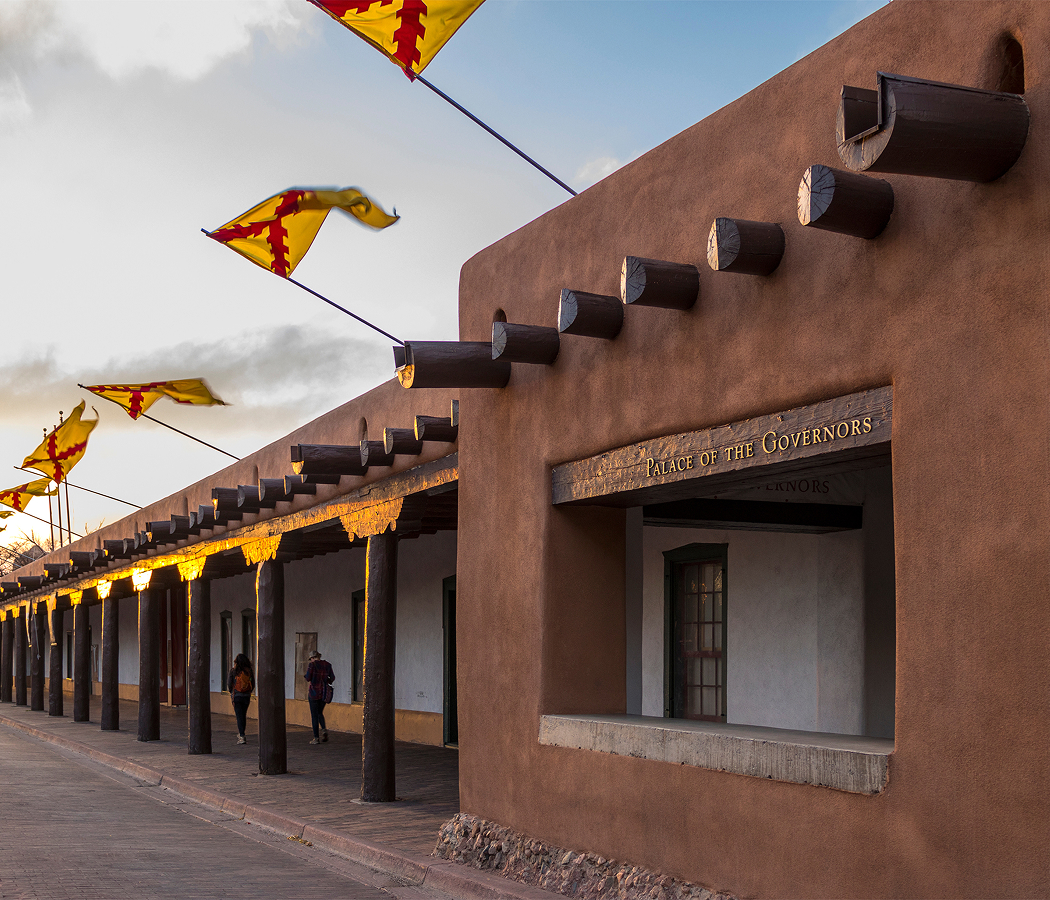
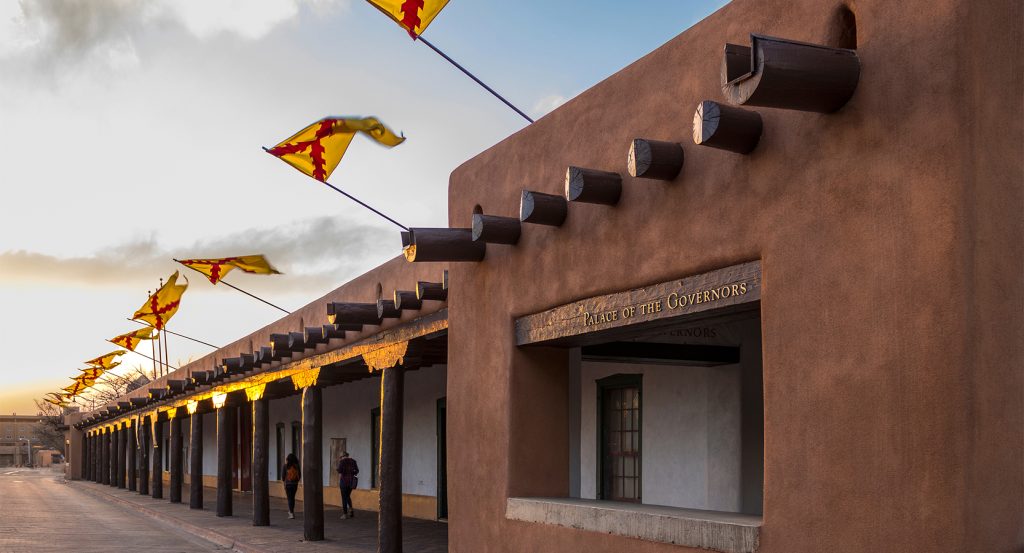
Begin at New Mexico History Museum, the state institution established to interpret the cultural and political development of New Mexico through historical collections, archaeological material and public exhibitions. The museum opened on May 24, 2009, following two decades of planning and the construction of the Pete V. Domenici Building beside the Palace of the Governors. Its campus incorporates the historic Fray Angélico Chávez Library, constructed in 1907, connecting successive periods of Santa Fe's civic architecture. Archaeological investigations preceding construction recovered more than 800,000 artifacts from the museum site, contributing substantial material evidence concerning the city's early settlement. The galleries trace relationships among Indigenous communities, Spanish colonization, Mexican administration and American territorial development, establishing a comprehensive introduction to the region's political and cultural history. Continue to IAIA Museum of Contemporary Native Arts, the institution dedicated to contemporary Indigenous artistic production and the preservation of work associated with the Institute of American Indian Arts. Its collection originated through the institute's student honors program and donations from artists and private collectors, providing the foundation for the museum's establishment in 1972. The institution relocated to Downtown Santa Fe in 1992, occupying a former federal building constructed in 1922 in the Pueblo Revival style. A substantial renovation completed in 2005 preserved the historic exterior and transformed the interior into contemporary exhibition galleries. Its collection now encompasses more than 9,500 works created from 1962 onward, representing an extensive range of Indigenous artistic practices and contemporary cultural concerns. Conclude at Lensic Performing Arts Center, the historic theater established by merchant Nathan Salmon and his son-in-law E. John Greer. The Spanish-Moorish building opened on June 24, 1931, introducing an elaborate movie palace and vaudeville venue into Downtown Santa Fe. Its stage subsequently accommodated performers including Judy Garland, Roy Rogers and the Trapp Family Singers, establishing the theater as an important center of local entertainment. A major preservation campaign led by Bill and Nancy Zeckendorf supported a multimillion-dollar restoration, culminating in its reopening as a nonprofit performing arts center in April 2001. The restored theater now accommodates concerts, dance, film, educational programming and community events, preserving an important element of Santa Fe's twentieth-century cultural history. The progression connects New Mexico's historical collections with contemporary Indigenous art and concludes at a restored performing arts institution, establishing the broader cultural setting surrounding La Boca.
Where your story begins.
Foresyte Travel reveals places that feel extraordinary long before you arrive.
Enjoy editorial crafted for luxury travelers.
Foresyte may earn a commission when you book.