
Why Left Bank Restaurant matters.
Left Bank Restaurant is a historic French fine-dining establishment where Vail Village's European-inspired alpine character meets classical French gastronomy, an exceptional wine tradition, and more than five decades of independent restaurant history.
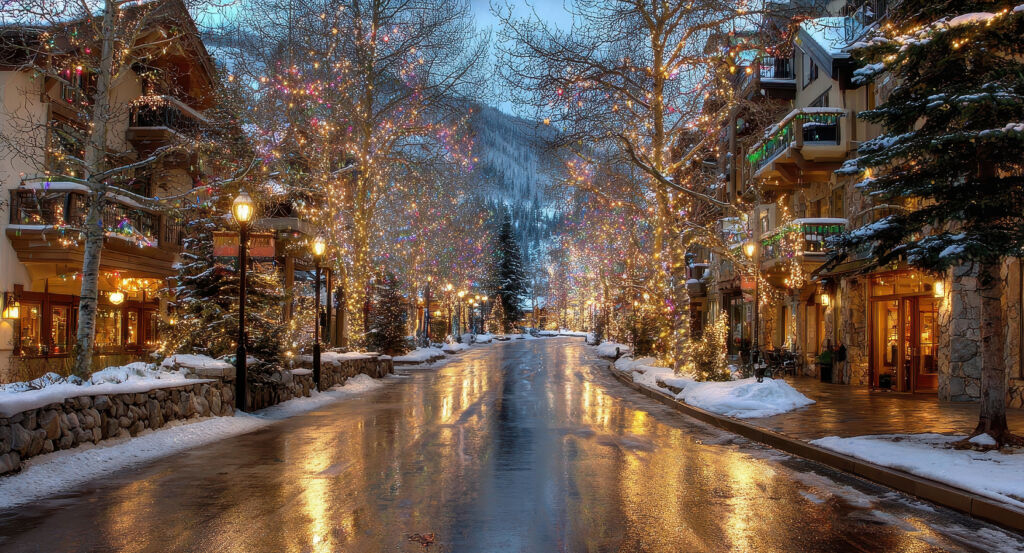
Occupying the ground floor of Sitzmark Vail along Gore Creek Drive, Left Bank Restaurant stands beside Gore Creek near the western end of Vail Village's pedestrian center, with Bridge Street, the Covered Bridge, and the village's principal shopping corridors a short walk east. The restaurant's creek-facing windows overlook the waterway and its wooded banks, establishing a direct connection between the dining room and the mountain landscape surrounding the resort. Its interior combines polished wood, upholstered banquettes, white tablecloths, and carefully arranged lighting within a formal European dining environment. Blue velvet seating, delicate glass chandeliers, and an extensive display of wine bottles contribute to the room's refined character. The main dining area accommodates elaborate multicourse meals, with tables arranged to support traditional French service and tableside presentations. A separate lounge introduces a more intimate setting for cocktails and wine, and the surrounding hotel architecture places the establishment within Vail's original resort village. The result is a distinguished alpine restaurant whose creekside location, sophisticated interiors, and enduring French culinary traditions preserve an important chapter of Vail's hospitality history.
What defines Left Bank Restaurant.
Left Bank Restaurant is best known for introducing traditional French fine dining to Vail during the resort's formative decade and preserving that culinary heritage through two generations of independent ownership. The restaurant's origins reach to 1970, when French restaurateur Luc Meyer and his wife, Liz, established The Left Bank in a mountain community undergoing rapid transformation from an emerging ski destination into an internationally recognized resort. Vail Mountain had opened on December 15, 1962, through the efforts of Peter Seibert and Earl Eaton, whose development brought European alpine influences into the architecture and commercial character of the surrounding village. The resort's early hospitality establishments reflected the backgrounds of Austrian, German, Swiss, and other European immigrants who contributed to its development. The Meyers introduced a distinctly French dining tradition into this environment, establishing a restaurant devoted to classical preparations, substantial wine service, and the formal hospitality associated with established European restaurants. Their venture became part of the first generation of independent businesses that helped define Vail's culinary reputation beyond its skiing facilities. The restaurant developed a devoted following among longtime residents, visiting families, and international travelers, building its reputation through continuity of service and a substantial commitment to French cooking. The Meyers also contributed to the wider development of the Vail Valley's dining culture, helping establish Mirabelle Restaurant in Beaver Creek in 1982. Their involvement in both communities connected the growth of French fine dining with the expansion of the region's mountain resorts. A consequential transition began with the arrival of chef Jean-Michel Chelain and his wife, Kimberly, who joined The Left Bank in 1998. Born in Grenoble in the French Alps, Chelain had developed his culinary interests during childhood, preparing cakes at home before beginning a formal apprenticeship at sixteen. His training began at Les Trois Biches in the Chartreuse region, introducing him to the disciplined kitchen practices of traditional French restaurants. At eighteen, he entered professional kitchens in Cannes and along the Côte d'Azur, developing his command of regional French cuisine and the expectations of sophisticated resort dining. His subsequent career included the Noga Hilton in Cannes and three years as chef at Chez Le Per Gras in Grenoble, strengthening his experience in established European hospitality environments. In 1996, Chelain moved to California to become executive chef of Stonepine Estate Resort in Carmel Valley, a property associated with the Relais & Châteaux hospitality collection and its emphasis on distinguished cuisine. There he met Kimberly, who managed Los Laureles Lodge, Stonepine's sister property. Their relationship developed through shared professional commitments to hospitality, and the couple eventually married during a sailing excursion in Key West, Florida. Their move to Vail introduced Chelain's classical training into an established restaurant whose original owners had already cultivated a loyal clientele. Over the following years, he developed a culinary program combining the traditional foundations of French gastronomy with seasonal ingredients and selected international influences. Kimberly contributed management and hospitality expertise, strengthening the continuity of the establishment's personal service. In May 2006, the Chelains purchased The Left Bank from Luc and Liz Meyer, completing a generational transfer that preserved the restaurant's original character under a professionally trained French chef. Jean-Michel became chef-owner, directing the kitchen and maintaining the establishment's longstanding relationships with wine producers and distributors. The transition reinforced the restaurant's association with elaborate French preparations and an extensive collection of carefully selected bottles from France and California. Chelain's professional approach emphasized culinary apprenticeship, a tradition through which experienced chefs transmit techniques and standards directly to younger cooks. His kitchen maintained a commitment to preparing bread, sauces, soups, and other foundational components in-house, preserving the technical discipline associated with his European training. The restaurant's wine program expanded into a collection exceeding 350 selections, establishing a substantial complement to its classical menu. The dining room also underwent a significant renovation during the late 2010s, introducing contemporary upholstery, decorative lighting, and a more extensive wine display. The improvements preserved the restaurant's formal character and strengthened its position among Vail's established special-occasion destinations. More than half a century after its founding, The Left Bank continues the French culinary tradition introduced by the Meyers and developed under the Chelains, occupying a distinctive place in the history of Vail's independent restaurants.
Jean-Michel Chelain's culinary program develops the foundations of classical French gastronomy through handmade preparations, precise cooking techniques, carefully selected ingredients, and elaborate dining-room presentation. The menu draws upon the regional traditions of France, connecting the chef's Alpine training with preparations associated with Burgundy, Provence, and the country's established fine-dining culture. French onion soup introduces the repertoire through deeply developed stock, caramelized onions, and a gratinéed cheese crust. Escargots à la bourguignonne and lobster bisque extend the opening courses into familiar French preparations, establishing the kitchen's command of traditional sauces and substantial seafood stocks. Foie gras appears in both seared and terrine preparations, accompanied by fruit elements that balance its richness. Handmade pasta with fresh truffles introduces a more contemporary expression of European luxury ingredients, reflecting the kitchen's willingness to extend its repertoire beyond exclusively French regional cooking. The restaurant's most distinctive culinary traditions emerge through substantial dishes prepared for two, particularly Dover sole meunière. The whole fish receives a classical preparation with butter and lemon before being deboned tableside, introducing the specialized service associated with traditional French dining rooms. Whole roasted turbot offers a related presentation, and a dry-aged côte de boeuf establishes another centerpiece through carefully selected beef and precise roasting. Colorado rack of lamb connects the restaurant's French techniques with the agricultural resources of the surrounding region. Seafood preparations extend into bouillabaisse, bringing the Mediterranean tradition of substantial fish and shellfish stews into the Alpine resort setting. The kitchen's treatment of meat and poultry incorporates familiar French combinations of roasting, reduction, and carefully developed accompaniments, maintaining continuity between the opening courses and principal dishes. Chelain's wine program forms an essential component of the meal, with selections from Bordeaux, Burgundy, Champagne, and other established wine regions complemented by notable California producers. The collection emphasizes mature bottles, careful storage, and relationships with vintners, supporting the restaurant's longstanding reputation among wine enthusiasts. Service staff guide the sequence of courses and accompanying wines, preserving the measured pacing of an extended French dinner. Desserts provide another expression of the kitchen's technical discipline through chocolate and lemon soufflés, whose preparation begins during the meal to accommodate the precise timing required for service. Baked Alaska introduces a theatrical conclusion through meringue and a Grand Marnier flambé performed tableside. Chocolate mousse, seasonal fruit desserts, and selections of French cheeses complete the traditional repertoire. The lounge supports a complementary program of cocktails and wine, extending the establishment's hospitality beyond the formal dining room. Left Bank Restaurant derives its culinary distinction from the sustained practice of classical French technique, the ceremonial character of tableside service, and a wine collection developed through decades of relationships with distinguished producers.
How Left Bank Restaurant fits.
Left Bank Restaurant works as the dining centerpiece of a Vail Village exploration connecting Colorado's skiing heritage, the resort's original pedestrian architecture, and the mountain transportation infrastructure that transformed the Gore Creek valley.
Begin at Colorado Snowsports Museum, the historical institution occupying the upper level of the Vail Village Parking Structure near the northern entrance to the pedestrian center. Founded on May 23, 1975, as the Colorado Ski Museum, the organization emerged through a partnership involving Vail town manager Terry Minger, resort founder Peter Seibert, and other prominent figures in Colorado's winter sports industry. Its original exhibition facility opened during the winter of 1976, introducing a modest collection devoted to the development of skiing in the Rocky Mountains. The institution subsequently expanded its interpretation to include snowboarding, competitive athletics, resort development, and the military contributions of the 10th Mountain Division. Its Hall of Fame began inducting distinguished athletes and industry leaders in 1977, eventually honoring more than 250 individuals. The museum's permanent exhibitions incorporate historic equipment, photographs, military artifacts, and the technological development of winter sports. Continue south to Vail Covered Bridge, the timber pedestrian crossing that connects the village's northern approach with Bridge Street across Gore Creek. The original uncovered bridge accompanied the resort's early development, providing access between parking areas and the emerging commercial center. John and Cissy Dobson, who arrived from Vermont in 1965, helped finance the addition of its distinctive pitched roof after establishing the nearby Covered Bridge Store. Their contribution introduced a New England architectural feature into a village otherwise strongly influenced by Alpine European design. A substantial restoration in 1994 replaced structural components and strengthened the crossing for increasing pedestrian traffic. The bridge subsequently became one of Vail's most recognizable landmarks, framing views of the creek and the historic shopping street beyond. Conclude at Gondola One, the principal mountain transportation terminal near the upper end of Bridge Street. Its location preserves the relationship between the resort's original village and the skiing infrastructure developed under Seibert and Eaton. Vail opened with a four-person Bell Gondola, two chairlifts, and a limited network of ski trails, introducing Colorado's first gondola as a defining component of its initial mountain operations. The original installation established a direct connection between the pedestrian village and the ski terrain above, supporting the rapid expansion of the resort during the 1960s. The modern Gondola One continues that geographical relationship, carrying passengers toward Mid-Vail and the mountain's extensive network of lifts and trails. The progression moves from Colorado Snowsports Museum's preservation of the state's winter sports heritage through Vail Covered Bridge's early resort architecture and culminates at Gondola One, where mountain transportation connects the original village with the slopes that established Vail's international reputation.
Where your story begins.
Foresyte Travel reveals places that feel extraordinary long before you arrive.
Enjoy editorial crafted for luxury travelers.
Foresyte may earn a commission when you book.


























































































































