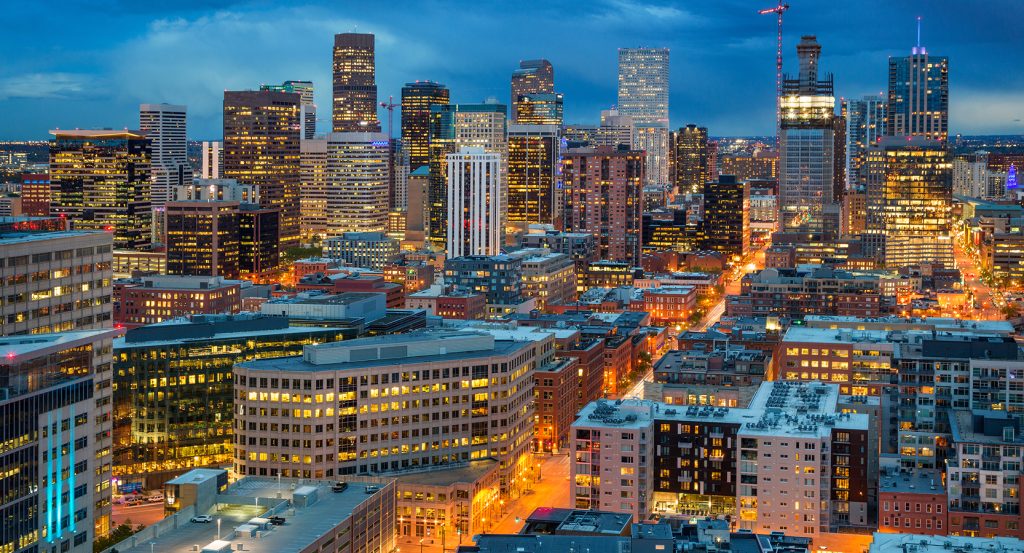
Why you should experience Lincoln Street in Denver, Colorado.
Lincoln Street is one of Denver's most important civic corridors where state government, historic architecture, and metropolitan energy converge along a boulevard that has shaped Colorado's political and urba character for more than a century.
Running through Capitol Hill, Golden Triangle, Baker, and Speer between North Capitol Hill and Washington Park West, this prominent corridor connects landmark government buildings, beautifully preserved historic districts, neighborhood businesses, cultural institutions, locally owned restaurants, and energetic commercial blocks that collectively showcase Denver's remarkable civic evolution. Monumental public architecture, architecturally significant office buildings, historic churches, mature streetscapes, neighborhood cafés, and welcoming public plazas create an urban landscape where generations of governors, legislators, entrepreneurs, educators, and residents have influenced the direction of Colorado. Lincoln Street developed during the city's late nineteenth century expansion, evolving into the principal address for state government while preserving an extraordinary collection of historic architecture and civic landmarks. The result is a corridor defined by governmental significance, architectural distinction, and enduring metropolitan character.
What you should know about Lincoln Street.
Lincoln Street is best known for being home to the Colorado State Capitol, completed in 1894 with a dome clad in Colorado mined gold leaf that was added in 1908 to commemorate the state's Gold Rush heritage.
Designed by Elijah E. Myers, who also designed the state capitols of Michigan and Texas, the building became one of Colorado's most enduring architectural achievements through its commanding Renaissance Revival design, grand marble interiors, and symbolic use of stone quarried from across the state. The Capitol continues to serve as the center of Colorado's executive and legislative government while welcoming hundreds of thousands of visitors each year through public tours, civic events, and educational programs. Its architectural prominence and continuing role in state government give Lincoln Street a character inseparable from Colorado's political history and civic leadership.
How to fold Lincoln Street into your trip.
Lincoln Street works as an exploration of Colorado's political heritage, grand architecture, and celebrated public spaces.
Begin at the Colorado State Capitol, where one of the state's most iconic civic landmarks immediately establishes the corridor's defining governmental legacy. Continue toward Civic Center Park, where landscaped gardens, grand public art, and nationally significant civic buildings provide broader perspective on the City Beautiful vision that transformed the heart of Denver during the early twentieth century. From there, make your way to the Denver Art Museum, where internationally acclaimed collections, bold contemporary architecture, and world class exhibitions provide a memorable conclusion while celebrating one of the Rocky Mountain region's leading cultural institutions. Along the route, you'll encounter architecturally significant government buildings, welcoming public spaces, thriving local businesses, historic civic landmarks, beautifully maintained streetscapes, and energetic urban gathering places that reveal the corridor's exceptional depth. The progression moves naturally from Colorado's seat of government to the city's ceremonial civic park to one of the nation's premier art museums, demonstrating how Lincoln Street connects political leadership, architectural heritage, and cultural discovery within the heart of Capitol Hill.
Where your story begins.
Foresyte Travel reveals places that feel extraordinary long before you arrive.
Experience premium editorial crafted for luxury travelers.