Why you should experience Lower Alabama Street in Atlanta, Georgia.
Lower Alabama Street is a historic South Downtown corridor where railroad heritage, commercial innovation, and urban revival converge along one of Atlanta's most foundational streets.
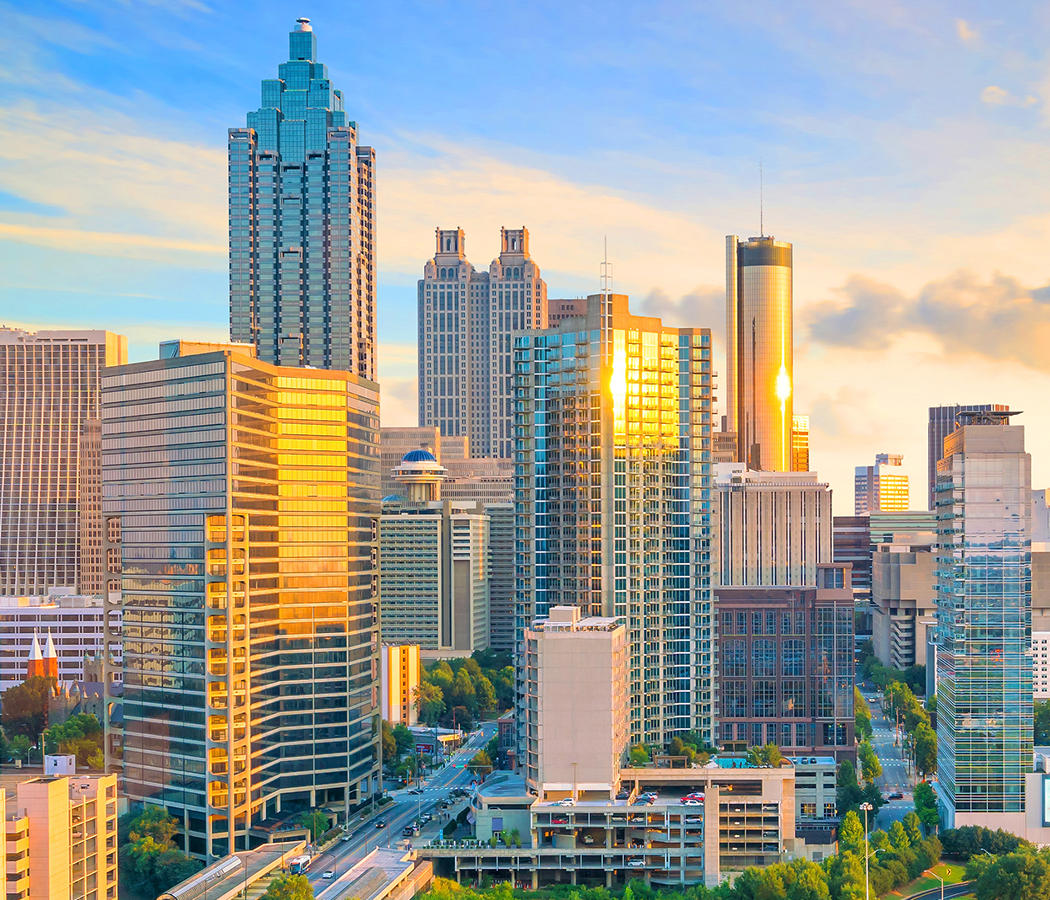
Running through South Downtown between Fairlie-Poplar and Castleberry Hill, this influential corridor connects historic viaducts, preserved commercial buildings, entertainment venues, adaptive reuse developments, transit hubs, and civic landmarks that have shaped Atlanta since the city's earliest decades as a railroad center. Brick warehouses, early twentieth-century storefronts, railroad infrastructure, and contemporary redevelopment projects create a streetscape where Atlanta's industrial origins remain inseparable from its evolving future. Built around the railroad crossings that gave birth to the city itself, the corridor continues to preserve one of Downtown's richest concentrations of transportation and commercial history. The result is a street defined by connectivity, preservation, and enduring civic significance.
What you should know about Lower Alabama Street.
Lower Alabama Street is best known for passing through Underground Atlanta, preserving the original street level of nineteenth-century Atlanta that was buried after a series of railroad viaducts were constructed between the 1910s and 1930s, creating one of the nation's most distinctive preserved urban landscapes beneath the modern city.
As Atlanta's railroad traffic expanded rapidly during the early twentieth century, dangerous grade crossings prompted engineers to elevate surrounding streets with massive concrete viaducts while leaving the original commercial blocks below. Rather than demolishing the earlier city, the project created an extraordinary two-level urban environment where storefronts, granite sidewalks, and brick façades from Atlanta's formative years survived beneath the new street grid. Today, Lower Alabama Street provides one of the clearest physical connections to this remarkable engineering undertaking, allowing visitors to experience a rare surviving fragment of nineteenth-century Atlanta while witnessing the city's continuing efforts to revitalize its historic core. Few streets demonstrate Atlanta's railroad-driven evolution as vividly as this corridor, where transportation infrastructure permanently reshaped the city's landscape while unexpectedly preserving one of its oldest commercial districts.
How to fold Lower Alabama Street into your trip.
Lower Alabama Street works as an exploration of Atlanta's railroad heritage, historic architecture, and civic evolution.
Begin at Underground Atlanta, where preserved nineteenth-century storefronts immediately reveal the remarkable engineering story that defines the corridor. Continue toward Five Points Station, whose position at the heart of the region's transit network reflects Atlanta's enduring character as a transportation hub. From there, make your way to Georgia State Capitol, where the gold-domed landmark provides a broader perspective on the political and civic institutions that grew alongside the city's commercial center. Along the route, you'll encounter historic viaducts, restored brick buildings, public art, neighborhood restaurants, pedestrian plazas, and active transit corridors that demonstrate how Lower Alabama Street continues to connect Atlanta's railroad foundations with its modern urban revival. The progression moves naturally from preserved historic streetscape to regional transit hub to iconic seat of government, revealing why Lower Alabama Street remains one of Downtown's most historically compelling corridors.
Where your story begins.
Foresyte Travel reveals places that feel extraordinary long before you arrive.
Experience premium editorial crafted for luxury travelers.