Why the Mountaineers' Cemetery matters.
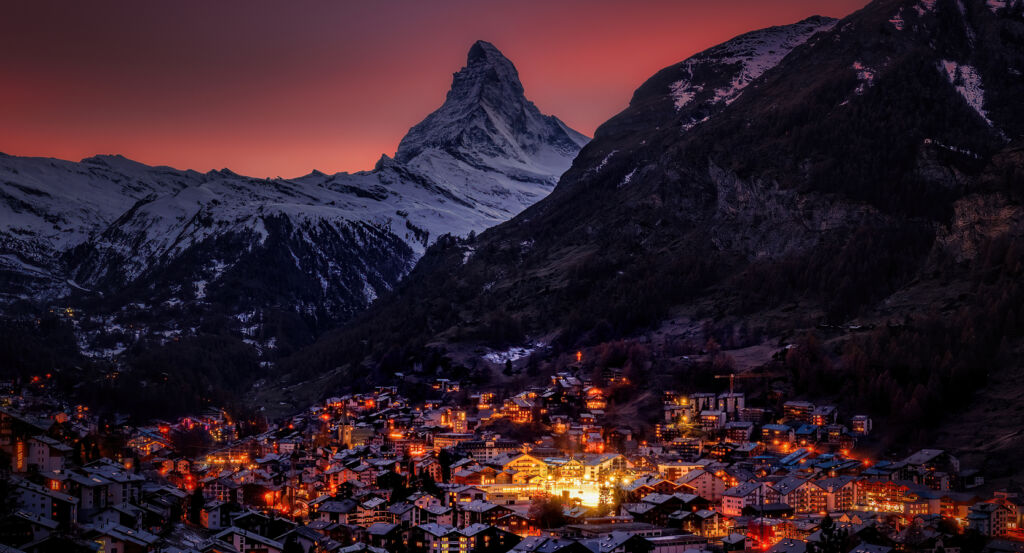
The Mountaineers' Cemetery in Zermatt, Switzerland, is not just a resting place, it's a quiet act of remembrance carved into the heart of the Alps, where courage, tragedy, and reverence share the same ground.
Tucked behind the Pfarrkirche St. Mauritius, in the shadow of the Matterhorn, this small alpine cemetery feels like stepping into a pause in time. Crosses and weathered stones line the garden, each etched with names, dates, and mountains that claimed them. Flowers bloom between the markers, gentians, edelweiss, alpine roses, tended year-round by the village, as if Zermatt itself refuses to forget. The air here is still, but never empty. Bells from the church tower echo softly through the valley, mingling with the rush of glacial meltwater nearby. It's impossible not to feel humbled. Many who lie here came chasing the same beauty that draws travelers to Zermatt today, climbers, guides, and explorers who looked at the Matterhorn and said yes. Their stories linger in the mountain air, a reminder that every view, every triumph, every safe descent is borrowed from those who went first.
What defines the Mountaineers' Cemetery.
Though it feels timeless, the Mountaineers' Cemetery tells a specific story, among ambition, loss, and the bond between Zermatt and the mountains that define it.
The first burials here date back to the mid-19th century, around the time when Edward Whymper's fateful first ascent of the Matterhorn in 1865 turned Zermatt into legend. That climb, successful, yet deadly, marked the beginning of modern mountaineering, and the village quickly became a pilgrimage site for those drawn to the challenge. Over the decades, hundreds have lost their lives on the surrounding peaks, the Matterhorn, Monte Rosa, Dent Blanche, and many of their names are etched here, side by side with those of the local guides who led them. One of the most visited graves belongs to Peter Taugwalder, the Zermatt guide who survived the Matterhorn's first ascent and carried its burden for the rest of his life. Another, marked by a simple cross, commemorates climbers lost without a trace, the “known unto God” of the Alps. Unlike grand monuments, this place speaks in understatement. The epitaphs are brief, the stones modest, the message clear: in Zermatt, heroism is not noise but endurance.
How the Mountaineers' Cemetery fits.
Visiting the Mountaineers' Cemetery is less about sightseeing and more about grounding, a moment to breathe, to feel, and to remember that beauty and risk often walk hand in hand.
You'll find it just steps from Zermatt's main street (Bahnhofstrasse), behind the St. Mauritius Church, making it easy to include before or after exploring the village center. Take a few quiet minutes to wander the paths, reading the inscriptions and letting the weight of history settle. The cemetery is free to enter, open year-round, and always immaculate, snow-dusted in winter, lush with blooms in summer. Nearby, the Matterhorn Museum - Zermatlantis deepens the story, with exhibits on early alpinism and the original equipment used by climbers in the golden age of mountaineering. If time allows, follow your visit with a stroll to Kirchbrücke, the bridge offering Zermatt's most famous view of the Matterhorn, and reflect on the line between wonder and danger that defines this landscape. The Mountaineers' Cemetery is not morbid, it's moving. It reminds you that every summit has its cost, and that gratitude, not grief, is the truest way to honor those who climbed before you.
Where your story begins.
Foresyte Travel reveals places that feel extraordinary long before you arrive.
Enjoy editorial crafted for luxury travelers.
Foresyte may earn a commission when you book.