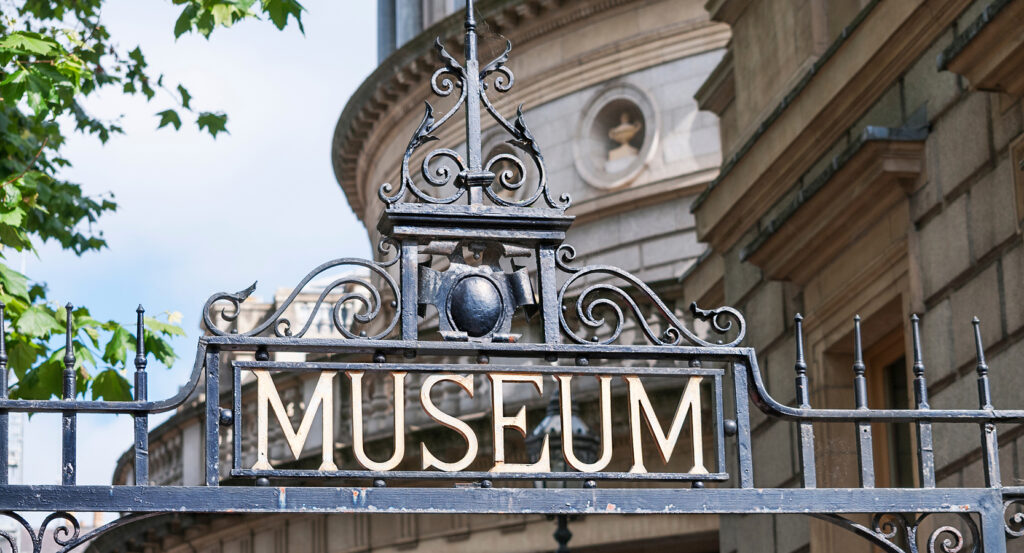
Why you should experience National Museum of Ireland, Collins Barracks in Dublin, Ireland.
In the cultural and historical heart of Dublin of Ireland, Collins Barracks stands as a guardian of the nation's soul, a collection of four grand institutions that together weave the story of Ireland's people, craft, and identity.
Each branch, Archaeology, Natural History & History, and Country Life, offers a window into a different dimension of Irish life, from the myths of ancient kings to the quiet dignity of rural traditions. The most visited, the Museum of Archaeology on Kildare Street, feels like stepping into a time capsule of Celtic mysticism and craftsmanship. Its gilded halls cradle treasures like the Tara Brooch, a masterpiece of early medieval metalwork, and the Ardagh Chalice, whose silver filigree gleams as if still used in sacred ritual. The bog bodies, astonishingly preserved by the peatlands of Ireland, lie in haunting stillness, their features a thousand years old yet uncannily human. Across the River Liffey, the Museum of Decorative Arts & History unfolds inside Collins Barracks, a vast 18th-century military complex now transformed into a celebration of design, fashion, and revolution. Here, fine silver glitters beside World War uniforms and banners from the Easter Rising, each artifact bearing the fingerprints of Ireland's evolving identity. Together, the museums form a living narrative, not just of Ireland's past, but of its resilience, beauty, and unbreakable cultural thread that ties the ancient to the modern.
What you didn’t know about National Museum of Ireland, Collins Barracks.
National Museum of Ireland was established in 1877, during a period of renewed national consciousness when the preservation of heritage became an act of quiet resistance.
Its founding was inspired by the Great Exhibition movement sweeping Europe, but unlike imperial museums of the time, Ireland's national collection sought to celebrate its own story, not its conquests. The Archaeology Museum, housed in an elegant Palladian building designed by Thomas Newenham Deane, was built to resemble the great classical temples of Europe, a fitting tribute to a nation reclaiming its narrative through scholarship and pride. Within its walls, each gallery feels like a hymn to Irish craftsmanship: Bronze Age torcs, Iron Age weaponry, Neolithic pottery, and gold hoards that shimmer with the light of millennia. Yet beyond these treasures lies a deeper tale of endurance, of how archaeologists and curators risked suppression under British rule to safeguard Ireland's artifacts and identity. The Natural History Museum, affectionately known as the “Dead Zoo,” opened in 1857, preserving over 10,000 animal specimens in Victorian-era cases that evoke the wonder of early science. Meanwhile, Collins Barracks, named after revolutionary leader Michael Collins, reimagines military architecture as a repository of memory, its exhibits tracing the evolution of Irish independence, craftsmanship, and modern design. Few realize that the Country Life Museum in Mayo, the newest addition, tells a subtler story, one of the rural rhythms, folklore, and domestic traditions that sustained Irish families for centuries. Collectively, these museums aren't simply institutions, they are expressions of Ireland's heart and its fight to define itself through art, history, and humanity.
How to fold National Museum of Ireland, Collins Barracks into your trip.
Exploring National Museum of Ireland is best approached as a journey through four chapters of a single epic, one that moves from myth to modernity, from Dublin's Georgian avenues to the wild landscapes of the west.
Begin at the Archaeology Museum on Kildare Street, where marble floors and domed ceilings frame Ireland's earliest relics. Move through the Prehistoric Ireland galleries, pausing before the Gold Collection, a dazzling array of ornaments dating back over 3,000 years, before encountering the eerily preserved bog bodies, whose leathery skin and ancient wounds bring history unsettlingly close. Next, cross the Liffey to Collins Barracks, where the Decorative Arts & History museum reveals Ireland's creative pulse, from ornate silver and ceramics to exhibits chronicling the Irish struggle for independence. The Proclaiming a Republic gallery offers an emotional look at the 1916 Easter Rising, complete with original flags, weapons, and the stories of ordinary citizens who changed the course of history. If time allows, step into the Natural History Museum on Merrion Street, where Victorian-era cabinets display whales, butterflies, and extinct Irish elk under the soft gleam of glass and wood, a glimpse into the age when science was still poetry. For those venturing west, the Museum of Country Life in Castlebar, County Mayo completes the journey, offering insight into Ireland's rural customs, crafts, and community spirit. Each site is free to enter and easily accessible, making it one of the most rewarding cultural circuits in Europe. Whether you're tracing Celtic artistry, revolutionary fervor, or the quiet beauty of daily life, National Museum of Ireland gathers it all, the sacred, the ordinary, and the eternal, into one sweeping portrait of a nation whose story continues to unfold with grace and grit.
Hear it from the Foresyte community.
Just enough life around you not to be overwhelming. Right pace.
Where your story begins.
Start your planning journey with Foresyte Travel.
Experience immersive stories crafted for luxury travelers.