Why Museum of Natural History Vienna matters.
Museum of Natural History Vienna is a distinguished natural history museum where Innere Stadt's scientific heritage, imperial patronage, research excellence, and centuries of discovery preserve one of Europe's greatest collections devoted to the natural world.
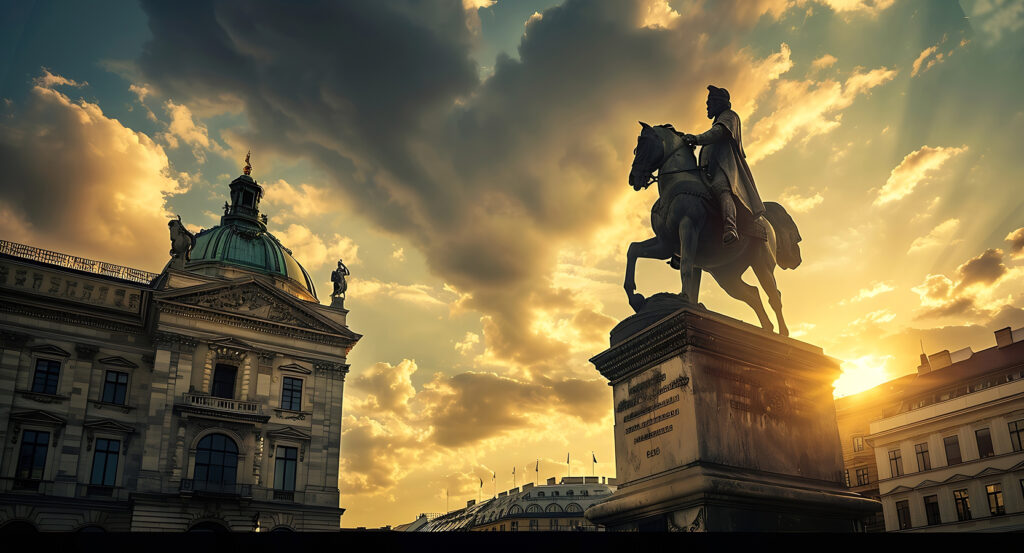
Set along Maria-Theresien-Platz near Burgring and just steps from the Kunsthistorisches Museum Vienna, this grand museum unfolds through soaring exhibition halls, richly decorated galleries, mineral collections, fossil displays, zoological exhibits, and research laboratories where the history of Earth, life, and humanity is explored across millions of years. Marble staircases, frescoed ceilings, ornate interiors, and meticulously curated collections create an environment where scientific inquiry and architectural elegance remain inseparably connected. Discovery, scholarship, and preservation define every gallery.
What defines Museum of Natural History Vienna.
Museum of Natural History Vienna is best known for opening in 1889 after Emperor Franz Joseph I commissioned Gottfried Semper and Carl von Hasenauer to design twin imperial museums facing Maria-Theresien-Platz, creating one of Europe's foremost centers for natural science while preserving more than 30 million collection objects spanning mineralogy, paleontology, zoology, anthropology, botany, meteorites, and prehistoric archaeology. The museum originated from the Habsburg imperial collections assembled over centuries, particularly those of Emperor Francis I Stephen of Lorraine, whose scientific interests established one of Europe's earliest comprehensive natural history collections during the eighteenth century. Constructed in an imposing Neo-Renaissance style, the building incorporates richly decorated ceremonial staircases, painted domes, sculptural programs, and purpose-built exhibition halls reflecting the close relationship between scientific advancement and imperial patronage during the late nineteenth century. Among its most celebrated treasures is the Venus of Willendorf, the 29,500-year-old limestone figurine discovered in Lower Austria in 1908 that remains one of the world's most important surviving examples of Paleolithic art. The museum also safeguards one of the world's largest meteorite collections containing more than 8,000 specimens, internationally respected dinosaur fossils, prehistoric artifacts, rare gemstones, extensive mineral collections, anthropological holdings, and zoological specimens representing every major branch of animal life. More than sixty scientific researchers continue conducting field expeditions, taxonomic studies, genomic analysis, paleontological excavations, climate research, biodiversity investigations, and collection-based scholarship while publishing internationally recognized scientific research that advances understanding of Earth's history and biological diversity. Continuing conservation science, specimen digitization, collection expansion, exhibition development, and international academic collaboration reinforce the museum's standing among the world's leading natural history institutions.
Centuries of scientific collecting, rigorous research, and careful conservation demonstrate how museum collections continue generating new knowledge across geology, biology, anthropology, and evolutionary science. Fossil skeletons, meteorites, mineral galleries, prehistoric artifacts, zoological collections, interactive exhibitions, and advanced research facilities reveal the immense diversity of Earth's natural history while illustrating the scientific methods used to understand planetary evolution and biological change. Continuing specimen preservation, laboratory research, digital documentation, international partnerships, and public education ensure the museum remains one of Europe's foremost centers for scientific scholarship. Scientific excellence, architectural refinement, and enduring curiosity combine to create one of Europe's finest natural history museums.
How Museum of Natural History Vienna fits.
Museum of Natural History Vienna works as the centerpiece of an exploration through Innere Stadt's celebrated cultural institutions.
Begin at Maria-Theresien-Platz, where the formal gardens and twin museum buildings establish the grandeur of the district before exploring Museum of Natural History Vienna. Continue to Kunsthistorisches Museum Vienna, whose imperial art collections complement the scientific discoveries preserved across the square. Conclude at Volksgarten, where landscaped gardens and historic pathways provide a memorable finale celebrating another side of Vienna's cultural landscape. The progression moves naturally from scientific discovery to artistic achievement before concluding through one of the city's most elegant public gardens, revealing why Innere Stadt remains Vienna's intellectual and cultural heart.
Where your story begins.
Foresyte Travel reveals places that feel extraordinary long before you arrive.
Enjoy editorial crafted for luxury travelers.
Foresyte may earn a commission when you book.