Why you should experience Rosanna River in St. Anton am Arlberg.
Rosanna River in St. Anton am Arlberg is the valley's pulse, a restless silver thread running beneath the snow, carrying the sound of the mountains in motion.
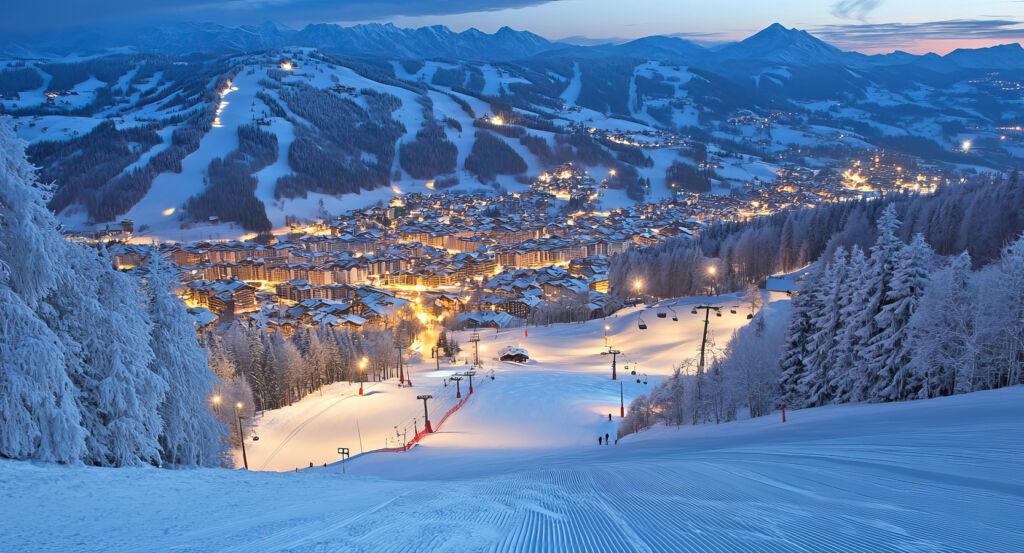
It winds quietly through the heart of the village, weaving between bridges, chalets, and pine groves, its current steady even in deep winter. You'll hear it before you see it, a low, clean rush beneath layers of frost and stone. In summer, it turns bright and wild, breaking through meltwater and echoing against the canyon walls. The river divides St. Anton into two worlds: the lively bustle of the main streets on one side, and the softer calm of Nasserein and St. Jakob on the other. Yet it never feels like a barrier, more like a rhythm that the entire town unconsciously keeps time with. Walk along its banks at dusk, when the air cools and the last light slips down from Galzig, and you'll understand how this small alpine river defines everything here, movement, sound, and the quiet continuity that links the peaks to the people below.
What you didn't know about Rosanna River.
The Rosanna River is far older than the town it sustains, a glacial creation that carved the Stanzertal Valley long before anyone thought to name it.
Fed by springs and snowfields high in the Verwall Mountains, the Rosanna flows eastward through St. Anton, gathering strength as it runs toward the Sanna and eventually the Inn, one of the Danube's great tributaries. Its total length is just over 25 kilometers, yet within that distance it crosses landscapes that feel like worlds apart, from alpine meadows and spruce forests to deep gorges and meadowland near Landeck. Few visitors realize that the river still plays a vital role in the village's modern life: it powers small hydroelectric systems, supplies fresh water, and regulates the valley's delicate ecosystem. The walking trail that traces its edge, known simply as the Rosannaweg, doubles as both promenade and pilgrimage, linking St. Anton's neighborhoods with nature at every turn. Along its route you'll find benches made of raw wood, small waterfalls that freeze into crystal curtains in winter, and wildflowers that reclaim the banks each June. In spring, when the thaw comes fast, the sound of the Rosanna changes tone, softer in morning light, urgent by afternoon, like an orchestra tuning itself before the mountain day begins. It's less a river than a presence: constant, cleansing, quietly alive.
How to fold Rosanna River into your trip.
The best way to meet the Rosanna River is to follow it, to let its flow set your pace.
Start from the pedestrian bridge near the St. Anton railway station, where the water first greets the town with a clear, cold rush. From there, follow the Rosannaweg east toward Nasserein and St. Jakob, a flat, easy trail that runs parallel to the current, perfect for early mornings or post-ski evenings when the valley turns blue. In summer, bring a picnic and stop where the forest opens into meadow; you'll hear nothing but birds and the occasional roll of distant thunder. If you're visiting in winter, walk the same path at night when snow muffles everything but the river's low hum, lanterns and streetlights reflecting on ice. For a full loop, continue toward the Verwall Valley, where the river deepens into gorge and the sound grows louder with each turn. Cross one of the small suspension bridges, stand in the middle, and feel the vibration of the current beneath your boots. You'll see why locals call it the valley's heartbeat. When you return to the village, stop near the covered bridge by the park, the perfect place to pause, breathe, and watch the Rosanna carry the day downstream. In St. Anton am Arlberg, mountains give you altitude, but it's the river that gives you rhythm.
Where your story begins.
Start your planning journey with Foresyte Travel.
Experience immersive stories crafted for luxury travelers.